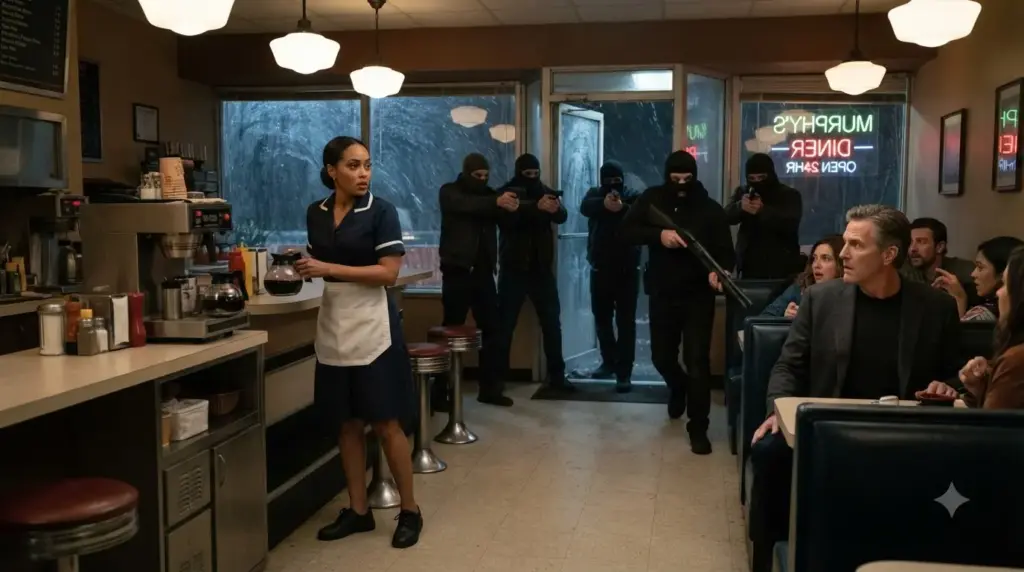
And suddenly, everyone was about to discover that this waitress had been running from something far bigger than anyone imagined. The overhead lights in Murphy’s diner cast a warm glow across the worn linoleum floor. It was the kind of place travelers found by accident rather than intention. A small roadside establishment just outside the city limits where the coffee was strong and the pie was homemade. Most people stopped once and never returned.
Some became regulars without quite knowing why. Nia Carter moved between the tables with practiced efficiency. Her movements were economical, purposeful. She wasn’t the chatty type who shared life stories while refilling coffee cups, but customers seemed to appreciate her quiet attentiveness. She noticed things when someone needed a water refill before they asked.
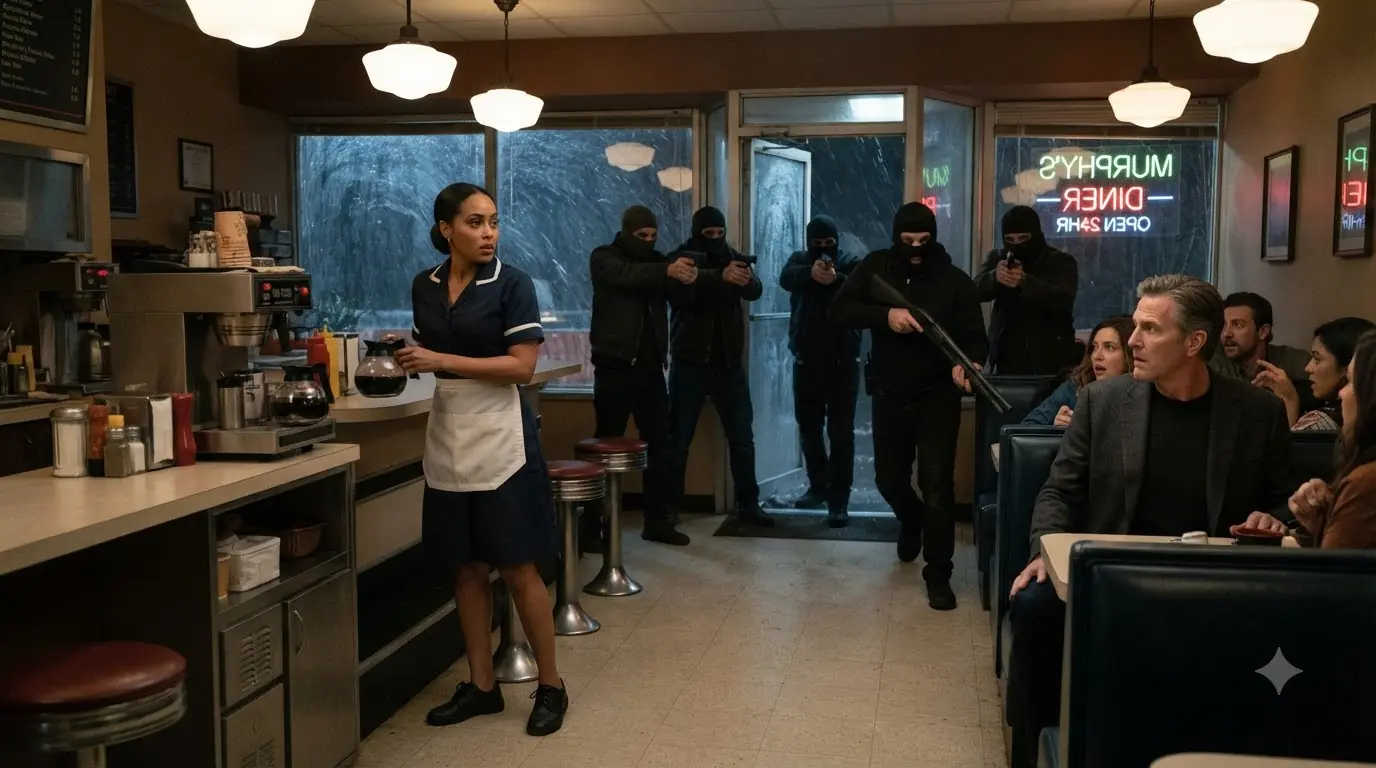 When a tired trucker wanted silence instead of small talk, when tension rose at a table and needed gentle diffusing. “More, Mr. Harrison?” She asked, already reaching for the pot. The elderly regular looked up from his newspaper and nodded. “You always know, don’t you?”
Nia smiled softly as she poured. “Just paying attention. You seem too calm for this work,” he observed, studying her over his reading glasses. “Too put together, like you’re meant for something bigger.” She laughed it off with practiced ease.
“This suits me just fine.” But as she walked away, something flickered across her face. Not quite sadness, not quite regret. More like acceptance of a choice she’d made long ago. The kind of choice that required burying parts of yourself so deep that most days you almost forgot they existed.
The dinner rush had ended, leaving only a handful of customers scattered across the booths. Nia used the lull to take her break in the small back office. She pulled out her phone and counted the evening’s tips carefully, separating bills into neat stacks. Every dollar mattered. Every cent had a destination.
She opened her banking app and transferred $200 with a memo that read, “Marcus, tuition payment.” Her younger brother was in his second year at community college studying computer science. He’d wanted to defer and get a job when their mother got sick, but Nia wouldn’t hear of it. Someone in their family was going to finish what they started. Next, she checked her email.
A message from Mercy General Hospital waited in her inbox. An update on her mother’s treatment plan. The experimental therapy was showing promise, but the cost kept climbing. Insurance covered some of it, but the rest fell on Nia’s shoulders. She didn’t mind carrying that weight.
After everything her mother had sacrificed raising two kids alone, this was the least she could do. Still, the numbers added up in ways that made sleep difficult some nights. Taking a break, Nia. The manager, Tom Brennan, poked his head into the office. Yeah, just finishing up.
She closed her phone quickly. Take your time. It’s quiet tonight. He paused, then added. You doing okay?
You seem tired lately. I’m fine, Tom. Really. He nodded, though his expression suggested he didn’t quite believe her. Tom was a decent boss. fair, rarely demanding, content to let his staff handle things their own way as long as customers stayed happy.
He’d hired Nia eight months ago without asking too many questions about her resume gaps, and she appreciated that more than he knew. When she returned to the floor, the point-of-sale system at the register was frozen. Tom stood in front of it, jabbing buttons with increasing frustration. “It’s doing that thing again,” he muttered. Nia glanced at the screen and immediately recognized the problem.
The payment processor timed out. You need to restart the network connection first, then reboot the terminal. Tom blinked at her. How do you know that? Just logic, I guess.
She moved past him and quickly navigated through the system menus, her fingers moving with confidence that came from muscle memory rather than guesswork. Within 90 seconds, the register hummed back to life. You secretly work in IT before this? Tom asked half joking. Nia shrugged.
I picked things up quickly from across the room. Sarah, another waitress, exchanged a glance with the cook. They’d noticed these moments before, times when Nia demonstrated knowledge or skills that seemed out of place in a roadside diner. She could troubleshoot technology, spoke with unusual precision when needed, and carried herself with a composure that felt almost corporate. But Nia never explained and eventually people stopped asking.
After closing out a table near the window, Nia caught her reflection in the glass. The storm outside had started, rain streaking down the panes in heavy sheets. She stared at herself for a moment. The simple uniform, the tired eyes, the face she trained to remain neutral no matter what happened around her. She barely recognized the woman looking back.
Sometimes that woman used to wear tailored suits and carry leather briefcases. That woman used to walk into boardrooms where millions of dollars hung in the balance and speak with authority that made powerful men listen. That woman had a different name on business cards and a reputation that opened doors across three continents. But that woman didn’t exist anymore. Nia had made sure of it.





