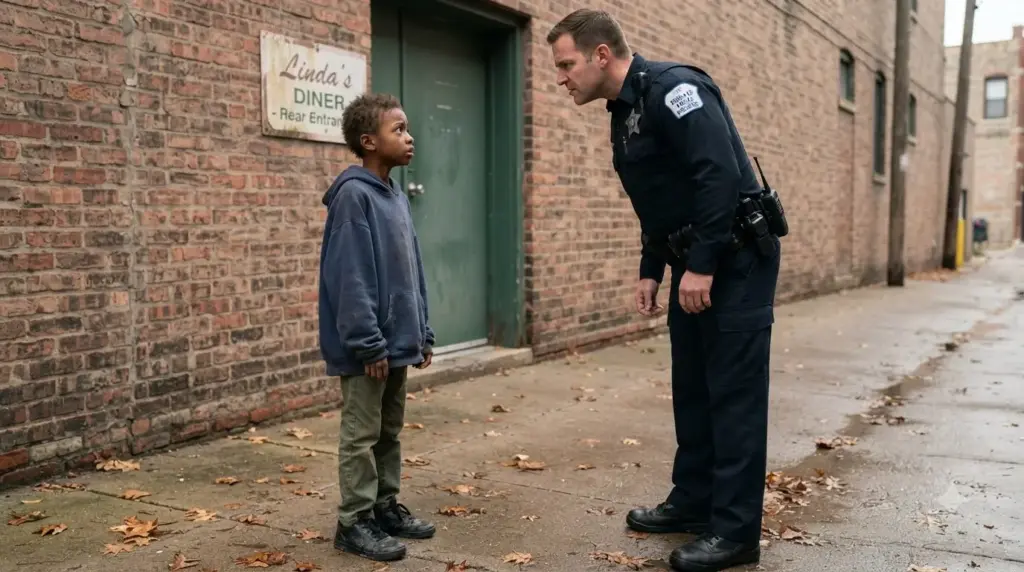
There’s a boy who needs help, Dan, and I think you’re the one who can do it.” Dan opened his eyes, looking at Linda. No longer was there a hardened look or prejudice, but remorse, regret, and a glimmer of hope, a change sparking. He knew his life had taken a different path, and Malik was the start. The next morning, cheerful bird chirps outside blended with warm sunlight, brightening the sterile white hospital room.
Dan lay on his hospital bed, looking much better, though still tired. Mrs. Linda was there looking at Malik with completely different eyes than last night, filled with respect and self-reproach. Mrs. Linda turned to Dan, then to Malik. She began to recount, voice slow, a profound reminder. The boy, the way you acted last night.
I’ve never seen anyone like that. Your kindness, it reminds me of a lesson I once learned long ago as a child here. People judged me, believed false rumors. Officer Dan, he intervened. Just a word, but it helped me out of a difficult situation, a big misunderstanding.
That taught me appearances aren’t always the truth. And sometimes a small act of trust can change a person’s entire life. I tried to tell you last night, Dan, but you didn’t listen. I won’t repeat the mistake of judging others by their appearance anymore. I will help this boy.
Dan listened, eyes slightly surprised as she recalled an old story, a faded memory suddenly vivid. He nodded faintly, acknowledging. He turned to Malik, eyes filled with gratitude and regret. Dan took Malik’s small hand, his voice sincere. Malik, you saved my life.
Mrs. Linda is right. I was wrong. Terribly wrong. I owe you a chance, a better future. And I owe Mrs. Linda an apology for not believing her last night.
Mrs. Linda, I hope you’ll take in this boy. I believe you’re the best person to help him. I’ll do everything I can to support you and Malik. Malik looked at Dan and Mrs. Linda, eyes full of hope, but also apprehension. He spoke softly.
I just want people to see me, not some prejudice. I just want a chance. Oh, Officer Dan, I have another friend. Her name is Tasha. She also lives on the streets.
She’s very smart, but also very stubborn. She needs a chance like me, too. Dan looked at Malik, nodding slowly. He’d seen Tasha loitering before, that sharp but wounded look in her eyes. If one boy can make me change, then one girl can also find the light, he told himself.
“All right, Malik. I’ll try to help Tasha, too.” A faint, hesitant smile appeared on Malik’s lips like a flower blooming after a storm. Mrs. Linda’s diner became Malik’s first real home. Early mornings, when sunlight streamed through the window, the boy would wake to the comforting smell of coffee and sizzling from Mrs. Linda’s kitchen.
Malik quickly donned his apron and began work. Mrs. Linda taught him not just how to wipe tables and serve customers, but also how to brew coffee just right, chop vegetables evenly, and offer a natural smile. Malik learned quickly, his eyes gleaming with a thirst for knowledge. Mrs. Linda noticed his meticulousness, picking up every fallen grain of rice, cleaning every nook, reminiscent of how he used to secretly clean trash behind her back. Evenings after closing, Mrs. Linda often sat with Malik, teaching him simple math or reading old newspapers.
She was more than a diner owner. She was a grandmother figure. Malik’s first teacher. She saw innate intelligence, a hunger for learning the streets had suppressed. You’re very smart, Malik, she’d say, gently stroking his messy hair.
You deserve a better future than these alleys. Dan, recovering and facing scrutiny from colleagues like Harris, began his serious journey of atonement. In his free time, he threw himself into finding support programs for street children. He called community centers, nonprofits, and local schools, asking about enrollment, scholarships, or any assistance for Malik and Tasha. One afternoon, Dan visited an old community center in South Chicago.
He met Maria, an older woman with white hair but warm eyes who ran a program for homeless and disadvantaged children. Dan passionately presented Malik and Tash’s stories. Maria listened attentively. She nodded, offering a sympathetic smile. We have a program.
It requires commitment from the children and support from adults. We’ll help them with books, uniforms, and a meal. Dan felt a spark of hope. Maria, I’ve looked into the center’s program very carefully. I truly believe this is the best path for Malik and for another girl named Tasha, too.
I don’t just want to refer them. I also want to volunteer my time. I can help transport the children or even act as a mentor talking to them about life choices. I want to make sure no child has to go through what I used to think about them. Dan’s words were no longer just duty, but a deep commitment.
Tasha still frequently visited Mrs. Linda’s diner. She stood from a distance, her sharp street eyes watching Malik work. She saw Malik wasn’t just paid with meals and clean clothes, but with care and kind guidance. She saw Dan often visit, not as an officer, but a friend, an older brother. He brought books for Malik, patiently explained math, and had serious talks about the future.
Maybe promises aren’t always lies. Maybe these adults aren’t like the ones who used me before. That boy has really changed. Could I be like that? She wondered.
Tasha had seen too many promises disappear. She believed in fending for herself. Vigilance her only weapon. One afternoon, as Malik cleaned outside the diner, Tasha approached. Her cold demeanor remained, but her voice was softer.
You look a lot better, Malik. Malik smiled sincerely. Yeah, I’m much better. Mrs. Linda is really good. Officer Dan, too.





