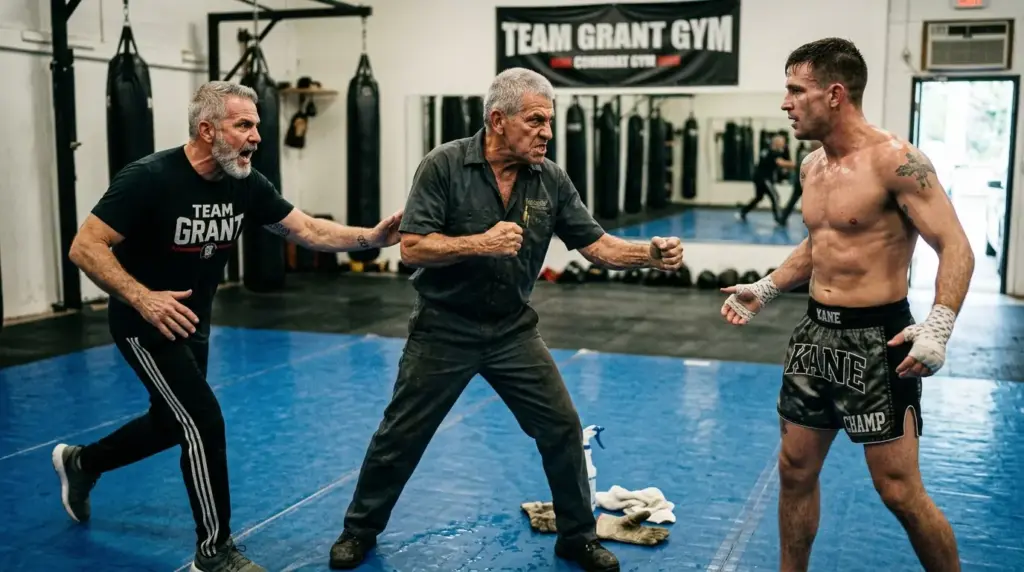
“I thought the job told me something about you.”
Samuel nodded.
“It did.”
Derek looked confused.
“What?”
“That I clean the gym.”
Derek smiled despite himself.
Samuel continued.
“You added the rest.”
That line stayed.
Derek looked down.
“I did.”
Samuel returned to the latch.
“Then don’t do it again.”
“That’s it?”
“What else do you want?”
“I don’t know.”
“Punishment?”
Derek shrugged.
“Maybe.”
Samuel shook his head.
“Young men love punishment.”
“Why?”
“Because punishment ends.”
Derek looked at him.
Samuel tightened the screw.
“Changing how you see people takes longer.”
Then he closed the cabinet.
Fixed.
Derek stood there.
Samuel picked up his tools.
“Anything else?”
Derek hesitated.
“Will you train me?”
Samuel laughed.
“No.”
Derek blinked.
“Why?”
“You have a coach.”
“I mean some old-school stuff.”
Samuel looked at him.
“There is no old-school magic.”
“Still.”
“No.”
Derek looked disappointed.
Good.
Samuel walked away.
Two weeks later, Derek lost a sparring round to Aaron.
Cleanly.
Not badly.
Aaron was improving.
That should have been good.
Instead Derek turned up the pace in the next round.
Grant stopped him.
“Too hard.”
Derek exhaled.
“I’m fine.”
Grant looked at him.
“That’s not the question.”
Derek backed off.
After class, Samuel passed by.
Derek said,
“You saw?”
“Yes.”
“You think I did it again?”
Samuel looked at him.
“Yes.”
Derek frowned.
“That quick?”
Samuel nodded.
“You became embarrassed.”
“So?”
“You tried to make someone else pay for it.”
That was the pattern.
Derek hated how easily Samuel saw it.
“You never did that?”
Samuel laughed.
“All the time.”
Derek looked surprised.
Samuel leaned the mop against the wall.
“When I was twenty-seven, I broke a sparring partner’s nose because a promoter was watching.”
Derek stared.
“He was smaller.”
“I knew.”
“I hit too hard anyway.”
“What happened?”
“He missed work for a week.”
“Did you apologize?”
“Yes.”
“Did he forgive you?”
“Yes.”
“Then?”
Samuel shrugged.
“I still did it.”
That answer mattered.
No redemption erased the act.
Derek sat on the ring edge.
Samuel continued.
“I spent years thinking fighters needed humility after losing.”
“They need it more after winning.”
“Why?”
“Because losing already tells you something.”
“Winning can lie.”
Derek looked at him.
“What does it say?”
“That whatever you did was right.”
Silence.
Samuel picked up the mop.
“That is the dangerous part.”
Derek started listening differently after that.
Not obediently.
Not perfectly.
Differently.
He still trained hard.
Still talked trash sometimes.
Still liked attention.
But he began noticing the moments before the mistake.
The laugh.
The look around the room.
The need to be seen as dominant.
Recognition does not cure ego.
It gives you a second before obeying it.
Sometimes a second is enough.
A month later, Harbor Combat Center held a charity exhibition.
Local fighters.
Amateur bouts.
Kids demonstrations.
Funds for a youth recreation program.
Derek was scheduled for a three-round technical exhibition with a visiting champion named Corey Banks.
Friendly.
Good pace.
Near the end of round two, Corey landed a clean body shot.
Derek backed up.
The crowd reacted.
Small sound.
Derek felt the old urge.
Answer hard.
Immediately.
Make the room forget.
He stepped forward.
Then stopped.
Breathed.
Reset.
Jab.
Movement.
Technical.
Coach Grant noticed.
So did Samuel, standing near the back with a trash bag.
No one else did.
That was perfect.
The change mattered even without witnesses.
After the event, Derek found Samuel.
“You saw?”
Samuel tied the trash bag.
“Yes.”
Derek waited.
Samuel looked at him.
“What?”
“That’s all?”
“What do you want, a medal?”
Derek laughed.
“No.”
“Good.”
Samuel walked away.
That became their relationship.
No formal mentorship.
No secret morning sessions.
No montage.
Conversation.
Observation.
Occasional correction.
Derek learned pieces of Samuel’s past slowly.
He had grown up in San Antonio.
Started boxing at fourteen.
Turned professional at twenty-one.
Won a state middleweight title at twenty-six.
Lost a national eliminator at twenty-nine.
Retired at thirty-three after repeated hand injuries.
Then coached.
For seventeen years.
His best fighter, Tommy Ruiz, reached the national Golden Gloves final.
His second best, according to Samuel, was a woman named Alicia Moreno who never won a major title but became a high school principal and still called him every Christmas.
“Why is she second best?”
Derek asked.
“Because she listened.”
“What about Tommy?”
“He did not.”
“Then why is he best?”
Samuel smiled.
“I said best fighter.”
“Not best student.”
That distinction stuck.
Samuel stopped coaching after his wife became sick.
Cancer.
He cared for her for four years.
After she died, he tried returning to a gym.
Could not.
Too many memories.
Too much noise.
He took maintenance work at Harbor because he liked being around training without being responsible for it.
“Why didn’t you tell Grant?”
“He never asked.”
“You knew he would care.”
“That is not the same as needing him to know.”
Derek thought about that for a long time.
He had built half his life around making sure people knew.
Rank.
Record.
Wins.
Sponsors.
Photos.
Samuel had carried an entire history without introducing it into rooms.
Different kind of confidence.
The season changed.
Derek defended his regional title.
Won a close decision.
No domination.
No knockout.
Hard fight.
Afterward, an interviewer asked,
“Who deserves credit?”
Derek almost gave the standard answers.
Coach.
Team.
Family.
Then he stopped.
He said,
“The people who clean the gym too.”
The interviewer laughed.
Derek did not.
“I’m serious.”
He explained.
Not Samuel’s full story.
Not without permission.
Just:
“A gym teaches you who matters by who you notice when you’re winning.”
The clip circulated locally.
Samuel hated it.
“You made me sound philosophical.”
“I didn’t use your name.”
“Worse.”
Derek laughed.
Then Samuel asked:
“Did you mean it?”
“Yes.”
“Good.”
That was enough.
Six months later, Harbor hired a new front-desk employee named Malik Thompson.
Nineteen.
Community college student.
Quiet.
He cleaned between shifts when Samuel needed help.
One evening, a promising amateur named Jake tossed his wet hand wraps onto the floor beside Malik.
“Laundry.”
Malik stared.
Jake smiled.





