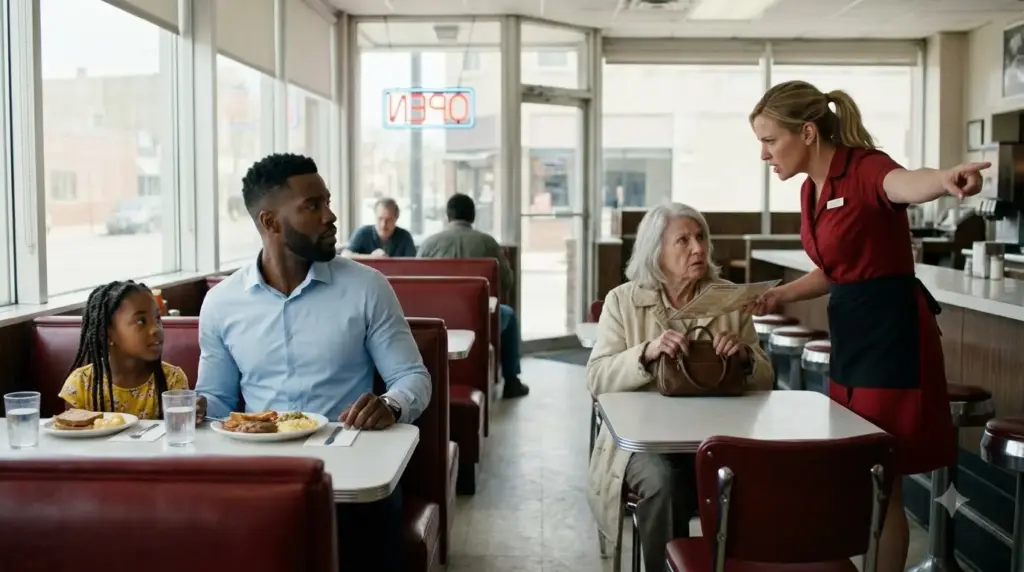
Daniel smiled. “My mother has been doing that to me for decades. You can survive it too.”
Marcus accepted on a three-month trial.
Grace was waiting in the hall when he stepped out. “That was fast,” she said.
Marcus heard the edge. “You think so?”
“My brother hears one story about a stranger on Friday and offers him a management position Friday night. Yes.”
“Then take it up with your brother.”
“I will. My mother is generous, and Daniel gets emotional when it comes to her. People know that.”
The implication landed cleanly. Marcus’s face hardened. “You think I planned to find your mother hungry outside a market?”
“I think my family has been used before.”
Marcus stepped closer, not threatening, but no longer polite. “Then here’s something that should make you feel better. I didn’t know your name, your mother’s last name, or your brother’s bank balance until two hours ago. I spent money I couldn’t spare because an old woman told me she was hungry. If that makes me suspicious in your world, your world has a problem.”
Grace opened her mouth, then stopped. Marcus walked away before she could answer.
The next morning, Grace found the napkin Lily had left on the dining room table. On it, Lily had drawn five stick figures: Elena, Daniel, Grace, Marcus, and herself. Grace had been given an enormous smile and the words “good drawer” beneath her. For reasons she did not want to examine, she folded the napkin carefully and put it in her purse.
Marcus started work Monday at a converted warehouse in West Garfield Park. Rows of shelves, refrigerators, loading bays, and unfinished offices waited for a system that made sense outside a boardroom. Instead of beginning with binders, he spent his first week talking to people: drivers, school counselors, church volunteers, cafeteria workers, parents, and seniors who had used food assistance before. He learned that the proposed online application was impossible for many older residents, that the delivery windows ignored working parents, and that one planned distribution site required three bus transfers for the families it was supposedly built to serve.
By Friday, he had filled a yellow legal pad with changes. Daniel called them aggressive. The consultants called them disruptive. Marcus called them obvious.
Grace arrived that afternoon carrying nutrition reports and two coffees. Marcus looked at the second cup with suspicion.
“Peace offering,” she said.
“Is it poisoned?”
“Only emotionally.”
He took it.
Grace leaned against the worktable. “I owe you an apology.”
Marcus waited.
“I was unfair at my mother’s house. My former fiance was very interested in being part of the Hayes family. Less interested in being part of my life. After that, I started seeing motives everywhere.”
Marcus’s expression softened, but only slightly. “That explains it. Doesn’t excuse it.”
“I know.”
“Okay.”
“Okay means you forgive me?”
“Okay means I heard you. Forgiveness is a premium package.”
Grace laughed before she could stop herself. “Lily gets that from you, doesn’t she?”
“Unfortunately.”
From then on, Grace worked closely with Marcus because the food program needed someone with her expertise. Their first weeks were more argument than friendship. Grace wanted standardized nutrition boxes to guarantee balanced meals. Marcus insisted families should have choices and culturally familiar food. She worried flexible inventory would complicate procurement. He argued that giving a grandmother ingredients she did not recognize was technically assistance and practically waste.
“You can’t design dignity on a spreadsheet,” Marcus told her during one meeting.
Grace shot back, “And you can’t feed eight hundred families on instinct.”
They eventually built a hybrid system that did both.
Lily became the unexpected third member of their partnership. On afternoons when Marcus had to stay late, she sat in the office doing homework. Grace would bring fruit, help with science assignments, and let Lily test kid-friendly recipe cards. Soon Lily began saving a chair beside her whenever Grace visited.
One evening Marcus returned from the loading dock and found them on the floor surrounded by colored pencils. They were designing signs for the children’s pantry shelves. Lily had drawn smiling apples, cartoon rice bags, and a heroic can of beans wearing a cape.
“That bean has better shoulders than I do,” Marcus said.
Grace looked up. “He works out.”
Lily giggled. “Grace says food should look friendly.”
Marcus stopped at the sound of his daughter using Grace’s name so naturally. For one brief second, grief and gratitude collided inside him. Rachel should have been here for moments like that. He had spent three years guarding the empty space she left, terrified that allowing anyone near it would mean replacing her. But watching Grace tie Lily’s loose braid while arguing about a cartoon carrot did not feel like replacement. It felt like life continuing without asking permission.
He immediately distrusted the feeling.
The program launched in early spring. On the first weekend, they expected two hundred families and served nearly four hundred. Marcus worked fourteen hours without sitting down. Grace stayed beside him, loading boxes when volunteers fell behind and translating nutrition guidelines into ordinary language for parents who did not need a lecture with their groceries.
Elena arrived near closing with Lily and stood quietly at the edge of the warehouse. She watched Marcus kneel beside an elderly man who was embarrassed to ask for extra food for his wife. Marcus did not call attention to the request. He simply added another bag and said, “This saves us a trip next week. You’re helping us out.”
Elena looked at Grace. “You see it now?”
Grace did not pretend not to understand. “Yes.”
“Good.”
“Don’t start.”
Elena smiled innocently. “I said one word.”





