he whispered. “I’m proud of you,” I said. “I’ve always been proud of you.” He nodded, swallowing hard. I put the truck back in gear and pulled onto the road. The rest of the drive was quiet, but it was a different kind of quiet than before. Softer. Warmer. When we got home, I made him soup and checked his ribs again. Nothing broken. Bruised, but healing. I put ice on the swelling and sat with him on the couch while he ate. “You better not have ruined your appetite,” I said. He grinned through a mouthful of crackers. “Too late.” I laughed. It felt good. Real. Later, after he’d fallen asleep on the couch, I stood by the window and looked out at the dark yard. The desert was far away. Years away. But it never really left you. I’d spent eight years trying to be someone else. A quiet widower. A maintenance contractor. A father who fixed faulty wiring and made hot meals. But tonight, the desert had come back. Not the violence. Not the death. The discipline. The control. The knowledge that mercy was harder than destruction. I hoped Toby would never need to know that lesson the way I’d learned it. But I hoped he’d remember tonight. Not the kicks. Not the embarrassment. The handshake. The grace. The quiet heart of a father who knew when to strike and, more importantly, when to forgive. I turned off the porch light and went to bed. The next morning, I woke to the sound of my phone buzzing. I reached for it, squinting at the screen. A number I didn’t recognize. I answered. “Logan Vance?” The voice was male, middle-aged, official. “This is he.” “My name is Chief Marshal Hendricks. I run the regional circuit for competitive kickboxing in this county.” I sat up. “What can I do for you?” There was a pause. “I heard about what happened at the gym last night. About you. About Blake.” I said nothing. “I also heard some things about your background. Things I’d like to verify.” My jaw tightened. “What are you asking?” “Just a conversation,” he said. “In person. There’s something we need to discuss. About Blake. About his record. And about what happens next.” He gave me an address. A coffee shop on the outskirts of town. Noon. I hung up and stared at the phone. The desert never really left you. And sometimes, it came back to find you whether you wanted it or not. I got dressed quietly. Toby was still asleep, curled under a blanket on the couch. I wrote a quick note—Gone to run errands. Back soon. Pancakes when I get home.—and left it on the kitchen counter. The drive to the coffee shop took twenty minutes. It was a small place, tucked between a hardware store and a laundromat. Old vinyl booths. A waitress who looked like she’d been serving coffee since before I was born. Chief Marshal Hendricks sat in the back corner. He was a broad man, gray at the temples, with the kind of posture that came from decades of standing in gyms and watching fighters. He wore a plain shirt and no tie, but there was an official badge clipped to his belt. I slid into the booth across from him. “Mr. Vance.” “Hendricks.” He studied me for a moment. His eyes were sharp, calculating. He was measuring me the way I’d measured Blake. “You’re not what I expected,” he said. “I get that a lot.” He smiled slightly. “I bet you do.” The waitress came by. I ordered black coffee. He ordered a refill. “You heard about the incident at the gym,” I said. It wasn’t a question. “I heard. I also heard you didn’t press charges. Didn’t sue. Didn’t even raise your voice.” “No.” “Why not?” I considered the question. “Because it wasn’t about punishment. It was about correction.” Hendricks nodded slowly. “That’s what the retired colonel told me. The one who was in the bleachers.” I remembered the veteran. The one who’d recognized my grip. “He served in the same theater as you,” Hendricks said. “Different units, but he knew the training. He called me last night.” “I see.” He leaned forward. “Here’s my problem, Mr. Vance. Blake is one of my top fighters. He’s got a regional title, a five-belt record, and a reputation that brings in sponsors. But after last night, that reputation is—” He paused. “Complicated.” I said nothing. “I’ve had three parents call me this morning. Three separate complaints. They said Blake’s been running his youth program like a boot camp for his own ego. Bullying the smaller kids. Using them as punching bags.” My hands tightened around my coffee cup. “I didn’t know,” Hendricks continued. “That’s on me. I should have known. But Blake was winning, and winning keeps the lights on.” “Winning isn’t coaching,” I said. “No. It’s not.” He was quiet for a moment. “I want to offer you something,” he said finally. “What’s that?” “A position. Head of youth development for the regional circuit. You’d oversee training standards for all the affiliated gyms. Make sure what happened to your son doesn’t happen to anyone else’s kid.” I stared at him. “I’m a maintenance contractor,” I said. “I know what you are, Mr. Vance. Or at least, I know enough.” He met my eyes. “You spent fifteen years in one of the most elite combat units this country has ever fielded. You’ve trained in conditions most fighters can’t imagine. And last night, you showed more restraint than any man in that room would have shown in your position.” I shook my head. “I don’t want to be a public figure.” “You wouldn’t be. You’d work behind the scenes. Set standards. Teach coaches how to build discipline without abuse. You’d answer to me and no one else.” I thought about Toby. About the bullies he’d face in school. About the kids in that gym who’d watched their coach humiliate my
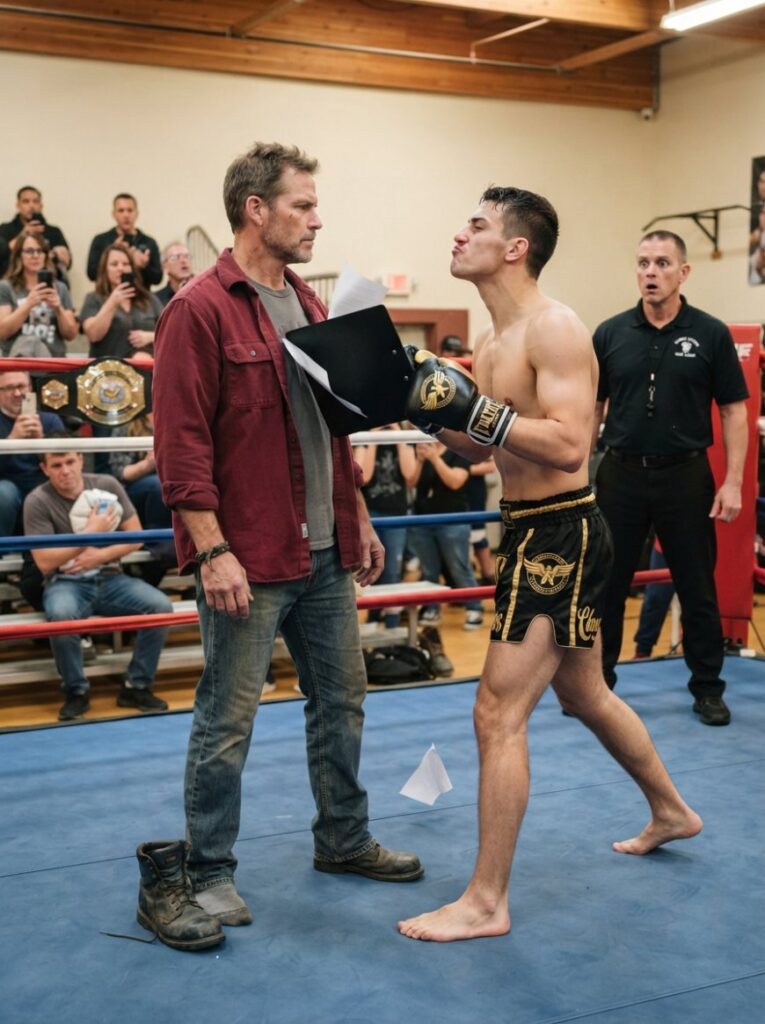
PART 2: A KICKBOXING CHAMPION folded my 13-year-old son with a full-contact body kick—then challenged every parent