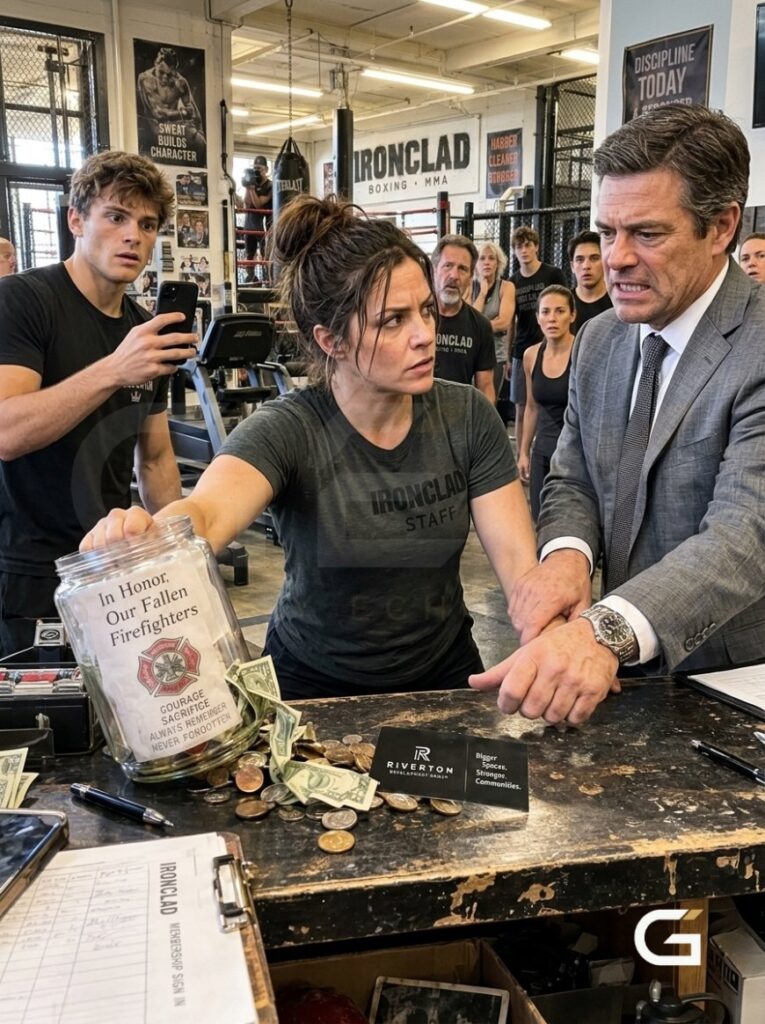
Somewhere in the middle of his objections, I catch a few words about his father. About legacy. About a family name he’d apparently hoped to restore rather than further damage.
Whatever he’d been trying to prove—by picking up exactly where Desmond Aldridge left off twenty-two years ago—it seems it hadn’t gone the way he’d imagined.
By the time the crowd begins settling back into their seats, someone from the sports network approaches me, laptop already open, asking permission to run the footage in full for their broadcast, along with an interview if I’m willing.
I’m not. Not tonight.
But I do allow Silas to speak briefly, laying out—in careful, measured words—exactly what the footage revealed. The old commission records. The connection between Desmond Aldridge and my father’s disqualification twenty-two years ago. The pattern connecting that old injustice to Bronson’s own questionable victory two years back.
It’s enough.
By the following week, the State Athletic Commission opens a formal review into Bronson Voss’s fight record, prompted by Trudy Faulk’s original column and the new evidence Silas provides.
His undefeated title is marked under investigation. His sponsors quietly withdraw their names from any future events, one by one, the way frightened companies always do once a story turns from inspiring to embarrassing.
Cole Bennett—the fighter who’d gone down two years earlier under such strange circumstances—comes forward himself a few weeks later, his own account finally corroborating what the betting records had only suggested. He tells the commission he’d been approached quietly before the match. Offered a sum of money he badly needed at the time.
He’d spent two years regretting the decision in silence, unsure who would believe him if he spoke up.
It isn’t the kind of ending that can undo the years already lost for him—any more than for Thomas Ree. But it’s the kind of ending that finally lets the truth stand where a lie had been standing for far too long.
The land deal Gordon spent the week engineering collapses within days. His investors want nothing to do with a story now circulating well beyond Mil Haven’s borders. Gordon himself faces a harassment complaint over the anonymous note. Combined with the damage to his professional reputation, it’s enough to send him quietly out of town before the month is out.
The Aldridge name finally—after twenty-two years—loses whatever quiet power it once held over Mil Haven’s fighters.
Silas sends a copy of the old commission files to the state athletic board as well, along with a short letter explaining what happened to Thomas Ree twenty-two years ago. It won’t undo a lost title or a career cut short before its time. But the board issues a formal correction to the record a few months later, striking the disqualification and noting—in careful official language—that the original ruling had been improperly influenced.
It’s a small thing on paper. To Thomas, standing in the gym when the letter arrives, it means something considerably larger than paper usually can.
Walt—Ironclad’s owner, watching all of it unfold from Florida through a flurry of phone calls—decides against selling the property after all.
There’s no need to now.
Word of what happened at the memorial spreads fast enough. A modest wave of donations flows in from around the state. Enough to cover the gym’s back payments several times over. Offered by people who’d simply wanted to be part of a story that ended the right way for once. A few of those donations come with handwritten notes attached. Strangers explaining they’d known someone like Gus once. Or a father like Thomas. Or a quiet woman like Callie, who never got the credit she deserved until far too late.
Opel reads a handful of them aloud one evening at the diner, her voice catching more than once. For a while, the whole counter goes quiet, listening to strangers two counties over say—in their own clumsy way—that decency still mattered somewhere.
One envelope arrives without a return address. Just a single folded bill and a note in careful old-fashioned handwriting.
*Some fights take longer than six seconds to finish. Glad this town finally saw one through.*
Nobody at the diner recognizes the handwriting. Opel keeps the note pinned behind the register anyway, next to the coffee-stained schedule she’s kept there for twenty years.
Two weeks later, on a bright Saturday morning, Mil Haven gathers again at the corner of Fifth and Miller. This time for a much happier occasion.
The hand-painted Ironclad sign comes down carefully. Silas himself steadies the ladder while Harold Kepler and another firefighter handle the actual lifting. A new one goes up in its place—freshly lettered, unveiled to a small crowd of regulars and well-wishers gathered on the sidewalk with coffee cups and folding chairs.
*The Ree-Doyle Boxing Academy.*
Underneath, a smaller line honoring Everett’s memory as well. A tribute to both families this town nearly let slip away.
The mayor says a few words—shorter and less polished than Gordon’s speech had been, but considerably more honest. The fire chief adds his own brief remarks, thanking the gym for years of quietly keeping this community’s retirees and veterans moving, long before anyone outside these walls had reason to notice.
Somewhere in the small crowd, a local reporter jots down notes for a follow-up piece. It’ll run a week later under the headline *”Mil Haven’s Quiet Comeback.”* Less focused on the six seconds that made the story famous. More on the twenty years it took to arrive at them.
It’s the kind of article that gets clipped out and taped to refrigerators, passed hand to hand at the diner counter, read aloud by people who’ve decided this particular story is worth remembering properly.
Inside, behind the front desk, a simple frame now hangs on the wall. Inside it sits a pair of gloves—cracked with age, the leather gone soft and dark—exactly where they belong. Beside it, a small brass plaque bears two names.
*Everett Doyle. Thomas Ree.*





