He appeared in the restaurants periodically on what he called quality assurance visits and what the staff called inspections. Though his visits seemed to be more about reminding everyone who was ultimately in charge, than about anything related to actual quality. He was in his mid-40s, expensively dressed, even in what he apparently considered casual attire. and he carried himself with the complete assurance of a man who had never encountered a situation he could not reshape to his advantage. He had arrived 20 minutes ago and had been sitting at the manager’s booth near the back with a series of spreadsheets and a cup of coffee that had gone cold because he kept forgetting to drink it while he talked.
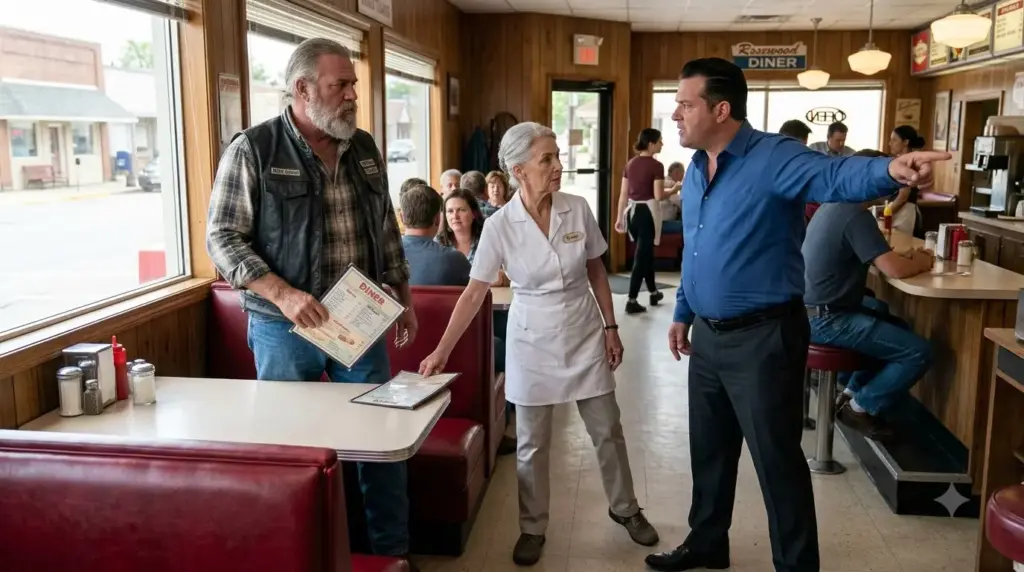
When he stood up from that booth, Evelyn felt the energy in the room shift in a way she recognized. She had seen Adrien Blake stand up from that booth before, and it rarely produced anything good. He walked toward the front of the restaurant with his hands in his pockets and his chin at a particular angle that Evelyn had learned to associate with the decision already made. He stopped a few feet from the biker’s table. Excuse me.
His voice was pleasant, the pleasantness of someone delivering bad news in a good tone because they enjoy the contrast. We have a dress code here. The man in the leather vest looked up from the menu. His expression was patient. Is that right?
It was not a question. It is, Adrien said. and I’m afraid you’re he gestured vaguely at the vest at the patches at the man himself. Your appearance doesn’t meet our standards. The biker set the menu down on the table slowly.
I’m just looking for something to eat. I understand that, Adrien said. But this is a family restaurant. We have a responsibility to our other customers. I haven’t done anything.
I know you haven’t yet. Adrien let that word land where he intended it to. But we prefer to maintain a certain atmosphere. He turned then and his voice changed. It became louder directional, designed to carry across the whole room.
Don’t serve that biker. He said it clearly to no one specific and to everyone simultaneously. People like him don’t belong here. The words hit the room the way certain words do with physical weight. A thing you felt in your chest before you processed it with your brain.
Several customers flinched. A teenage boy at the counter turned to look at the biker with wide eyes. The line cook visible through the kitchen window stopped moving. The man in the leather vest sat very still for a moment. Then he picked up the menu, placed it back in its holder on the edge of the table with the same slow deliberateness with which he had set it down and stood up.
He had been dismissed so many times in so many places that the motion had become economy. No protest, no scene, just the quiet mechanics of departure. He was turning toward the door when Evelyn Parker picked up a menu and crossed the dining room floor. She didn’t run. She didn’t make a production of it.