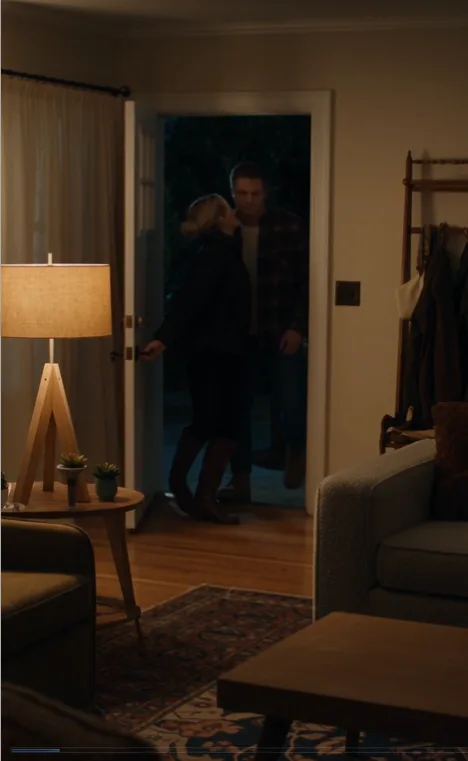
As they walked toward the van, a silver sedan pulled up to the curb. Master Vance stepped out, wearing his street clothes—a clean flannel shirt and trousers. He looked at Calder across the hood of the car, his eyes serious, searching.
“Calder,” Vance said, walking over. “Can I speak to you for a second?”
Calder stopped, letting go of Juniper’s hand for a moment. “Go hop in the van, June. I’ll be right there.”
Juniper climbed into the passenger seat, pulling the heavy door shut behind her.
Vance stood two feet away. “Rhett came to see me this morning,” Vance said softly. “He came to my house at ten o’clock. He handed me his black belt.”
Calder didn’t say anything.
“He told me he wasn’t worthy to wear it,” Vance continued. “He told me he spent five years learning how to hurt people because he was afraid of being weak. He asked if he could start over. As a white belt.”
Calder looked at the old instructor. “What did you tell him?”
“I told him to come back on Tuesday night,” Vance said. “I told him he could sit on the back bench and learn how to sweep the floor first.”
Vance reached into his coat pocket and pulled out a small, worn leather-bound book with yellowed pages. He held it out to Calder.
“This belonged to my teacher in Naha,” Vance said. “It’s a record of principles. Not strikes or kicks, Calder. Principles of protection. A man who moves like a ghost shouldn’t keep it all to himself. The kids in my evening class… they need to learn what a real protector looks like. Not a fighter. A protector.”
Calder looked down at the old leather book. He thought of his ten years in the Teams. He thought of the heavy black box behind the hot water heater in his basement. And then he looked through the clean glass window of his van, where Juniper was leaning her head against the headrest, humming a song to herself.
“I don’t teach violence, Vance,” Calder said quietly.
“Neither do I,” Vance replied. “That’s why I’m asking you.”
Calder reached out and took the small leather book. It felt light in his hand, dry and smooth, like old timber that had survived a long winter.
“Tuesdays at six?” Calder asked.
Vance smiled—a slow, warm expression that crinkled the corners of his eyes. “Tuesdays at six. Bring Juniper.”
EPILOGUE: THE LINE IN THE SAND
Six months later, the first autumn frost lay white and crisp over the grass behind the dojo.
The evening class was full. Twenty students—ranging from eight-year-old kids to forty-year-old mothers—stood in two neat lines across the polished pine floor.
At the very end of the back row sat Rhett Callaway. He wore a plain, unadorned white belt tied around his waist. His posture was straight, his chin up, his eyes clear and focused on the front of the room. He didn’t look at the mirrors. He didn’t look at the trophy cases. He looked at the floor in front of him with quiet, humble attention.
At the front of the mat stood Calder Rowan.
He didn’t wear a gi. He wore his clean blue work shirt, the sleeves rolled up to his forearms, revealing the broad, scarred skin of his wrists. Beside him stood Juniper, her white belt tied neatly around her waist, her feet set shoulder-width apart in a solid, stable stance.
“Strength,” Calder said, his voice carrying easily through the silent hall, “isn’t about how hard you can hit a bag. It’s not about how many trophies you have on your shelf, or how many people move out of your way when you walk down the street.”
He walked down the center line of students, stopping in front of a young boy who was standing with his shoulders hunched forward. Calder gently reached out and touched the boy’s shoulder, lifting it an inch until the boy’s spine aligned straight with his heels.
“True strength,” Calder continued, turning to face the room, “is the quiet inside you that says you don’t have to prove anything to anybody. It’s the ability to hold a heavy weight so the people you love don’t have to feel it. It’s knowing when to stand like a wall, and knowing when to put your hands in your pockets and walk away.”
He looked back at the rear row, meeting Rhett’s eyes for a brief second. Rhett offered a single, quiet nod of respect—a promise kept between two men who knew the truth about power.
Calder returned to the front of the mat, stepping beside his daughter.
“Alright,” Calder said, a small, warm smile breaking across his broad face. “Let’s work on balance. Everyone drop your hips. Drive through your heels. Find the ground.”
Twenty students dropped into their stance together, their feet striking the floor with a single, unified sound—a solid, resonant thrum that shook the pine boards and stayed firmly rooted to the earth.
Outside, the cool October wind swept through the trees along the river, carrying away the dry autumn leaves, but inside the dojo, the air was warm, clear, and completely at peace.