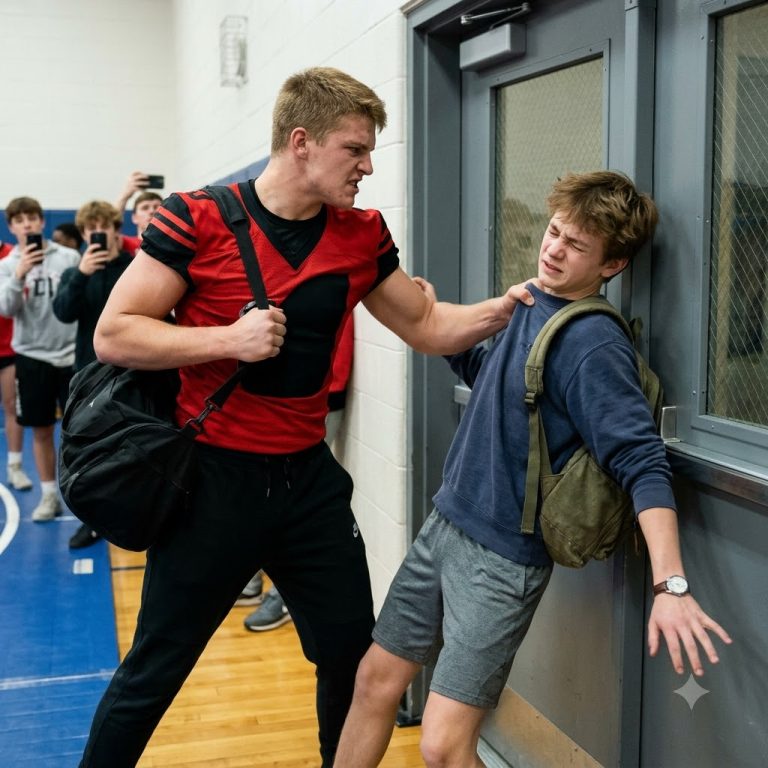
The beginner laughed in the moment.
The internet did not laugh with him.
It laughed at him.
Comments spread.
The beginner, Aaron, stopped coming.
Maya noticed.
“Where’s Aaron?”
Leo froze.
Marcus looked at him.
“You tell her.”
Maya’s face changed.
“What happened?”
Leo explained.
“I asked him if I could post it.”
“Before or after?”
“After class.”
“Before it went up?”
“Yes.”
“Did you show him the caption?”
“No.”
“What was it?”
Leo looked embarrassed.
Maya waited.
Finally:
“When your first day fights back.”
She stared.
Leo continued.
“He laughed.”
“In the room.”
“Yes.”
“Then strangers got involved.”
“Yes.”
Maya looked at Marcus.
“Did you call him?”
Marcus nodded.
“He says he needs a break.”
Maya looked back at Leo.
“You wanted content.”
“Yes.”
“You got it.”
He flinched.
“That’s harsh.”
“It’s accurate.”
Leo removed the clip.
Posted no apology publicly because Aaron asked him not to turn the situation into more content.
Instead, Leo called him.
Aaron did not answer.
He texted.
No reply.
For three weeks.
Then Aaron returned.
Leo saw him.
Walked over.
Stopped six feet away.
“Can I talk to you?”
Aaron thought.
“Later.”
Leo nodded.
Later came after class.
Aaron said, “I know I said yes.”
Leo listened.
“I didn’t know what yes meant.”
That sentence hit hard.
Aaron continued.
“I thought your followers were gym people.”
Leo nodded.
“They weren’t.”
“No.”
“I thought maybe a thousand people would see it.”
“Two hundred thousand.”
Aaron looked down.
“I hated reading it.”
Leo swallowed.
“I’m sorry.”
Aaron nodded.
“I believe you.”
Not forgiveness exactly.
Belief.
They rebuilt.
Slowly.
Leo changed his media process.
Show the final edit.
Show the caption.
Explain expected reach.
Allow withdrawal.
No beginner-fail clips.
Nolan helped build the rules.
Titan Forge’s content became less viral.
Sponsors complained.
Marcus shrugged.
Membership stayed healthy.
Imagine that.
Maya watched the three men grow in uneven directions.
Sometimes forward.
Sometimes backward.
She changed too.
At seventeen, she thought the lesson was simple.
Don’t disrespect people.
At twenty, she understood power made simple rules complicated.
People could be kind and still dominate rooms accidentally.
Coaches could care and still protect successful athletes too long.
Victims of one mistake could become controlling in another situation.
Maya discovered this when she began coaching teenagers.
A fourteen-year-old named Sophie kept forgetting a basic escape.
Maya corrected her three times.
Then four.
Then frustration entered her voice.
“Why are you doing that again?”
Sophie froze.
Maya heard herself.
Not the words.
The tone.
The same tone champions had once used with her.
You should already know.
She stopped.
“Sorry.”
Sophie looked surprised.
Growth remained messy.
Leo’s life shifted next.
He married a photographer named Jamie Park.
Jamie hated combat sports at first.
Not morally.
Viscerally.
She could not watch people get hit.
Leo stopped inviting her to fights.
She stopped pretending she wanted to go.
That worked.
Then Jamie became pregnant.
Leo panicked.
Not about the baby.
About becoming someone worth copying.
He had seen younger athletes imitate him.
Now a child would.
The thought terrified him.
He called Maya at midnight.
“What if I screw him up?”
Maya looked at the clock.
“It’s twelve fourteen.”
“I know.”
“Call your wife.”
“She’s asleep.”
“Correct choice.”
Leo sighed.
“Seriously.”
Maya sat up.
“You will screw up.”
“Helpful.”
“Everyone does.”
“What then?”
“Repair.”
“That’s it?”
“Mostly.”
Leo was silent.
Maya continued.
“You don’t need to become perfect before your kid arrives.”
“Good.”
“You need to become apologizable.”
He laughed.
“That is not a word.”
“It is now.”
His son was born.
Leo became a tired, softer version of himself.
At the gym, he became more patient with beginners.
Sleep deprivation accidentally cured some ego.
Damon teased him.
Leo replied, “I’ve been awake since three.”
No one challenged him.
Marcus’s health declined before anyone expected.
Not critically.
A hip that had bothered him for years worsened.
Then a heart arrhythmia.
Doctors told him to reduce stress.
Everyone laughed when he told them.
“What?”
Maya said, “You own two fight gyms.”
“Yes.”
“You chose stress.”
He glared.
She smiled.
But the arrhythmia scared him.
He began delegating seriously.
For the first time, Maya saw him let others make decisions he disagreed with.
Not because he changed his mind.
Because ownership required letting consequences belong to other adults.
That was difficult.
One budget meeting, Damon proposed hiring a full-time mental performance coach.
Marcus said no.
Too expensive.
Maya said yes.
Damon argued.
Kane supported.
Leo abstained because he was changing a diaper on video call.
Marcus lost the vote.
He stared at them.
“This is my company.”
Maya smiled.
“Partly.”
He groaned.
“You people are awful.”
They hired the coach.
Her name was Dr. Renata Singh.
Sports psychologist.
No martial arts ego.
Within six months, even Marcus admitted it helped.
Retirement transitions.
Competition anxiety.
Weight-cut stress.
Identity.
Burnout.
Fighters who once hid problems began speaking earlier.
Not always.
Enough.
Maya learned from Renata too.
She had spent years believing she understood psychological safety because she had lived disrespect.
Renata challenged her.
“Your experience gives you perspective.”
“Yes.”
“Not universal insight.”
Maya frowned.
“I know.”
“Do you?”
The question annoyed her.
That meant useful.
Renata continued.
“You sometimes assume quiet athletes need space.”
Maya stared.
“They often do.”
“Some need invitation.”
“Okay.”
“You assume public correction is risky.”
“It is.”
“Sometimes private correction feels secretive or shameful.”
Maya leaned back.
“So everything depends.”