If someone needs help and we can provide it without going under, why wouldn’t we? Robert began keeping notes in a small leather journal. He tracked customer retention rates, average transaction values, peak hours, and most importantly, the intangible metrics, how many regulars came in daily, how many people lingered to talk with staff, how many strangers became friends over shared tables. The numbers told a story that warmed his heart. This location had a 94% customer retention rate.
The average customer visited 4.3 times per week. Review scores averaged 4.9 stars across all platforms. And the comments, the comments were what mattered most. This place feels like home. The staff actually remembers my name.
I was having the worst day and the manager noticed and just listened. Didn’t try to fix it, just listened. They helped me when I had nothing. Now I’m back on my feet and I come here every day to pay it forward. This was it.
Robert realized this was what he and Elellanor had dreamed of. What they’d built in the early days before committees and market research and brand strategies. This was the soul of Harrison’s cafe, still alive and beating in this one small location. But how many other locations had lost it? Robert began visiting other Harrison’s cafes across the city, always in his disguise as just another elderly customer.
What he found troubled him deeply. The newer locations were cleaner, more modern, more profitable, and completely soulless. The staff were efficient, but distant, trained to execute transactions rather than build relationships. The decor was stylish but sterile. All matching furniture, carefully curated art, mood lighting designed by consultants.
The menus had been elevated to include artisal this and handcrafted that with prices to match. A simple coffee that cost $3 at Maple Street was 550 downtown. The community boards were gone, replaced with carefully curated art pieces that said nothing. The pay it forward programs had been discontinued as off-brand. The mismatch chairs had been replaced with uniform seating.
Even the music was controlled by corporate. The same playlist in every location optimized through focus groups. At one location in the business district, Robert watched as staff turned away a homeless man who’d simply wanted to sit out of the cold, even though the cafe was nearly empty. Company policy, the manager had said, not unkindly, but firmly. We can’t have non-paying customers taking up space.
It affects the ambiance. Robert had left without ordering, his coffee sitting untouched on the counter. At another location, he overheard a server being reprimanded for spending too long talking to an elderly customer. ” Your job is to serve efficiently and move on, ” the shift supervisor said. ” We have table turn rates to maintain. “
At a quarterly review meeting in late January, he sat in the back of the conference room and listened to the new executive. Present their brand evolution strategy. Harrison’s is moving up market, announced Sharon Reeves, the 42-year-old CEO who’d taken over three years ago. She was sharp, competent, and genuinely talented, but she’d never worked in a restaurant before Harrison’s. Her background was in luxury retail.
We’re competing with premium coffee chains. Now, our customer demographic is shifting toward young professionals with disposable income. To do that, we need to position ourselves as premium, not pedestrian. The slide showed glossy photos of remodeled cafes, sophisticated menu items, and demographic data. Profit margins were up 23% in locations that had implemented the new strategy.
Same store sales were up 18%. The stock price had nearly doubled. What about the community aspect? Robert had asked quietly from the back of the room. The programs that made Harrison’s a gathering place.
Sharon had smiled politely but dismissively. Those programs were valuable in their time, Mr. Harrison. And we appreciate the foundation you built. But markets evolve, customer expectations evolve. We have to evolve, too, or we become irrelevant, added Charles Mitchell, the 52-year-old regional director who’d been instrumental in implementing the new strategy.
Mitchell was former military, efficient, and disciplined. He ran his region like a welloiled machine. The soft stuff, the charity aspects, the pay it forward boards, the casual atmosphere, it doesn’t align with where we’re going. It actually works against us. High-end customers don’t want to sit next to homeless people or have their coffee subsidize someone else’s meal.
But those high-end customers aren’t loyal. Robert had pointed out they’ll go wherever is trendy next month. The customers who actually build a business are the ones who feel connected to it. With respect, Mr. comparison. Sharon said her tone gentle but firm.
Loyalty metrics show strong performance in our renovated locations. Mobile app usage is up. Rewards program enrollment is up. Social media engagement is up. Those aren’t loyalty, Robert said.
Those are transactions. The room had gone quiet. Sharon exchanged glances with Mitchell. Mr. Harrison, she said carefully. I know change is difficult, especially when it involves something you built, but the data supports our strategy.
We’re not destroying Harrison’s, we’re evolving it. Robert had said nothing more. What could he say? The numbers supported them. The strategy was working, but was it?
He thought about Joyce’s cafe, still clinging to the old ways. It was profitable, not spectacularly, but steadily. More importantly, it was loved. People came there not just for coffee, but for connection, for community, for a sense of belonging. Wasn’t that worth something?
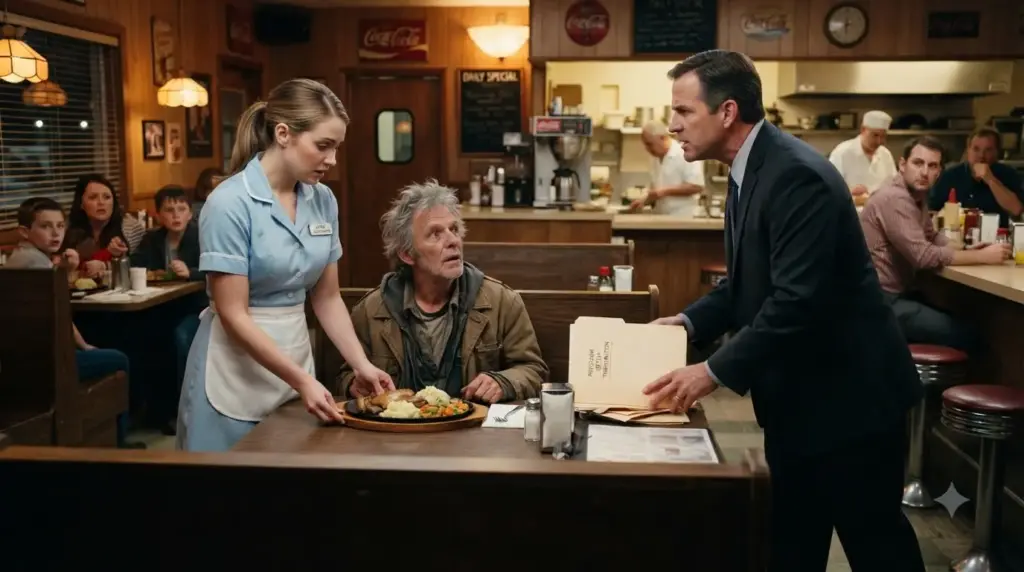
Wasn’t that worth protecting? One Tuesday afternoon in early February, Robert was at his usual table at Maple Street when Charles Mitchell himself walked into Joyce’s cafe. Robert recognized him immediately, but sank lower in his seat, letting his newspaper shield his face. Mitchell looked around with the critical eye of an inspector. He checked the bathroom, examined the menu, ran a finger along a window sill to check for dust.





