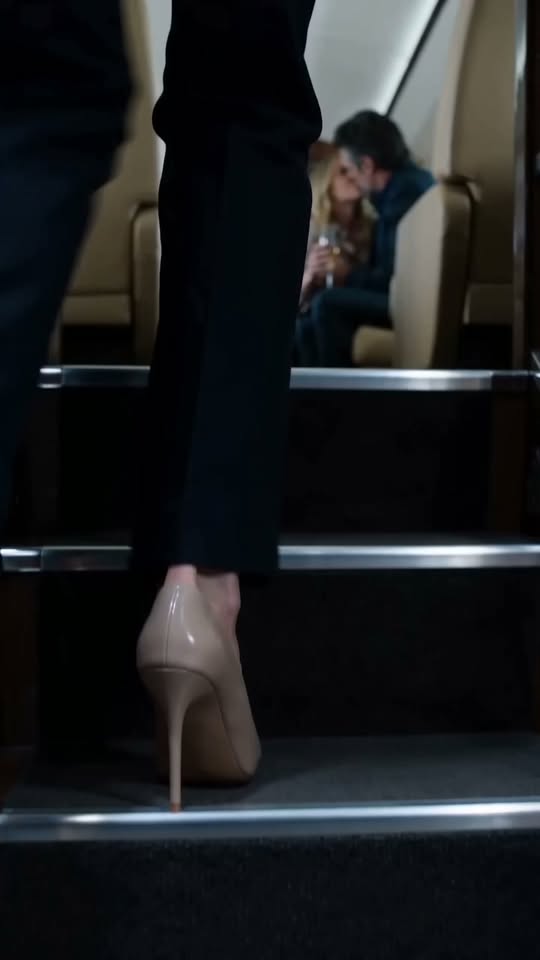
The bottle was still cold when I walked up the airstair.
I had ordered it two days earlier from a shop on Madison, the same one Grant and I used for our tenth anniversary, because I wanted the twenty-fourth to feel like a beginning instead of a habit.
The flight to Nantucket was supposed to be a surprise.
No one at Ashford & Vale knew, not even my assistant, because I had learned years ago that Grant could talk a surprise out of anyone.
The plane is mine.
That detail matters, and I want you to hold on to it, because everything that happened in the next ten minutes came back to that one fact.
That morning I came up the stairs myself, no crew meeting, no phone call ahead, because I have always liked walking onto my own plane without asking permission.
I heard his laugh through the cabin door.
That particular laugh, the short one he uses when he’s performing, when he wants someone to think he is easy and warm.
I stepped through, holding the champagne in both hands.
He was standing at the bar, and he was kissing a woman I had never seen in my life.
Her hair was dark, cut sharp at the jaw, and she had her hand flat on his chest like she had a right to put it there.
She saw me first.
Her hand came off him like the surface had burned her.
Grant turned around.
His face did something I had seen him do in depositions, a quick, practiced reset, and he opened his mouth.
I did not scream.
I have been screamed at enough in my life to know it never gets anything useful.
I set the bottle down on the side table.
I looked at the seats, all of them in my name, and I looked at the two of them, and I said, “The plane is in my name.”
Then I said, “The seats are mine, and so is the bill for the fuel you’re burning to sit in them.”
He started talking.
“Caroline, this is not what it looks like.”
“Don’t,” I said.
“Anything you say right now, I will use later, and I would rather you didn’t hand me the first draft.”
He stopped.
The woman stayed seated.
I appreciated that, actually.
She didn’t try to run past me and make it a chase.
I turned to her and I said, “What’s your name?”
“Erin,” she said.
“Erin,” I said.
“How long?”
She looked at Grant.
He looked at the floor of my plane.
“Almost two years,” she said.
Then she said something I have not been able to put down since.
“He told me the marriage was over years ago.”
She said it quietly, like she was repeating a line she had been taught.
She said Grant told her that he and I had stayed together on paper for the business, that I lived in the New York apartment and he lived his own life, and that the divorce was just paperwork.
I looked at Grant.
He was pale now, the way he gets right before he decides which lie to commit to.
“Did he ever show you paperwork?”
I asked her.
“Did he ever open a folder, or a decree, or anything with a court stamp on it, or did he only tell you?”
Erin did not answer.
That was the whole answer.
I turned to the cockpit door and called to the pilot, who had come out of the flight deck because of the noise.
“Close the door,” I said.
“Take off as scheduled.”
Grant stared at me.
“You’re not throwing me off?” he said.
“No,” I said.
“Not yet.
Erin is going to tell me everything she was told about my own life, and I am going to sit right here and listen.”
He had expected a scene.
He had rehearsed for it, probably, on the drive to the airport.
What he had not rehearsed for was a woman in her own cabin, with her own champagne still cold on the table, saying the worst thing he could hear.
“Sit down, Grant,” I said.
The plane pushed back.





