“I’m ten minutes away from the Birmingham office,” Marcus said, his voice ringing with absolute urgency. “I’m mobilizing our rapid-response civil rights squad right now. Two unmarked Suburbans, eight armed federal agents. We will establish a perimeter around that hospital room and take custody of your family and your witness. Do not go in there alone, Isaiah. Sullivan is unstable, and Vance practically owns the county sheriff’s department.”
“I can’t wait ten minutes, Marcus,” I said, looking through the rain toward the glowing red emergency cross of the hospital visible through the trees. “Sullivan is in that room right now. If he realizes Bell’s partner failed at the rail depot, he’ll execute a cover-up before your tires hit the asphalt.”
“Isaiah, wait for us! If you engage an armed officer inside a municipal facility, it gives them every legal justification to claim self-defense!”
“Just get here,” I said, and disconnected the call.
I turned to Ava. “Take my keys. Lock the doors from the inside. Lie down across the back seat so nobody can see you through the glass. If anyone other than Marcus Hayes and federal agents taps on that window, you blow the horn and don’t stop. The FBI will be on this corner in eight minutes.”
“Please don’t go in there,” Ava begged, tears streaming down her face. “You don’t know what Knox Sullivan is capable of. He killed a boy twelve years ago in a holding cell and called it a suicide. The grand jury never even saw the files.”
“He hasn’t faced someone who knows how to fight back,” I said, slipping my federal credentials into my left hand, pulling my coat tight, and stepping out into the cold downpour.
I jogged through the shadows along the edge of the medical center grounds, avoiding the main emergency room entrance where two marked Bessemer cruisers were now parked with their lights turned off. Instead, I circled around to the east ambulance bay, slipping through the automated service doors just as an EMT team wheeled an empty gurney inside.
The sterile smell of bleach and antiseptic hit me as I navigated the stairwell up to the acute care ward. My heart was pounding a furious, deafening rhythm against my ribs, but my mind was entirely clear, stripped of doubt, calculating every possible legal and physical contingency.
When I reached the second-floor hallway outside Room Twelve, the corridor was eerily empty.
Sergeant Bell was gone. The second officer was gone.
The door to Room Twelve was shut tight. The small rectangular observation window in the door had been covered from the inside with a white sheet of adhesive medical paper.
I approached the door silently, my boots making no sound on the vinyl tile.
From inside the room, muffled voices leaked through the heavy frame.
“…thought you could bury it, didn’t you, old man?” Sullivan’s voice was low, harsh, and grating. “Forty years. You thought because my daddy retired and Vance took the bench, everybody forgot about what was in that furnace on Fourth Avenue. But you couldn’t just pay your forty-five dollars and walk away today, could you? You had to make a scene at the counter. You had to look Vance right in the eye.”
“I didn’t… I didn’t come for Vance,” my father’s voice replied, weak, raspy, and trembling with pain. “I came to pay my citation, Knox. I never said a word to anyone. I kept my promise for forty years. I gave up my teaching career at the academy… I left the county… I gave you everything you wanted.”
“You should have left the state, Clarence,” Sullivan sneered. The sound of leather groaning followed—Sullivan leaning over the bed. “Because Vance remembers. And as long as you’re breathing, you’re a liability to the expansion project. So here’s what’s going to happen. You’re going to sign this statement admitting that you suffered an acute diabetic seizure, fell against the wooden bench, and struck your own head. And your hotshot lawyer son is going to pack his bags and go back to Georgia. If he doesn’t… well, accidents happen on the interstate all the time. Naomi’s a pretty girl. It’d be a shame if her car hydroplaned off the Black Warrior River bridge on her way home.”
“Leave my daughter alone!” Dad cried, his voice cracking with agony.
“Sign the paper, old man,” Sullivan barked.
I didn’t knock. I didn’t announce myself.
I took two steps back, coiled my muscles, and drove the heavy heel of my dress boot straight into the brass door latch with every ounce of momentum and fury in my body.
BANG!
The lock gave way with a deafening splinter of wood and screaming metal. The heavy door crashed inward against the wall, rebounding with a shudder.
Sullivan spun around, his hand dropping instinctively toward the retention snap on his holster.
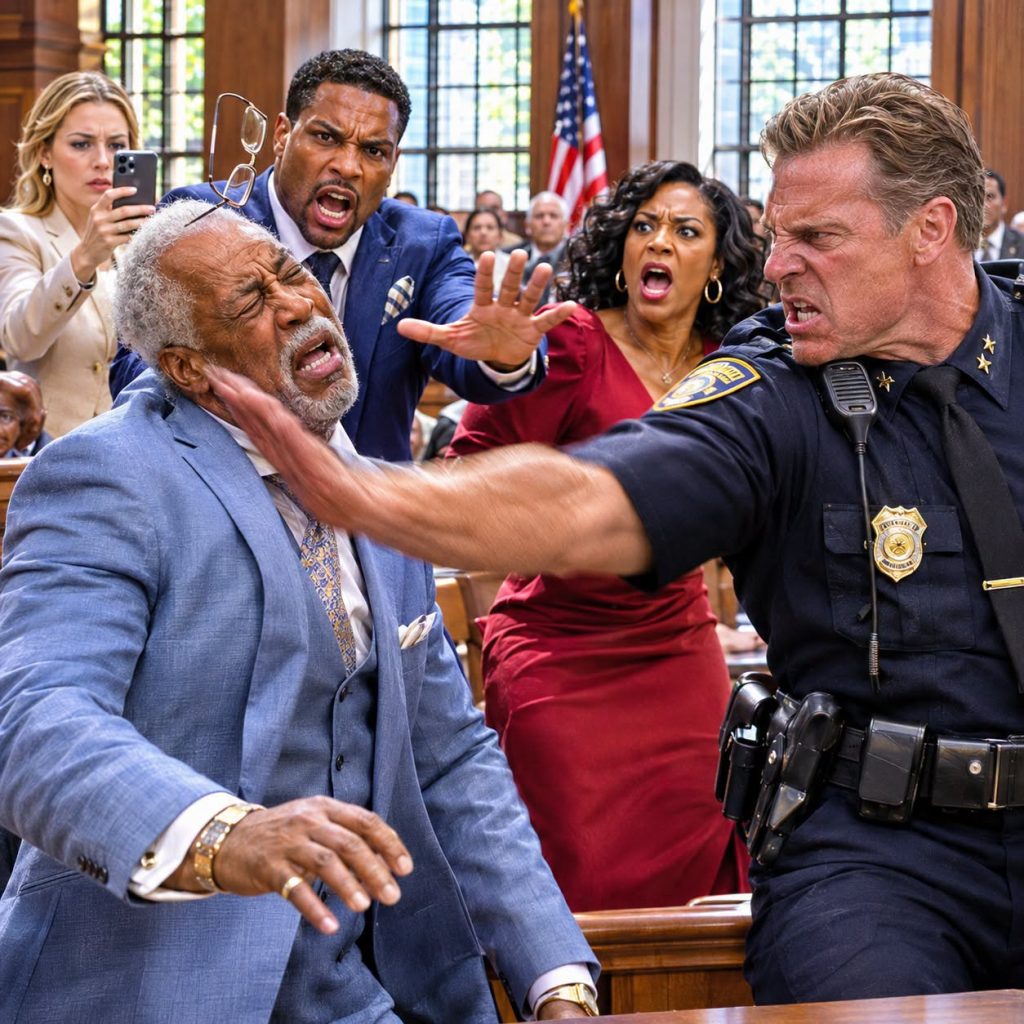
He was standing over my father’s bed, holding a pen and a crumpled document in his left hand. In the corner of the room, Naomi was huddled against the wall, her wrists bound tightly behind her back with white plastic flex-cuffs, a piece of heavy medical tape slapped across her mouth, her eyes wide with terror.
My father was lying flat on the mattress, his face gray as ash, Sullivan’s right forearm pressed firmly across his throat to keep him pinned down.
When Sullivan saw me standing in the shattered doorway, the arrogant smirk on his face vanished, replaced by a sudden, feral flash of pure murderous rage.
“You,” Sullivan snarled, letting go of my father and stepping away from the bed, his massive chest heaving. “You just committed a Class C felony breaking into a secured police crime scene, counselor. I warned you to stay away.”
“Take your hand off your weapon, Sullivan,” I said, my voice dead and completely devoid of fear. I stepped into the room, closing the distance between us until I was barely four feet away from his massive, hulking frame. “You’re done.”





