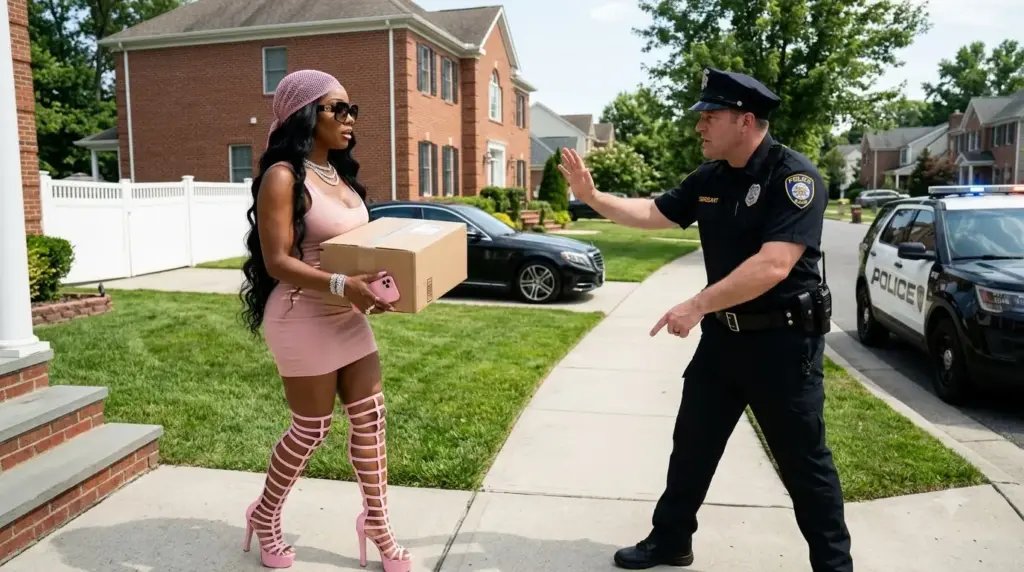
Clients learned quickly that hiring her did not guarantee she would validate their preferred story.
A company hired her once hoping she would prove an employee had fabricated harassment allegations.
She concluded the employee was telling the truth.
Another client hired her to investigate racial discrimination.
She concluded race had not caused the disputed decision.
Both clients were unhappy.
She considered that evidence she was doing the job correctly.
Her rule was simple:
Do not begin by asking who deserves to win.
Begin by asking what happened.
The city’s review project started as a technical assignment.
Complaint processing.
Evidence retention.
Supervisory auditing.
Body-camera activation.
Use-of-force reporting.
The city manager wanted recommendations.
The police union wanted assurances.
The chief wanted money for technology.
Civil-rights advocates wanted independent review.
Everyone already knew what answer they wanted.
She hated that.
During the first briefing, she sat at the end of a long municipal conference table while eleven people explained the department to her.
The police chief spoke first.
“We have approximately four hundred sworn officers.”
She wrote.
“Complaint rate?”
The chief gave the number.
“Sustained rate?”
Another number.
“Appeals?”
The city attorney answered.
“Body-camera activation compliance?”
The deputy chief said:
“Ninety-four percent.”
She looked up.
“What is the denominator?”
The deputy chief paused.
“Excuse me?”
“Eligible recorded events?”
“Yes.”
“How are missed events identified?”
“Supervisor review.”
“Random?”
“Mostly.”
“Mostly isn’t a method.”
The deputy chief did not like her.
That was fine.
She continued.
“What happens if an officer generates multiple complaints that individually fall below discipline?”
The room became quieter.
The chief answered:
“Supervisors monitor patterns.”
“How?”
“Performance review.”
“What fields?”
Nobody answered immediately.
She wrote something.
The city attorney said:
“Why?”
“Because your complaint system treats each allegation like a separate weather event.”
She looked around.
“I want to know whether anyone is watching climate.”
That sentence entered the final report months later.
But first they needed data.
Her team requested six years of complaints.
Names removed initially.
Dates.
Types.
Disposition.
Supervisors.
Body-camera status.
Use of force.
Searches.
Arrests.
Demographics where legally retained.
The first analysis produced nothing dramatic.
Most officers had zero or one complaint.
A smaller group had several.
Expected.
Officers working busier areas generated more.
Then one analyst noticed something.
A cluster.
Same badge number.
Not the highest complaint total.
That belonged to a traffic officer who wrote enormous numbers of tickets.
But the pattern was unusual.
The same sergeant repeatedly received allegations involving:
unnecessary escalation,
recording interference,
failure to explain detention,
disrespect,
questioning property ownership,
and physical control after verbal disagreement.
The Black review counsel looked at the spreadsheet.
“What else?”
Her analyst said:
“High search volume.”
“Yield?”
“Average.”
“Force?”
“Above unit average, below top ten percent.”
“Body camera?”
“Activation gaps higher than peers.”
“Discipline?”
“Minimal.”
“Why?”
“Most individual complaints unsustained.”
She leaned back.
The pattern was not proof.
It was a question.
She asked for every relevant file.
The first night she reviewed footage until 2:00 a.m.
Teenager in rain.
Teacher at school.
Homeowner on porch.
Delivery driver.
Then other incidents.
Some complaints were weak.
One man claimed the sergeant shoved him.
Video showed no shove.
One woman accused him of racial slurs.
Audio disproved it.
Those cases mattered because bad complaints could not simply be ignored when constructing a pattern.
She marked them clearly.
Unsupported.
Then she found stronger concerns.
Not spectacular misconduct.
Behavior.
The sergeant moved closer when questioned.
His voice became shorter.
He interpreted cameras as hostility.
He frequently used:
“Stop arguing.”
“Don’t make this harder.”
“You don’t tell me how this works.”
“Do what I said.”
None illegal by themselves.
But repeated.
A style.
The review counsel watched a stop where a driver asked:
“Why do you need me out of the car?”
The sergeant replied:
“Because I said so.”
Legally, officers can sometimes order drivers out.
But that was not the point.
He had a lawful reason available.
Traffic investigation.
Safety.
Instead he chose personal authority.
Because I said so.
She wrote in the margin:
Authority framed as personal, not institutional.
The next file showed the same.
A homeowner asked whether he needed to provide identification in his own yard.
The sergeant said:
“If you’re talking to me, yes.”
Not necessarily legally accurate.
The homeowner complied.
Nothing further.
The review counsel wrote:
Questions treated as challenges to hierarchy.
The pattern became stronger.
Still not enough for formal accusation.
So she interviewed officers who worked with him.
Most were cautious.
“He’s old school.”
“He gets results.”
“He doesn’t like people playing games.”
“He’s intense.”
“What does old school mean?”
Silence.
One officer eventually said:
“He wants immediate compliance.”
“Doesn’t every officer?”
“But with him, the compliance itself becomes the goal.”
That mattered.
Another officer said:
“If you tell him to back off, he thinks you’re siding with the citizen.”
Another:
“I’ve seen him turn a warning into a whole thing because somebody rolled their eyes.”
Another:
“He’s brave.”
That was interesting.
“Explain.”
“He’ll go into places most people wait for backup.”
“Domestic calls.”
“Fights.”
“He’s good when things are actually dangerous.”
“And when they’re not?”
The officer looked uncomfortable.
“Sometimes he creates danger.”
There.
The review counsel stopped writing.
“Say that again.”
The officer swallowed.
“When someone challenges him verbally, he escalates like it’s physical.”
The city now had enough to open a focused supervisory review.
Not a criminal case.
Not even formal discipline yet.
A management intervention.
The chief hesitated.
“He’s been here sixteen years.”
“That isn’t evidence for or against the behavior.”
“He has commendations.”
“Same answer.”
“He’ll say you’re targeting him.”
“Probably.”
The police union objected before the review even began.
Pattern analysis could become character assassination.
The counsel agreed with the risk.
That was why she insisted on including exculpatory material.
The sergeant’s commendations.
Cases where he de-escalated.
False complaints.
Positive evaluations.
A real review included contradictory evidence.
The chief finally authorized a formal professional-standards inquiry.
The sergeant was notified.
He reacted badly.
Not violently.
Defensively.
He demanded to know who started it.
Was there a complainant?





