Take the department’s apology, accept a settlement, move on. Your promotion to major general is coming up for review. It would be unfortunate if external controversies complicated that process. The threat is polite but unmistakable.
Drop it or risk your career. Olivia thanks him and hangs up. She sits at her kitchen table. The house is quiet.
Emma’s at school. The voicemail threat is on her phone. The smear campaign is on television. Her career is hostage.
Her daughter is harassed. This is how they win. Not by being right, but by making the cost of fighting too high. By isolating you.
By making you choose between justice and everything else you value. Olivia thinks about giving up. It would be easy. Just let it go.
Van gets his vacation. She keeps her stars. Emma stops getting bullied. And life returns to normal.
She almost does it. Her hand hovers over her laptop, ready to email Sarah, saying she’s withdrawing cooperation. Then Emma comes home early from school. Emma’s face is blotchy from crying.
Her backpack hits the floor. She stands in the doorway like she’s trying to decide whether to fall apart or hold it together. What happened? Olivia asks, though she already knows.
Mr. Patterson, my history teacher. He showed the news clip in class. The union guy saying you probably did something we didn’t see on camera.
Then he asked if anyone had thoughts. Emma laughs bitter. Brandon’s dad is a cop. He said, “You’re making it harder for good officers to do their jobs.
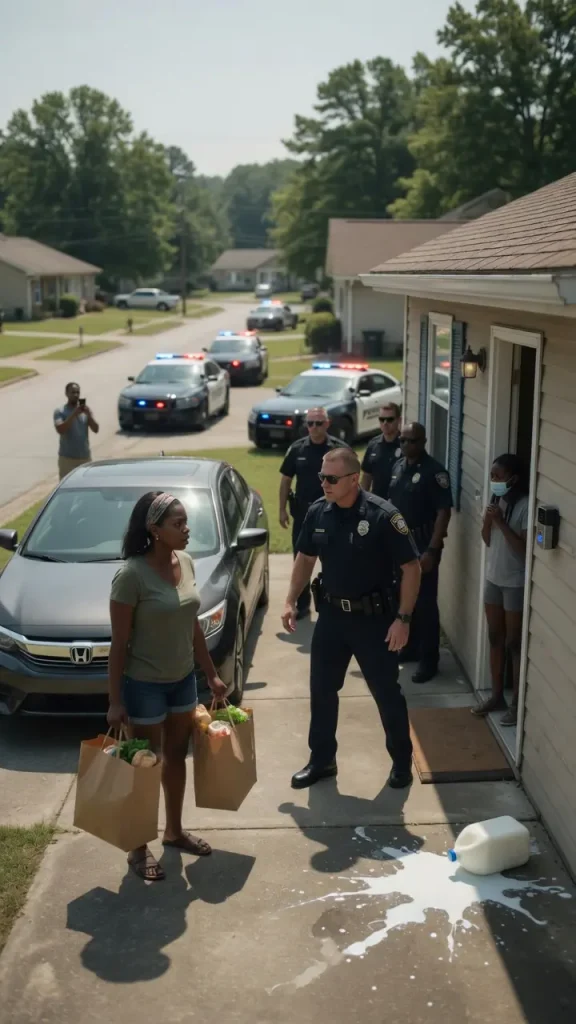
Said people like you are why cops get killed. People like me. He didn’t say black. He didn’t have to. ” Emma sits at the kitchen table where Olivia’s been drafting her withdrawal email. Mr. Patterson didn’t stop him, just nodded like Brandon made a good point, like it was legitimate debate whether my mom deserved to be tackled in our driveway. Olivia closes her laptop.
The cursor’s been blinking on that email for an hour. Dear Miss Ramsay, after careful consideration, I have decided to withdraw my cooperation. I’m sorry, baby. Why are you sorry?
Emma looks up, eyes red but sharp. You didn’t do anything wrong. You came home with groceries. That’s it.
That’s the whole crime. “I know, but” but what? But we should just accept it. But we should let them lie about you and threaten us?
Emma’s voice rises. Mom, you always said follow the rules and you’ll be fine. I believed that and they still put you on the ground. The words hit like physical force.
Olivia hears her own voice in her daughter’s mouth. All those years of teaching Emma to respect authority, to comply with police, to believe the system works. All those lessons now ashes. If you stop now, Emma says quietly.
What do I tell myself next time? that the rules don’t work or that you have to be a general for them to matter. Olivia doesn’t have an answer. When did you get so smart? I have a good teacher.
Emma manages a small smile. “So, what are we doing? Fighting or giving up? ” Olivia looks at her daughter and sees herself at 22 standing in the military entrance processing station with right hand raised and her father’s words in her head.
He died when she was 19. Heart attack at the mechanic shop where he worked 60-hour weeks without complaint. But before he died, he told her something. Summer evening on the porch.
Olivia complaining about unfair treatment. “Do the right thing even when it costs you,” he said. “Especially when it costs you. ” That’s the only time it matters.
She joined the army three years later, took the oath at MEPS with 40 other recruits. I will support and defend the Constitution of the United States against all enemies, foreign and domestic. That oath didn’t have an expiration date. Didn’t say unless it’s inconvenient or unless they threaten your career or unless your daughter gets harassed.
Olivia deletes the email, types a new one. “Dear Miss Ramsay, I’m ready to move forward. ” “Tell me what you need. ” She clicks send.
Emma watches. “So, we’re fighting. ” “We’re fighting. ” “Good. ” Emma picks up her backpack. I’m going to do homework. Let me know if you need me to testify or whatever. She heads upstairs like they just decided what to have for dinner instead of whether to go to war.
Olivia sits alone in the kitchen and feels something she hasn’t felt in days. Not hope exactly, not confidence, just clarity. The kind that comes when you stop looking for the easy way out and accept the hard way forward. Her phone buzzes.
Text from Sarah Ramsay. Just got your email. Thank you. We’re going to win this.
Olivia doesn’t know if that’s true, but she knows they’re going to try. Tuesday morning, Mr. Garrison starts a petition on change.org. His grandson helps him set it up.
The title, Justice for General Hawkins, and accountability for Ridgemont Police. He includes links to Sarah’s articles, Ring doorbell timestamps, CAD log quotes, no inflammatory language. The facts are inflammatory enough. “This isn’t about one incident,” he writes.
This is about a pattern of abuse unchecked for years. If a decorated general can be treated this way in broad daylight, what happens to people without cameras, without visibility, without Pentagon backing? Within 6 hours, 800 signatures. Within 2four hours, 3,000.
By Thursday evening, 5,200 and climbing. The comment section becomes testimony. A black man two streets over describes being pulled over five times in eight months. Always at dusk, always asked where he’s going and whether the car is really his.





