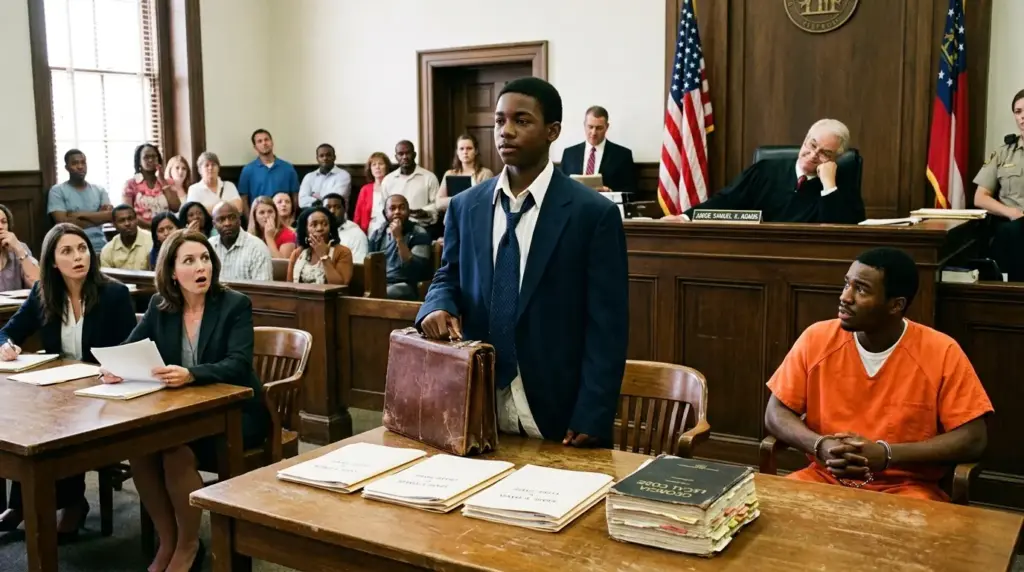
“This isn’t about revenge,” Elijah said. “It’s about accountability.” He turned back toward the gallery. “How many people in this room know someone who’s been locked up for something they didn’t do?”

Hands went up quietly, one by one. Tolbert’s jaw clenched.

“You asked me earlier if I knew what I was doing,” Elijah said. “I do. I know exactly what I’m doing. I’m standing up for my brother because no one else would—not even you.”

The words hung heavy. Not loud, but heavy.

Tolbert adjusted his robe, looked down, then finally said, “The court will take a short recess. I’ll issue a ruling within the hour. Gavel down.”

He stood and walked through the side door, but not before shooting one last look at Elijah. This time, no smirk, no sarcasm—just a face that looked like it had been cracked open.

Elijah sat down slowly. He didn’t speak.

Isaiah leaned forward behind him and whispered, “You all right?”

Elijah didn’t look back. “I think I finally made him listen.”

From the gallery, someone muttered, “I don’t know who raised that boy, but they sure as hell did something right.”

Outside, clouds started to roll in. The light dimmed through the old courthouse windows, casting soft shadows across the room. But Elijah—he looked brighter than ever. Still, the verdict wasn’t in yet, and one sentence from the judge could still tear it all down.

An hour felt like forever. The courtroom buzz had faded into a strange kind of quiet: not tense, not relaxed either, just waiting. Elijah sat alone, elbows on the table, hands folded, eyes focused on the door Judge Tolbert had disappeared through. He hadn’t moved much since the recess: didn’t check his phone, didn’t fidget, just waited.

Across the aisle, Isaiah sat taller now. The chains around his wrists had been removed by order of the court—a small gesture, but it meant something.

At 2:03 p.m., the judge returned, robe dragging just slightly, face unreadable. He sat, shuffled some papers, then looked up.

“This hearing is now back in session. My ruling will be delivered orally and entered into the record.”

The air in the room thinned.

“After reviewing the evidence presented, some of which was admittedly unexpected, it is the opinion of this court that the prosecution has not demonstrated sufficient cause to proceed to trial.”

Gasps. One person clapped and was immediately shushed.

Tolbert continued, voice flatter than usual. “The charges against Isaiah Carrington are hereby dismissed with prejudice.”

You could have heard a pin drop. Then it all hit at once: shoulders dropping, murmurs rising, the sound of someone crying softly in the back row. Isaiah looked at Elijah, just looked. His mouth opened, then closed.

Tolbert tapped the gavel once more. “Mr. Carrington is free to go.”

Lindholm didn’t even stand. She sat stiffly, biting the inside of her cheek. Officer Haskins got up and walked out without saying a word.

And Elijah—he didn’t jump up. He didn’t pump his fist. He just stood slowly, gathered his notes, and placed everything back into the battered briefcase like it was any other school day.

Tolbert remained at the bench, watching. Then he did something no one expected. He cleared his throat.

“Mr. Carrington, would you approach the bench?”

Elijah walked forward. The courtroom held its breath.

Tolbert leaned in slightly, his voice low enough for only a few to hear. “You made me look in a mirror I’ve been avoiding for a long time.”

Elijah didn’t smile. “That wasn’t the point, sir. I just wanted my brother back.”

Tolbert nodded. “Well, you got him. And you might have changed more than you realize.” He paused like he wanted to say more, but didn’t know how. Then he added, “Don’t stop.”

Elijah stepped back, said nothing.

As the judge stood and disappeared again behind the wood-paneled door, people started clapping—for real this time. Not loud, but with weight. The kind of clapping that means something.

A man in the back shouted, “This boy just made history in Camilla!”

Elijah walked over to Isaiah, who was already being uncuffed and handed back his hoodie and wallet. They stood there face to face, no words at first.

Then Isaiah shook his head, blinking back heat in his eyes. “You did the impossible.”

Elijah shrugged, fighting a smile. “Wasn’t impossible, just ignored.”

They walked out of the courtroom side by side, the crowd parting like water. Some people nodded; some just stared. One older woman whispered, “Lord, let that boy go far.”

Outside, the sun had returned. Across the street, a local reporter was setting up a mic, but Elijah kept walking past the courthouse steps, past the news van, down the cracked sidewalk where his bike still leaned against the rack.

Isaiah laughed softly. “You really rode your bike to court?”

“Gas money ain’t free,” Elijah said, grinning.

They both laughed. But there was one more person Elijah wanted to see: someone who never set foot in the courtroom, but made all this possible.

Elijah’s shoes crunched softly over gravel as he crossed the back parking lot behind the courthouse. His suit jacket swung open in the wind, tie a little looser now. He wasn’t in a rush; he just needed to get there.

A small brick building sat on the corner of Broad and Chestnut: faded sign, rusted mailbox. That was the Camilla Public Library. He pushed the door open and stepped into the smell of old pages and worn carpet.




