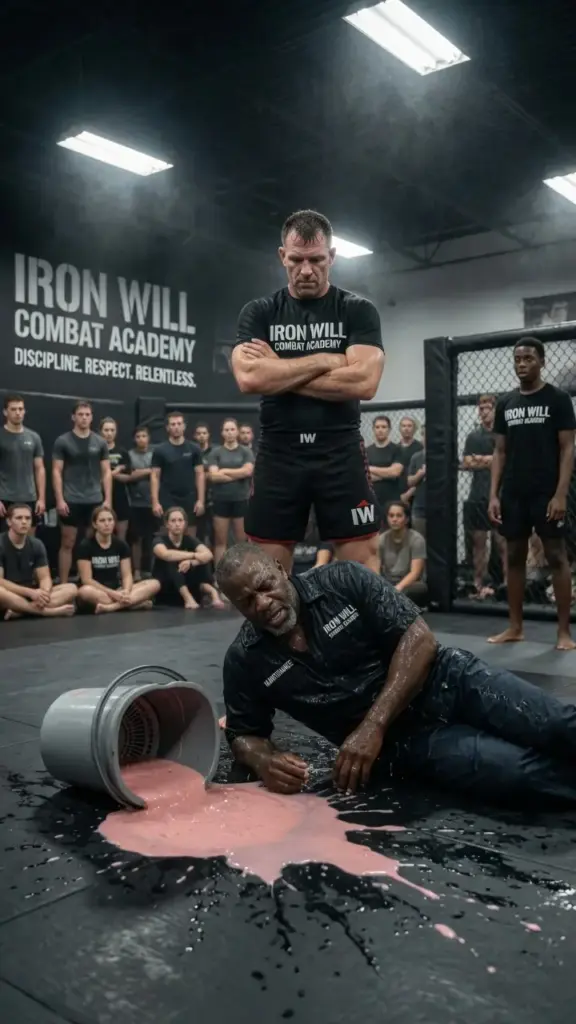
The night ended not with violence but with conversation. James, Brandon, Sarah, the coaches. They talked for two hours after everyone left, about new policies, about trauma-informed training, about what strength really meant.
Brandon shared about his father, about learning that love and pain were the same thing, about never being good enough unless he was hurting someone.
James shared about Tommy, about Afghanistan, about thirteen years of being invisible because being seen meant being Ghost again.
“But tonight,” James said, “I realized Tommy didn’t mean for me to disappear. He meant for me to show kids that someone dangerous could choose to be gentle. That someone powerful could choose to serve. That someone skilled could choose patience. Being invisible wasn’t keeping my promise. It was hiding from it.”
Sarah wiped her eyes.
“What happens now?”
James looked at the banner still hanging above the ring.
“Now I keep cleaning floors because someone needs to teach these kids that work matters, consistency matters, showing up matters, not just in the ring, in life. And I start over,” Brandon added. “Find a therapist, deal with my stuff, learn to coach without breaking kids.”
“We all start over,” Sarah said. “New policies, better training, real accountability.”
The clock read past midnight when they finally left. James was the last one out. He stood in the empty gym, looked at Tommy’s banner.
“How’d I do, brother?”
The gym was silent, but James felt something. Peace, maybe. For the first time in thirteen years, he’d stopped being invisible. Not by being Ghost. By being James.
The video footage from that night went viral within forty-eight hours. Someone’s phone footage titled “Janitor shows MMA coach what real strength looks like.” Five million views in three days. Ten million by week’s end.
The comments exploded.
“This is what masculinity should look like.” “Notice he never threw a punch to hurt. That’s mastery.” “The real fight was saving Brandon, not beating him.”
News outlets picked it up. Local first, then regional. A national morning show requested an interview. James declined.
“I’m not a hero,” he told Sarah. “I just did what needed doing.”
But the attention had consequences. Good ones.
Two weeks after the fight, Sarah called a staff meeting. All coaches, all instructors, James in the back.
“What happened can never happen again,” Sarah said. “We’re implementing new policies. Anti-bullying protocols. Mandatory trauma-informed coaching training.” She looked at James. “And James has agreed to consult on our youth program. He won’t coach directly yet, but he’ll help ensure we’re creating the kind of environment Tommy believed in.”
The coaches nodded. Most had seen the video. They understood.
Three weeks after the fight, Brandon walked into a coffee shop downtown. He wore work clothes, paint-stained jeans, dusty boots. Construction work. Paid bills while he figured things out.
Darius sat at a corner table doing homework. Brandon almost left. Almost walked right back out. But Darius looked up, made eye contact, waved.
Brandon approached slowly.
“Hey. Can I sit?”
“Sure.”
Awkward silence. Then Brandon said, “I’m in therapy dealing with stuff about my dad. I wanted you to know I’m sorry. Really sorry.”
Darius closed his textbook.
“James said hurt people hurt people. You were hurting. That’s not an excuse.”
“No,” Darius agreed. “But it’s a reason. And you stopped. You’re trying. That counts.”
Brandon’s eyes welled up.
“James saved me that night. Not from losing a fight. From becoming my father.”
They talked for twenty minutes. Not friends yet. But not enemies. Just two people trying to figure out who they wanted to be.
Two months after the fight, a young Marine in uniform walked into Iron Will. Visiting family. Heard about the viral video. Wanted to see the gym.
James was in the janitor closet when the Marine walked past. The Marine stopped. Stared.
“Ghost Turner? Is that you?”
James felt his stomach drop.
“I don’t go by that anymore.”
“Sir, you taught my combatives course at Pendleton in 2013.” The Marine’s face lit up. “You’re a legend. What are you doing as a janitor?”
“I found a different mission,” James said.
“Sir, you changed my life.” The Marine’s enthusiasm was genuine. “You showed me violence isn’t strength. Control is. I use what you taught me every day.”
James felt something shift.
“Then you learned what I couldn’t teach myself for a long time. Thank you.”
The Marine left. James sat in his closet for a long moment.
Maybe Tommy’s legacy was bigger than either of them had known.
That afternoon, James watched Darius sparring with one of the new coaches. Sarah had hired a veteran, former Army, trained in trauma-informed methods, the kind of coach Tommy would have been.
A younger kid, maybe twelve, got frustrated during drills, threw his hand wraps down. Darius stopped his session, walked over.
“Hey, that’s not how we do things here,” Darius said gently.
“What do you know?” The kid was defensive.
“I know anger feels like strength, but it’s not.” Darius crouched to the kid’s level. “Real strength is choosing something different. Someone taught me that. Want me to show you?”
The kid’s defensiveness cracked.
“Okay.”
James watched from his corner, mop in hand. Watched Darius become the person someone had been for him. Watched the cycle of hurt stop. Watched a new cycle begin.
He touched the dog tags under his shirt.
“We did it, brother. Not the way either of us expected, but we did it.”
His phone buzzed. Sarah texted.
“Brandon asked if he could volunteer. Help with equipment. Be around kids in a healthy way. Thoughts?”
James typed back.
“Everyone deserves a chance to be better. Even coaches.”
That evening, as James mopped floors one more time, he heard laughter. Darius and the younger kid practicing. The new coach giving encouraging feedback. The sound of people learning without fear.
The gym radio played quietly. Same station as always. James hummed along.
Someone knocked on the supply closet. Brandon stood there looking nervous.





