A cold gust rattled the dry oak leaves along the fence line, stinging my eyes until a single hot tear spilled down my cheek. I wiped it impatiently with the cuff of my sweater.
“Do you know what hurt worse than the kiss, Daniel?” My voice scraped over gravel I’d held down for eleven days. “In that August text, you told her I’d just pull out a spreadsheet and a five-year contingency plan. Do you know why I make spreadsheets when things go wrong? Because when my dad lost his business when I was fourteen and Lauren was eleven, nobody had a plan, and I watched my mother cry over grocery receipts for two years! Every spreadsheet I ever made for us wasn’t me keeping score on you—it was me trying to build a fortress so nothing could ever hurt us!”
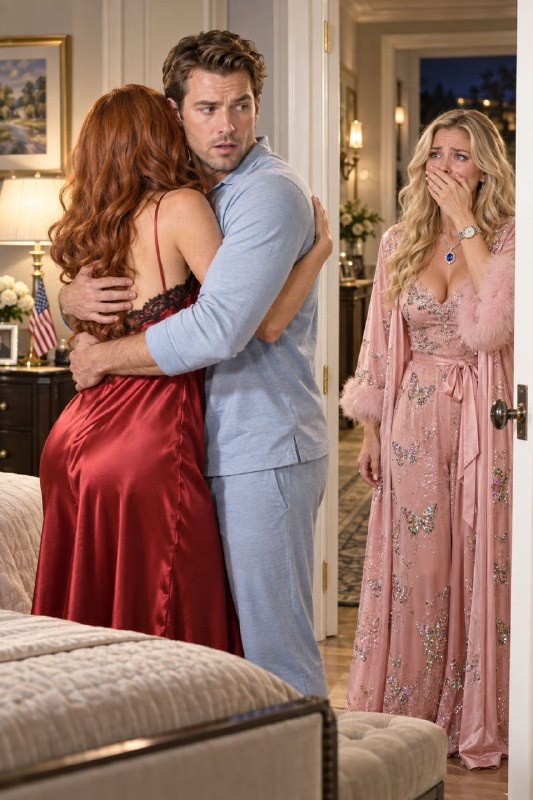
Daniel’s face crumpled—not the panicked tears of getting caught eleven nights ago, but the quiet, devastating comprehension of a man realizing he had mistaken his wife’s armor for coldness while handing the keys to the gate to someone else.
“God, Clara,” he whispered, bowing his head over his knees. “I turned the exact way you love me into an excuse to shut you out. You don’t owe me forgiveness tonight. You don’t owe me forgiveness next month. All I’m asking—if there is even one percent of you left that still wants to see who we can be without secrets—is let me start from zero. Couples therapy on Friday at four; I already put a hold on Dr. Aris’s calendar in case you say yes, and if you say no, I’ll cancel it without a word. If you want to sell this house because the kitchen feels ruined to you, we’ll put a sign in the yard tomorrow and rent a two-bedroom apartment while we rebuild.”
I looked back out at the yard. The last sliver of burnt orange had vanished below the treeline, leaving the sky a vast, deep indigo, clear and cold and honest.
In books and movies, people either throw their wedding rings into the river in magnificent, righteous triumph, or they fall weeping into each other’s arms on the porch steps while music swells and five months of erosion magically vanish by morning. Real marriage—five years of tangled roots, shared history, bone-deep hurt, and imperfect people—rarely fits into clean melodrama.
Lauren wouldn’t be sitting at my Thanksgiving table next week. It might be years before I could sit across from my sister at Christmas without seeing the ghost of her hand sliding under my husband’s collar, and even if we eventually stitched together a polite truce for our parents’ sake, the blind, childhood trust of sisterhood was gone forever. That grief belonged in its own box, and I would carry it for a long time.
And Daniel? Looking at him shivering slightly in his thin sweater on the far end of the step, stripped of his pride, having burned down his secret refuge with his own hands in front of my father just to prove he wanted to stand in the daylight again—I didn’t feel the effortless, unblemished trust I had woken up with on the morning of November 9th. That marriage was dead. You cannot un-ring a bell, and you cannot un-read midnight messages sent from your own marriage bed.
Yet beneath the scar tissue forming across my chest, something fierce, stubborn, and undeniably alive refused to let Lauren’s loneliness and Daniel’s cowardice write the final sentence of my life without my consent. If a second marriage was ever going to be built out of the rubble of the first, it would be built on my terms, in blinding daylight, with every door in the house wide open.
Slowly, I set my empty teacup down beside my boot. I reached across the cold cedar planks between us, picked up the manila folder—leaving his phone untouched on the wood, because I refused to become his jailer—and laid the folder across my lap.
“I have a client call until three-thirty on Friday,” I said quietly to the dark yard. “If Dr. Aris’s office is downtown, I can make four o’clock.”
Beside me, Daniel let out a shaky, fractured breath that sounded like a man surfacing from deep water just before his lungs gave out. He didn’t crowd me. He didn’t try to kiss my cheek or rush an ending he hadn’t earned yet. He simply turned his palm upward on the rough wood halfway between us—open, unhidden, waiting in the cold without moving an inch closer.
For a long moment, I looked down at the pale band of platinum gleaming faintly in the porch light. Then, deliberately, I slid my chilled fingers two inches across the cedar until the side of my little finger brushed his knuckles—just a fraction of contact, fragile and conditional, before I stood up, opened the back door, and stepped back into my house to see what could still be saved.