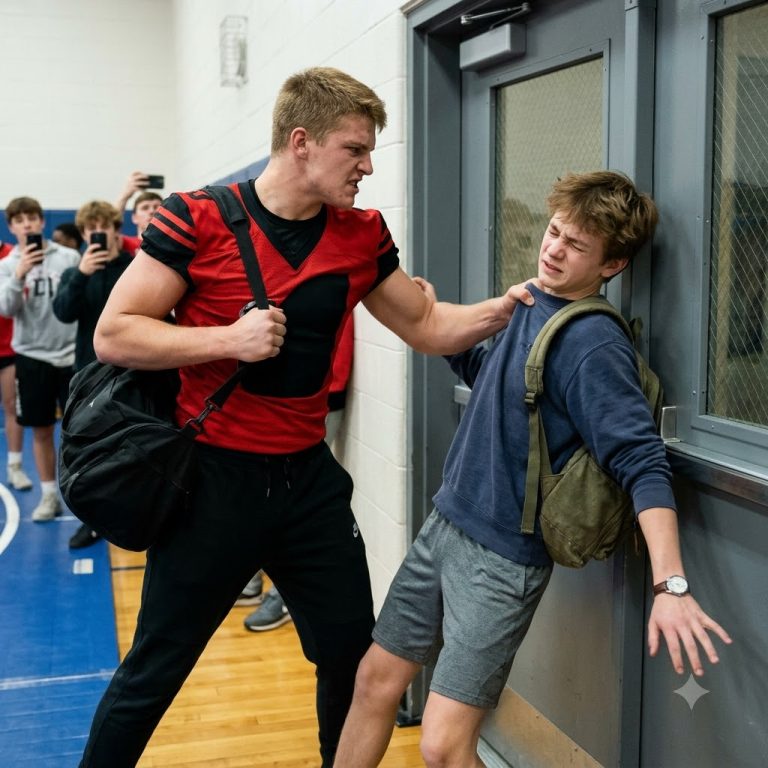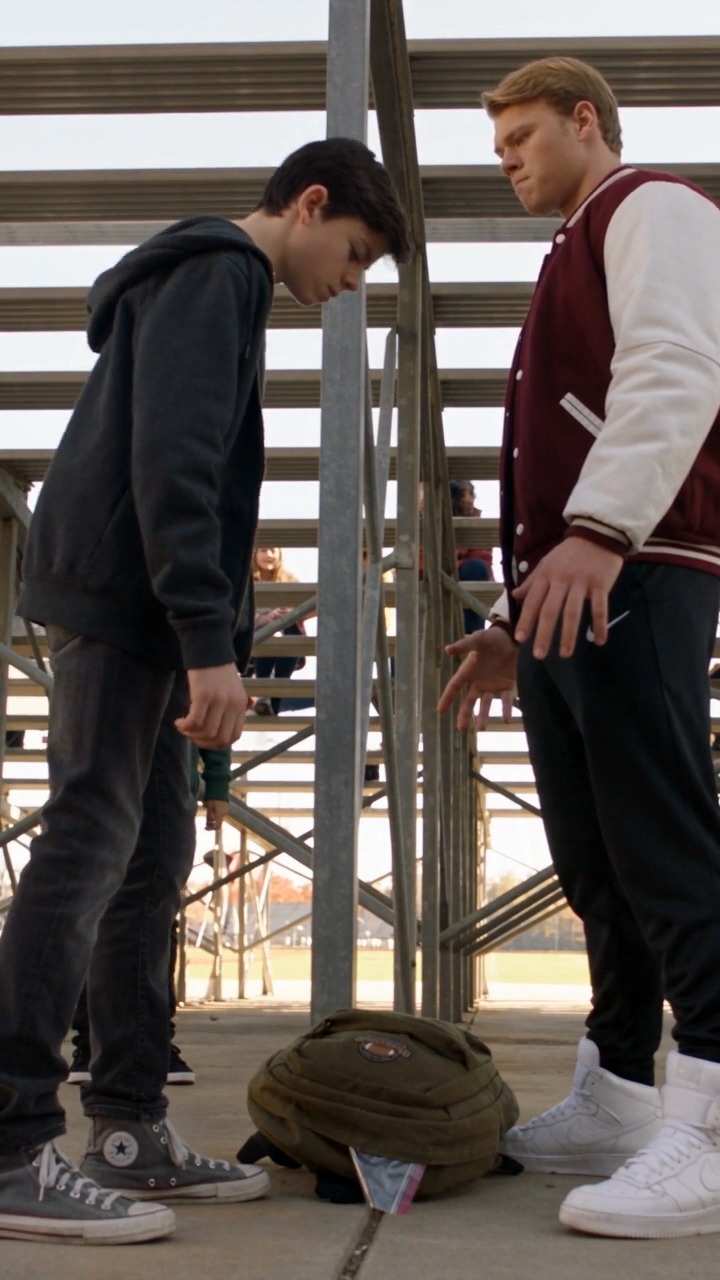
Trent Maddox had a fistful of my hoodie when he told me to get on my knees.
The fabric tightened against my throat. Behind me, the bottom row of metal bleachers rattled from where he’d pushed me into it. Six wrestlers occupied the locker-room doors, shoulder to shoulder, while students along the seats held up their phones. A few laughed like they’d bought tickets to something. The rest watched with an expression I couldn’t read.
“Get on your knees, scholarship boy!” Trent said.
His sneakers were bright enough to reflect the gym lights. Mine had a split in the gray rubber near the left toe. I knew he had noticed, because noticing things like that was practically his hobby.
I looked past his shoulder to Coach Voss. He sat by the equipment box on the south sideline, thirty feet away, holding a black phone in his right hand. I could see his face tilted toward it. I couldn’t see the screen. He had heard the bleachers crash; everybody had. He didn’t stand.
“Let go,” I said.
Trent turned his head to enjoy the reaction of his teammates. His grip relaxed, only a fraction. I stepped backward and slipped out of it.
There was open hardwood toward the public gym entrance on the west wall. Not much, but enough room to breathe. I planted my feet, brought them together, and bowed once. Not deeply. Not theatrically. The small bow my grandfather expected before every practice at the recreation center.
The noise from the bleachers grew louder.
“What was that supposed to be?” Trent demanded.
“I don’t want to fight.”
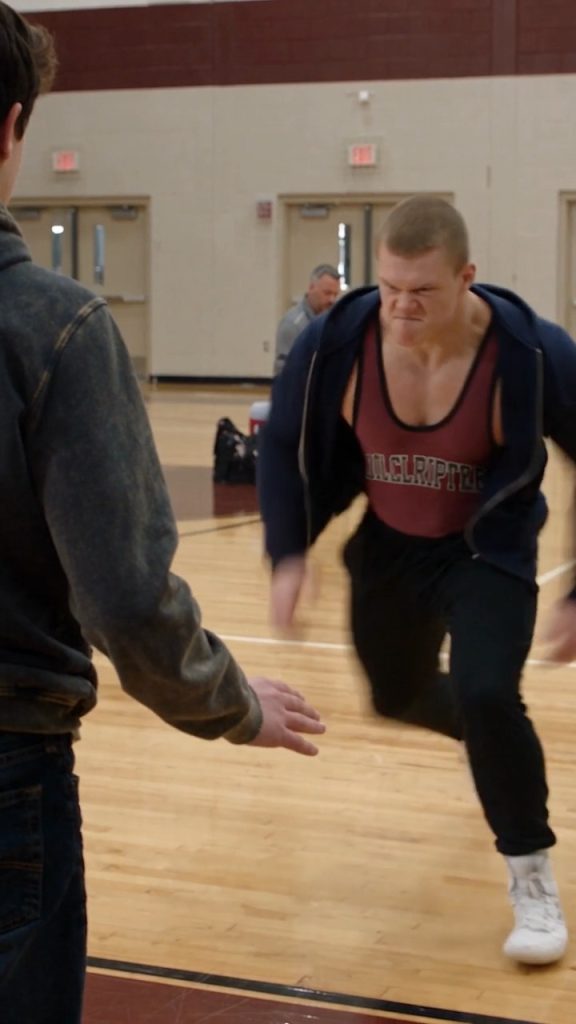
He came at me so quickly I barely completed the sentence. I moved sideways. Trent rushed through the space where I’d been standing and stumbled, catching himself before he fell. The sound of his shoes scraping the floor bounced off the high ceiling.
A part of me wanted to run while his back was turned. Another part counted the distance to the west doors, watched the students on the bleachers, and knew any move I made would look different through half a dozen tiny cameras. I’d learned that being innocent didn’t guarantee people would agree on what they’d seen.
Trent swung around. His face had turned a furious red. His knees bent, his weight pitched forward. He was about to charge again.
I glanced at Voss. Still seated. Still looking at his phone.
Then Trent rushed.
He caught my hoodie sleeve as I shifted away. For an instant I felt that same terrible pull toward the bleachers, and every instruction Grandpa had ever given me competed in my head. Keep your balance. Don’t meet strength with strength. Find a way out.
I turned with the pull rather than yanking straight back, kept my feet under me, and freed my arm. It wasn’t an impressive move. It was a clumsy, frightened version of something I’d practiced a thousand times. Trent was already committed to coming forward. Without my sleeve to hold, he lost his balance and dropped to one knee on the hardwood.
The gym went strangely quiet.
I could have said something. The words were there: Now who’s kneeling? It was exactly what the crowd expected. I swallowed them.
Trent pushed himself upright. I backed toward the public doors, palms open and chest hurting from the blow against the bleachers.
“I want to leave,” I said loudly enough for the room to hear. “Please let me leave.”
Only then did Coach Voss stand.
“That’s enough,” he called. “Both of you.”
Both of us. As if we’d agreed on a contest and he was stopping it halfway through.
Trent pointed at me. “He attacked me!”
“I didn’t.”
Voss walked toward us, the phone still in his hand. His gray polo was marked with the Briarwood crest, the same crest on the letter that had arrived last spring offering me a scholarship. I looked for some sign that he understood what had happened. His eyes went first to Trent, then to my stretched sleeve.
“Go to the office, Reyes,” he said. “This is a fight, and it needs to be reported.”
“Can I get my notebook?” I asked. It was still on the east bleachers. I’d come back to the gym for that notebook and no other reason.
“Later. Go.”
I went. Walking, not running, because running felt like admitting something, though I couldn’t have said what. Behind me a student said, “Did you see him make Trent kneel?” Someone else laughed. I kept my eyes on the doors until I was through them.
In the corridor, the ordinary sounds of Briarwood continued: a cart squeaking along the far hallway, a door closing, a teacher saying good afternoon to somebody. I stood against the wall and discovered I was shaking so hard I couldn’t make my phone recognize my thumb.
I used my passcode. Then I called Mom.
She answered over the mechanical hum of the hospital laundry facility. “Nolan? Is everything okay?”
The question nearly undid me. I had prepared a dozen sentences that sounded reasonable. What came out was, “Trent tried to hurt me in the gym.”
The hum seemed to fade as she stepped somewhere quieter. “Where are you now?”
“Outside the gym. Coach sent me to the office.”
“Are you hurt?”
“My back hit the bleachers. I can walk. I’m okay.”
“Okay is not a medical report,” she said, gently but firmly. “Tell the office you’re hurt and ask them to check you. I’m coming.”
I could hear the effort she made to keep her voice steady. She had already used time off for the meeting Briarwood never quite arranged. She couldn’t afford to leave work whenever a rich kid decided to make my day miserable. And yet she was coming.
That was what frightened me most: not just what Trent might do next, but how easily he could make the people I loved pay for it.