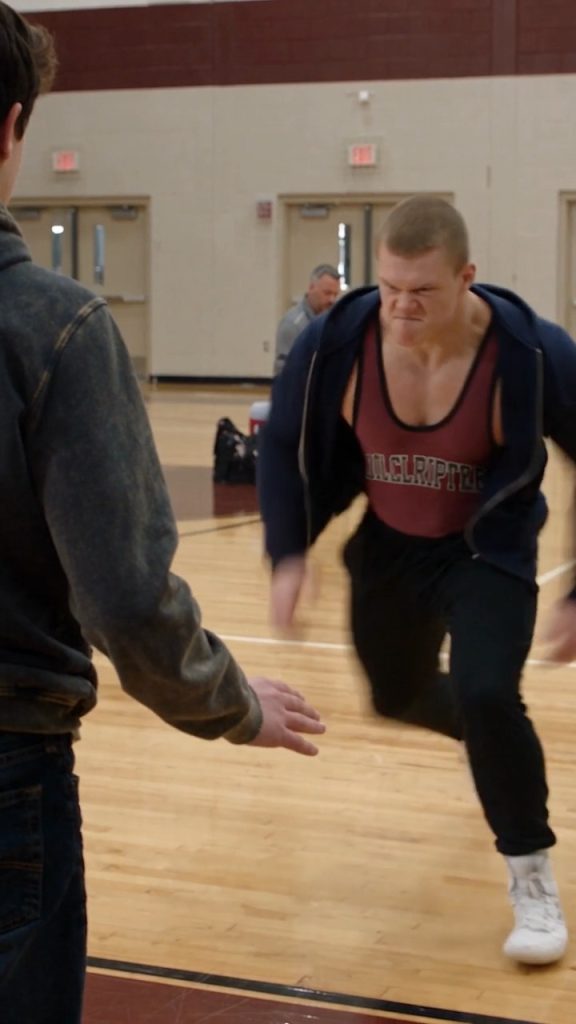
I thought of Trent’s first rush. There had been time for a warning then. After the second rush, there was still time for Voss to ask if I was hurt. He’d chosen instead to send me away under a label that made us both responsible.
I asked whether Ford knew about Trent’s father’s donations. She did, of course. She said donor relationships did not grant a family control over disciplinary findings and that she would make her own decision under Briarwood’s procedures. I believed she meant it. I also knew the words weren’t enough by themselves; they would have to be proven by what she did.
“I don’t have evidence that Mr. Maddox told anyone to treat me differently,” I said. “But I felt like the school heard Trent before it heard me.”
“It’s fair to tell me that,” Ford said. “Please give me the specific examples.”
So I did. Not a speech about wealth in general. The first reports. The email. The lack of a safety plan. The video excerpt accepted before anyone showed us the beginning. Each time she asked a question, I answered it from something I could point to. When I didn’t know, I said I didn’t know.
After the meeting we left with a written schedule for Thursday’s review. Mom read it beside the car, a hand pressed against the roof because the wind had picked up. The schedule had space for Nolan Reyes and family to speak. It had space for Coach Voss. It had space for witnesses, including Maya. The school hadn’t promised any outcome.
It had, at least, promised to hear us in the same process.
That evening Grandpa found me in the recreation center after his final youth class. The other students had gone home, and the mats were laid out in a clean rectangle under the bright overhead lights. I had helped stack some of the foam blocks and now sat at the edge of the practice area, turning my phone over in my hands.
“Do you want to work through the motion?” he asked.
“No. I know what I did.”
“Then maybe you don’t need to.”
He sat beside me. We watched the clock climb toward six. A mop bucket rolled along the hallway somewhere beyond the door.
“When I was little,” I said, “I thought the bow meant you trusted the other person.”
“It means you recognize each other as people before you practice,” he said. “Trust takes more than a gesture.”
“I bowed to Trent. That didn’t make him stop.”
“No. You can’t control what another person does with your respect.”
I rubbed the edge of my phone case. “I thought if I did everything right, there’d be one clear answer.”
“Most things worth protecting are harder than that.”
“That’s not encouraging.”
He smiled. “I didn’t say it was. You did something important. You tried to leave. Don’t forget that because other people have trouble calling it what it was.”
We sat quietly until he stood to switch off the practice lights. At the door he turned around and gave the empty mat a small bow. I had watched him do that hundreds of times. It wasn’t magic. It was a way of remembering what the room was for.
At home Mom had made rice and beans with the last vegetables from the refrigerator drawer. We ate together, and for twenty minutes nobody spoke about Briarwood. Grandpa told us a story about a little girl in his class who had insisted the practice mats looked like giant waffles. Mom laughed so unexpectedly that I laughed too.
Then her phone rang. It was a message from Mercer confirming that the provisional mutual-fighting assessment was still the office’s working recommendation until Ford completed her review. Nolan Reyes, the message said, could submit any final written observations by nine the next morning.
Mom read it without speaking. I knew from the angle of her shoulders what it said before she showed me.
“They still want to call it a fight,” I said.
“It’s a recommendation,” she reminded me.
“It feels like a decision they don’t want to admit they’ve made.”
“I know.”
We sat with that for a moment. Then I opened my laptop and went back through the evidence, checking what each piece could and couldn’t prove. The old reports proved we’d asked for help. My hoodie photo proved the fabric had been pulled out of shape, not who had done the pulling. Maya’s video showed Trent’s grip and the two rushes, not his thoughts. Voss’s seven seconds showed contact, not why it happened. Emily could explain the school assignment, not a gym she had never entered.
Once I wrote it out that way, the evidence felt less like a pile of desperate paper and more like people and events occupying the places they belonged. I didn’t need any one piece to do everything. I needed the adults to put the pieces in the right order.
I drafted my final observations on a clean page. I described the open public exit, because I had tried to reach it. I described the teammates at the locker-room doors, because their positions had made the east side feel closed even though they hadn’t locked the whole gym. I described the difference between an accidental loss of balance and a deliberate attempt to hurt someone. I wasn’t trying to hide my training. I told Ford Grandpa had taught me since I was seven and that I had used it to keep upright, release a grip, and move away.
I considered adding a line about how much I hated Trent. I deleted it. My anger was real, but the question before the school wasn’t whether my feelings were justified. It was whether I had chosen to fight.
At 8:42 p.m., I sent the observations. Mom read the confirmation on her phone and put a hand on my shoulder.
“Whatever happens tomorrow,” she said, “you told the truth.”
“I know. What if it isn’t enough?”





