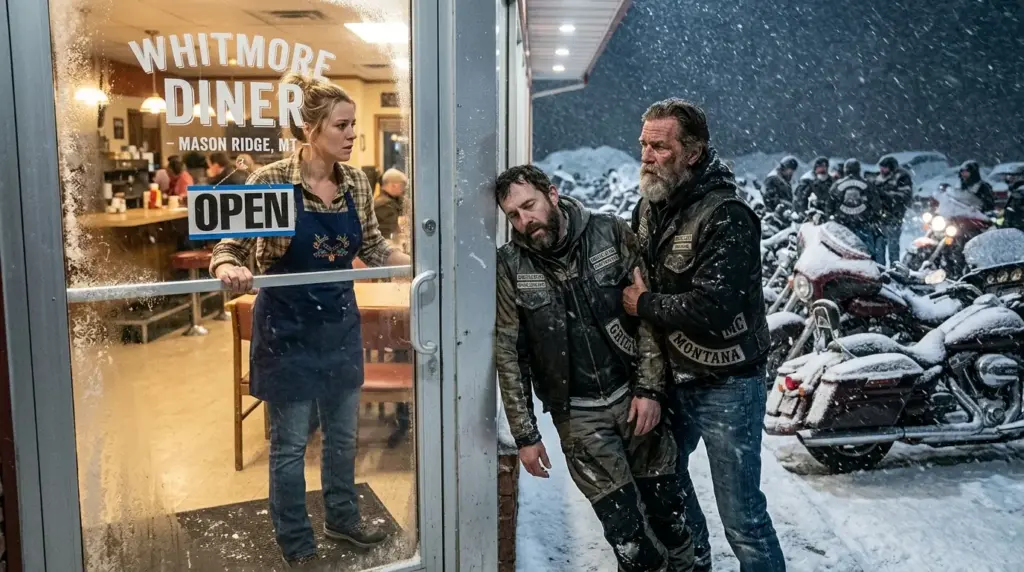
But this this is ordinary Saturday morning eggs and coffee and a 9-year-old explaining highway engineering to a man in a leather cut. This was real, and it was hers. And it was the thing her father had been building toward all along without knowing exactly what shape it would take. A place where people came and were fed and felt known. A place where anyone could walk through the door and find something warm.
One year after the storm, Sarah stood outside. It was the same cold Montana December committed to itself the same way every year, consistent in that, at least reliable in its demands. She stood in the parking lot in her coat, not her apron this time, just her coat, and she looked at the diner her father had built. The sign was new, not new, new. She had put it up two months ago after Angel’s grant came through and the six-month forbearance converted to a permanent restructuring agreement that Frank and Ray had both called better than expected, which was the most enthusiastic either of them tended to get about anything.
The sign was the same shape as the old one, the same position, but the text was different. It said Whitmore’s Everyone has a place here. Her father’s philosophy, the one he had lived so completely that it had become the air in the building, the temperature of it, the particular quality of the light. She had put it on the sign because she had decided it was time to say it out loud, to post it where everyone could see it, to make the promise visible and public and accountable. She heard tires on the parking lot behind her.
She turned. Motorcycles, not 67, 12, maybe 15, pulling in from the highway with the deliberate calm of people who knew where they were going. She recognized some of the faces through the helmets before they even took them off. Tommy, Angela, who had apparently ridden down from Great Falls, which was a fact that pleased Sarah more than she expected. Melissa Ethan’s riding companion from the mountain past, who had come back twice since that night and was on a firstname basis with Pat and had a standing order for the Tuesday soup.
And Ethan, he pulled in last, which she suspected was intentional. He parked and cut the engine and took his helmet off and looked at her across the parking lot with those clear eyes that she had first seen properly at 11:30 on the night that changed everything and he smiled, which was a thing he did more easily now than he had in December a year ago. She raised a hand. He raised his. Jack climbed out of a truck.
He was the truck now she had learned he had sold the bike 6 months ago. A decision he had made quietly and told her about in the same quiet way, saying only that it was the right time that he had put enough miles on enough roads and was ready to put some miles on some stationary things for a while. He came to stand beside her. He looked at the sign. “Your father’s words,” he said.
“His philosophy,” she said. He never wrote it down, but it’s what he lived. Jack looked at it for a long moment. Good sign, he said. Good man, she said.
Danny came out the front door to run, which was his standard movement style, and pulled up short when he saw the crowd in the parking lot and then broke into the grin that she lived for full and guarded the grin of a child who had learned that surprise was usually good. You all came, he said. We said we would, Ethan said from across the lot. Last year you said next year, Danny said. I wasn’t sure if that was a real promise or a polite thing.
We don’t do polite things, Tommy said. Danny considered this, filed it. Do you want eggs? He said to the assembled group with the authority of a 10-year-old who had been helping in a diner kitchen for the past year and had developed opinions about hospitality. Laughter moved through the group the way it had moved through the diner on that first night, catching genuine, the kind that came from the chest.
We want eggs, Melissa said. Then come inside, Danny said. He turned and went back through the door with the confidence of someone who knew people would follow. They followed. Inside was warm and loud in the way that Whitmore was warm and loud now.
On its busy days, which were more days than not, Pat was behind the counter already moving because Pat had the particular gift of reading a room’s needs before the room had finished walking in the door. She had been full-time for 6 months and the books had adjusted and the adjustment had required one conversation and two spreadsheets in a Sunday afternoon with Ray on the phone and it had worked. The diner had expanded. Not the building. The building was the same building it had always been.
Same square footage, same bones her father had loved. But the capacity had increased because Tommy had reorganized the furniture layout in a way that added four seats without anyone feeling cramped, which was the kind of solution that came from someone who had spent 40 years thinking about how people move through spaces. And it had made a difference that Sarah was still slightly amazed by. George Mercer was in his corner booth. He was always in his corner booth.





