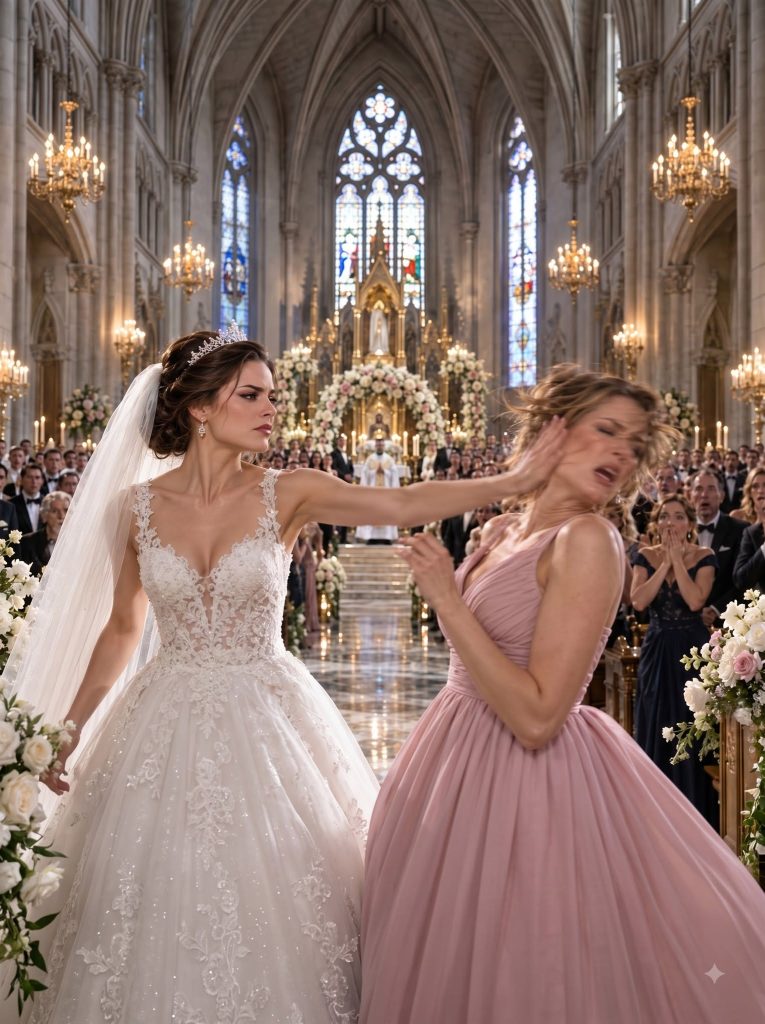
The story did not begin in that ballroom. Not really. It began years earlier in a basement office above a dry cleaner on West 23rd. Back then, I owned one folding table, one laptop, one rack of sample linens. I also owned a kind of hunger that scared people. I was 25. My mother had just survived breast cancer. My father was driving a cab at night after losing his restaurant. I was paying their mortgage with deposits from nervous brides and wealthy mothers who believed a wedding could rescue a family name.
I learned fast. I learned how to calm a bride without lying. How to read a groom before he spoke. How to know which mother-in-law would start the first fire. How to spot unpaid invoices by the angle of a florist’s smile.
Weddings tell the truth. People think they reveal romance. They reveal power, money, fear, control, debt, desire. Sometimes love, too. But love is rarely the loudest guest.
I met Melanie during my second year. She was crying outside a bakery in Soho with mascara down her face and a box of ruined macarons in her hands. Her boss had fired her that morning. Her boyfriend had emptied their shared account that afternoon. She was supposed to deliver desserts to a bridal shower by 4:00. It was 3:46. I asked what happened. She told me in one breath. I loaded the boxes into my car. We drove like criminals through traffic. I fixed the dessert table with ribbon scraps and fresh figs from a grocery store. The bride never knew.
Afterward, Melanie hugged me so hard I almost dropped my clipboard. “You saved my life,” she said. People say dramatic things after disaster. I believed her anyway.
Three weeks later, I hired her part-time. Six months later, she became full-time. Two years later, I gave her 10% of my company because she was good with clients and better with vendors. I thought generosity created loyalty. That was my first mistake.
Tyler entered my life through a client. The bride was a venture capitalist with a taste for wild orchids and impossible timelines. The groom was Tyler’s college roommate. Tyler came to the venue walkthrough because the groom was useless with floor plans. He carried a leather notebook. He listened more than he spoke. When a ceiling beam threatened our lighting layout, he offered three solutions before the hotel engineer found his tape measure. Competence is seductive when you are exhausted.
He asked me for coffee. I said no. He asked again after the wedding. I said I did not date clients or friends of clients. He said the wedding was over. I said my rules lasted longer than one night. He smiled—not wide, not smug, patient.
3 weeks later, he sent my mother flowers on the anniversary of her remission. I had mentioned the date once. He remembered. That should have warmed me. It did. It also should have warned me. Tyler collected information the way other people collected art. He made you feel seen. Then he used what he saw.
For two years, he was careful. He brought coffee to my office. He sat through tastings. He remembered vendors’ names. He held my hand at hospital checkups. He helped my father repair a leaking sink. He never shouted. He never made a scene. When he proposed at Battery Park after a storm, I said yes because the river was silver and his eyes were wet.
Melanie cried harder than I did. She threw her arms around us. She told Tyler he was family now. Family. That word would later taste like metal.
Our company was called Blake and Cole Events, though my name paid the lease. Melanie loved the sound of it. She loved stepping into hotel lobbies while assistants whispered our brand. She loved saying “my partner Olivia.” She loved correcting people who called her my assistant. At first, I was proud of her. I wanted her to rise. I wanted my table to have more seats than the tables I grew up serving.
The trouble began with Winterline. Alexander Winter had bought the old Harrington Hotel on Park Avenue and rebuilt it into a private luxury property with three ballrooms, two roof terraces, and a members-only dining room. The Winterline was not just a hotel. It was a gate. If you planned weddings there, Manhattan listened.
Alexander’s sister Daphne hired us for her wedding. It was a monster contract. Five days, 600 guests, two ceremonies, an afterparty with a jazz band flown in from New Orleans. Every vendor wanted the job. Melanie wanted it more than anyone.
“We could triple next year’s revenue,” she said. “We could open Los Angeles. We could stop fighting for crumbs.”
I told her crumbs did not look like our current client list.
She rolled her eyes. “You know what I mean.”
I did know. Melanie had grown up near money, but never inside it. Her father sold insurance in Stamford. Her mother taught piano to children whose parents owned summer homes. Melanie spent her childhood close enough to wealth to smell it and far enough to hate the distance. She wanted rooms to quiet when she entered. She wanted rich women to remember her birthday. She wanted men like Alexander Winter to call her directly. I wanted stability. That difference mattered.
Daphne’s wedding nearly broke us. A storm trapped flowers in Miami. The groom’s mother threatened to sue. The rabbi lost his voice. The fireworks company sent the wrong insurance certificate. I slept 7 hours in 5 days. Melanie slept less. On the wedding morning, Alexander found me in the loading dock with a dead headset and bitter coffee.
“You look like you fought the building and won,” he said.
“Ask me after the cake arrives.”





