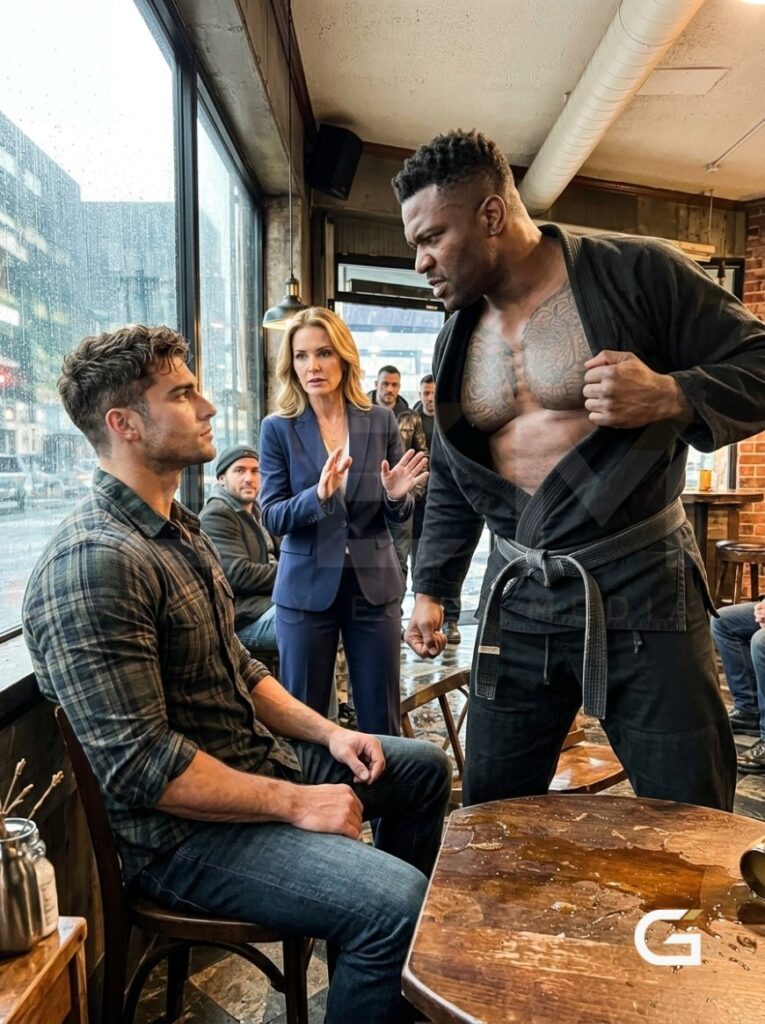
The third sign threw a rock through my front window at a quarter past one in the morning.
I was still awake, sitting in the office with the radio low, when the glass went. One sharp crack, then the long glittering slide of it across the floor.
I didn’t chase. I stepped to the side of the frame and watched the street.
A shape jogged two blocks down and got into a car with its lights already off. The car pulled away without hurry, which told me more than the rock did.
Careless men panic. Professionals don’t.
I swept the glass into a dustpan, taped cardboard over the frame, and sat back down at the desk.
Then I opened the drawer, took out the photograph, and looked at it under the lamp for a long time.
Six men. Two of them dead. One of them in a wheelchair in Tucson. One who sold insurance in Boise and never answered my calls. One who was on the phone with me an hour ago.
And me, standing on the far right, twenty pounds lighter, squinting at a sun that must have been brutal that day.
We were good at exactly one thing, and I had promised myself I would never need it again.
I put the photo back. This time I didn’t close the drawer.
Lisa called at six the next morning, and I could hear the fear in her breath before she said a word.
“Mason?”
“I’m here.”
“There are cars outside my building again.”
“How many.”
“Two. Same ones as yesterday, I think. One’s dark, one’s silver. They just sit there with the engines running.”
My hand closed around the edge of the desk.
“Have they talked to you.”
“No. Nobody’s gotten out. That’s what’s creepy. Nobody gets out.”
“Go back inside and lock the door.”
“I have to be at work at seven.”
“Call in.”
“I can’t afford to call in.” Her voice cracked on the last word. “I have a kid too, you know that. I can’t just—”
“Lisa.”
She stopped.
“You said he grabbed your wrist,” I said. “Did you file anything? Anything at all?”
“I didn’t think anybody would believe me. He’s—everybody knows who he is.”
“Write it down anyway. Today. Time, place, what he said, what he did. Everything you remember, even the small parts. Put a date on it.”
“Why?”
Because paper is the only thing in this world that doesn’t change its story, I thought.
“Just do it,” I said. “And send me a picture of both cars. Plates, if you can get them without being seen.”
“You’re going to do something.”
“I’m going to look at a picture of two cars,” I said. “That’s all.”
She made a sound that was half a laugh and half a sob, and hung up.
I sat in the dark office with the phone in my hand and felt the last of the hesitation drop out of me, quiet as a coin through water.
The card was still in my jacket pocket, corners soft from two days of being handled more than I wanted to admit.
I called the number at seven-fifteen.
Evelyn Carter answered on the second ring, and she didn’t waste time on hello.
“You saw the news,” she said.
“I saw the edit.”
“It’s worse than the news. My board met at six this morning. Two of them are already asking whether I should step back ‘for the good of the company.'”
“Who’s pushing that.”
“A man named Doyle. He’s been on my board for nine years and he’s never once agreed with me on anything.” She paused. “And this morning he suddenly cares very much about my reputation.”
“Does Connor know him.”
“Everyone in this city knows everyone.” Another pause. “Can we meet? Not at my office. Not anywhere with a lobby camera.”
“Where.”
“There’s a diner on Federal, three blocks past the rail crossing. It’s ugly and the coffee’s bad and nobody in my industry has ever set foot in it.”
I almost smiled.
“I’ll be there in twenty.”
Ray’s Diner had eleven booths, one waitress who had worked there since before I moved to Denver, and a jukebox that had been broken since 2011.
Evelyn was already in the corner booth when I walked in, wearing a plain gray sweater instead of the blazer. Without it she looked smaller, and much more tired.
She pushed a folder across the table before I sat down.
“This is everything,” she said. “The contract. The demand letters. Four months of emails from accounts that don’t exist anymore.”
I opened it and started at the back, because the back is where the real terms always live.
Forty pages in, I found it.
There was an appendix, buried behind three schedules of equipment specifications, written in the kind of language that makes lawyers smile and everyone else fall asleep.
Access credentials. Administrative rights. A central provisioning gateway maintained by Evelyn’s firm on behalf of thirty-one client companies.
I read the paragraph twice, then a third time, and set the page down flat.
“He doesn’t want your company,” I said.
Evelyn frowned. “What?”
“He’s not buying you. He’s buying the door.”
She leaned forward and read where my finger was resting, and I watched it land on her — the exact moment comprehension crossed her face and all the color left it.
“The gateway,” she said quietly. “The clients connect through it. Every one of them.”
“Including the financial ones.”
“Including the financial ones.”
“Once he has those credentials, he doesn’t need to extort anyone ever again,” I said. “He just watches. Waits. And picks up the phone when he decides it’s time.”
Evelyn sat back against the vinyl and stared at the page like it had insulted her personally.
“Fifteen years,” she said. “I built something that keeps thirty-one companies safe, and this is the thing he’s using to break all of them at once.”
“Why did you tell me it was about your reputation?”





