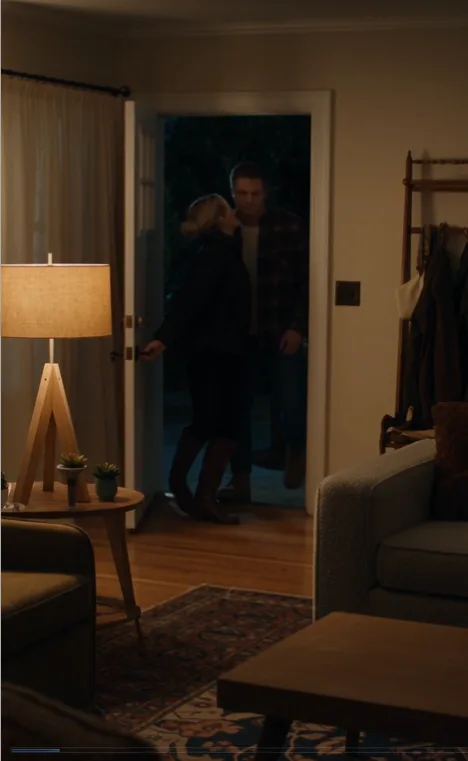
Are you in a position to listen carefully right now? Yes, sir. Go ahead. At approximately 6:00 tomorrow morning, before any member of the executive floor staff arrives at the building, I need you and one man you trust personally to enter the fourth floor executive suite, specifically Bernard Vance’s office. I need you to photograph the contents of the locked credenza behind his desk, the one with the brass inlay along the upper drawer.
The key is in a small ceramic dish on the bookshelf above his coat rack behind a framed photograph of his daughter at her wedding. You are not to remove anything. You are to photograph every document inside that credenza in the order in which it is stored and you are to replace everything exactly as you found it. You are then to leave the suite, lock the outer door behind you, and bring the photographs directly to me at the house. Do you have any questions about that instruction?
There was a pause of perhaps 2 seconds. Wendell Pryor had spent 26 years in the FBI before he came to work for Harold. He had been given many unusual instructions in his life. He had learned in the long course of his career that the appropriate response to an unusual instruction from a man like Harold Whitmore was not surprised. No, sir.
I will be at the building at 5:45. I will use the rear service entrance. The man I will bring is named David Aguilar. He is my second. He has been with us for 11 years.
I trust him with my own house. Good. One more thing. Between the time you hang up this phone and the time you arrive at the building tomorrow morning, I do not want you to speak to Bernard Vance under any circumstances. If he calls you, you do not answer.
If he sends you a message, you do not respond. Is that clear? Yes, sir. Thank you, Wendell, sir. Yes.
Whatever this is, I have been waiting for it for a long time. I want you to know that. Good night. The line went quiet. Harold set the receiver down a second time.
He sat for a long moment in the chair behind the desk, looking at the small black telephone. And he thought about what Wendell had just said to him. He had not entirely understood the words at first. Then, with the slow gathering clarity of a man who had been refusing for some years to notice certain small particular things about the people around him, he understood them perfectly. Wendell had been watching Bernard Vance for some time.
Wendell had been watching him without being asked. Wendell had been waiting for a reason to bring what he had been watching to Harold’s attention, and that reason had not yet come. And so, Wendell had said nothing. But Wendell had been ready because Wendell, in the long quiet way that good men of his particular profession knew how to be ready, had understood that the day would arrive. Harold stood.
He walked to the small drinks cabinet against the wall. He did not open it. He had not opened it in 11 months, since the morning his physician had told him that the small irregularities in his heart had become slightly less small, and that the bourbon he had been drinking every evening since 1968 was now, at his age and in his condition, a luxury he would have to give up if he intended to see his great-grandchildren reach their adolescence. He turned away from the cabinet. He walked to the door of the study.
He unlocked it. He stepped out into the corridor. He had one more thing to do before Steven Colter arrived, and it was the hardest thing he was going to do all evening. He walked down the long corridor to the south wing of the second floor, where Alina’s morning room had been preserved exactly as she had left it on the morning she had gone into the hospital for what they had been told was a routine procedure, and from which she had not returned. The door to the room was always closed.
Harold did not enter it often. He entered it perhaps three times a year, on her birthday and on their anniversary and on the anniversary of her death. And he sat in the small upholstered chair beside the window for an hour or so on each of those occasions, and he did not weep because he had done his weeping in the first year after she had died. But he sat in the chair, and he allowed himself to feel her absence in the room she had occupied more completely than any other room in the house. He was not entering the room tonight to sit in the chair.
He was entering it because Alina had kept a small writing desk against the eastern wall, and in the bottom drawer of that desk, in a leather portfolio that he had not opened in 19 years, she had kept her own private correspondence with the small number of people she had trusted in her life. He needed to know whether Patricia Donnelley’s name was in that portfolio. He opened the door. He closed it behind him. The room smelled faintly of the dried lavender that Marguerite, the housekeeper, replaced in the small porcelain dish on the writing desk every 6 months, the way Alena herself had replaced it for 38 years.