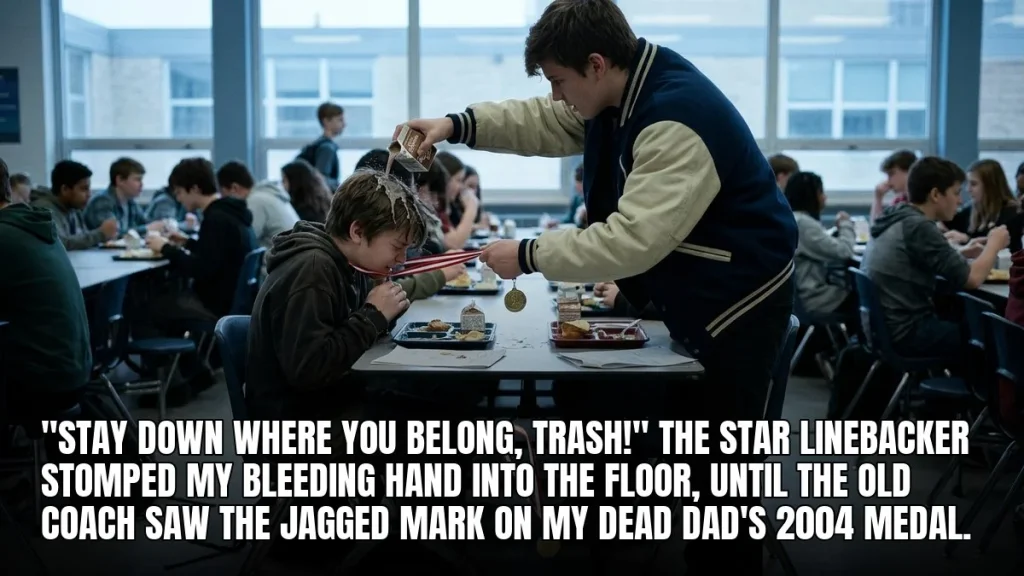
“I have this completely under control, Eugene,” Mr. Miller said smoothly, stuffing my dad’s medal into the breast pocket of his gray suit jacket and wiping a tiny smear of my blood and chocolate milk off his thumb with a disgusted grimace. “Go handle the superintendent. By the time you’re off the phone, I’ll have the boy’s mother in the boardroom and the disciplinary transfer paperwork ready for your signature.”
Coach Harlow hesitated, his big hand still gripping his brass whistle like a lifeline. He looked past Mr. Miller’s shoulder right into my eyes.
“Don’t you sign a damn thing until I walk into that room, boy,” Harlow growled, pointing the tip of his ash cane at my chest. “You hear me, Miller? Nobody touches that medal, and nobody signs a paper until I’m back.”
“Of course, Coach. Right away,” Mr. Miller said in that slick, practiced voice adults use when they have no intention of listening.
As Mrs. Gable practically dragged the limping old coach out through the cafeteria doors, Mr. Miller turned back to me. All the warmth vanished from his face.
He reached down, clamped five bony fingers around my upper arm, and yanked me to my feet so hard my shoes slipped in the puddle of chocolate milk.
“March, Mr. McCall,” the vice principal hissed in my ear. “And don’t drip on my carpet.”
Behind him, Tanner Vance let out a low, quiet laugh, dropping the wounded-victim act for one brief second to give Brody a triumphant fist-bump while the teachers’ backs were turned.
The walk from the cafeteria to the administrative suite felt like a mile.
Kids were already spilling out of the lunchroom into the main hallway for fifth period, and every single one of them turned to stare. My gray t-shirt was plastered to my ribs, stiff and reeking of sour chocolate. My right hand hung at my side, the skin across all four knuckles split raw and oozing a steady thread of dark red blood that dripped onto my sneakers every few steps.
Mr. Miller didn’t take me to the nurse’s office. He didn’t even hand me a paper towel.
He marched me past the giant glass trophy cases in the front foyer, straight into the small, windowless waiting room outside the main conference room, and shoved me down onto a hard vinyl chair.
“Sit there and keep your mouth shut,” Mr. Miller snapped. He reached into his breast pocket, pulled out my dad’s 2004 gold medal and the torn ribbon, and dropped them with a loud clatter onto the corner of the empty reception desk near the door. “Your mother was just paged at the Vance residence. When she gets here, we are settling this immediately.”
He stepped back into the hallway to speak with Tanner and Brody, pulling the door only halfway shut.
Sitting alone in that freezing little room, listening to the clock tick on the wall, the adrenaline finally drained out of my chest.
In its place came a cold, crushing wave of terror.
I looked down at my battered right hand. Then I looked at the door, knowing my mom was driving down from the hill in our family’s rusted twenty-year-old pickup truck right now.
The shame of the last morning I ever saw my father alive rose up in my throat until I thought I was going to choke on it.
ight months ago, on a Tuesday morning in March with freezing sleet blowing sideways across Millbrook, Dad had driven me to school before heading home to sleep after his night shift at the plant. The muffler on his old pickup had rusted through that week, making the truck roar like a broken tractor every time he touched the gas.
Two blocks away from the Oakridge gates, I had seen Tanner Vance and a group of eighth-graders standing on the corner in their brand-new winter parkas.
“Just let me out here, Dad,” I had muttered, slumping down in the passenger seat so nobody would see me through the cracked windshield. “I’ll walk the rest of the way.”
I still remember the way Dad looked at me. He was wearing his faded red flannel jacket, dark circles carved deep under his tired eyes, his bad right leg propped stiffly against the floorboards. He knew why I wanted out. He knew I was thirteen and ashamed of the noisy truck and his oil-stained work boots.
He hadn’t gotten mad. He had just smiled that quiet, gentle smile of his, reached across the cab to ruffle my hair, and said, “Have a good day, champ. We’ll work on that fireman’s carry tonight after supper.”
I had jumped out into the sleet without looking back. I hadn’t hugged him. I hadn’t even told him I loved him.
Five hours later, while I was sitting in fifth-period math, his heart gave out on the kitchen floor before he even made it to bed.
Over his casket, watching my mother cry until she couldn’t stand up on her own, I had sworn to God I would spend the rest of my life taking care of her. I had promised I would never give her a single reason to worry.
And now, because I hadn’t been fast enough to protect his medal without touching Tanner Vance, my mom was about to lose the only job keeping a roof over our heads.
The outer door of the administrative suite burst open in the hallway.
“Owen?” my mother’s breathless voice called out. “Where is my son? Somebody tell me if my boy is hurt!”
I stood up from the vinyl chair just as the door to the waiting room was pushed open.





