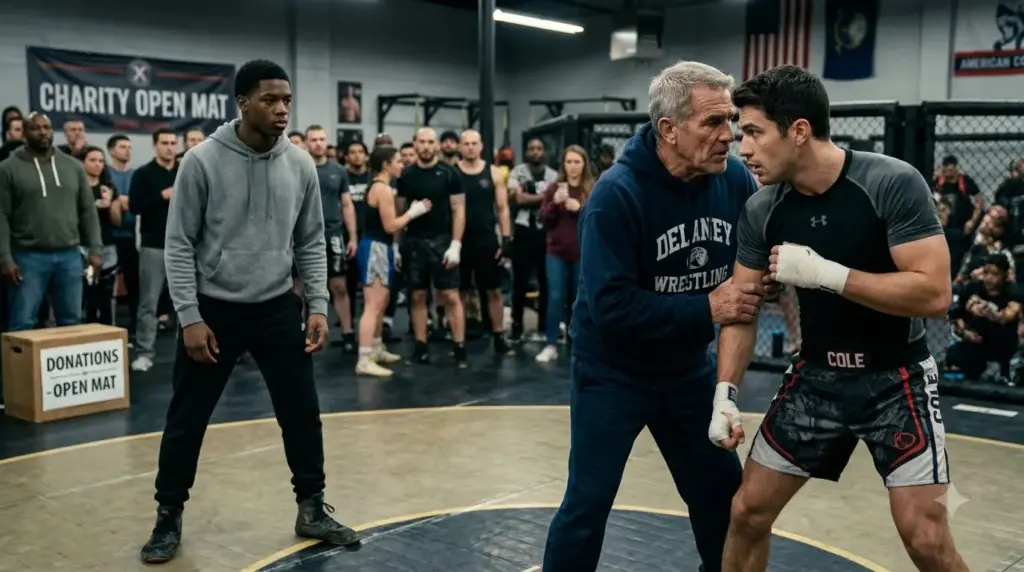
Frank, from across the room, shouted:
“I can still hear.”
Everybody laughed.
The tension disappeared.
Then Ryan became serious.
“I owe you an apology.”
Eli looked surprised.
“For what?”
“Easy thousand.”
Eli shrugged.
“It’s fine.”
Ryan shook his head.
“No.”
“It wasn’t.”
“I decided you were easy because you were younger and quiet.”
Eli looked at him.
“You didn’t know.”
“That’s the point.”
Eli thought.
Then nodded.
“Okay.”
Ryan waited.
Nothing else.
Teenagers sometimes accept apologies more efficiently than adults.
Good.
Marcus zipped the bag.
“We ready?”
Eli stood.
Before leaving, he looked at Ryan.
“That trip only worked because you leaned.”
Ryan smiled.
“Thank you.”
“I mean you probably stop it next time.”
Ryan’s smile faded.
Not from insult.
From accuracy.
“Probably.”
Eli nodded.
“Cool.”
Then left.
Ryan watched him go.
He had expected the boy to enjoy the story more.
He did not.
That bothered Ryan in a useful way.
The next Monday, he asked Frank about the inside trip.
“Show me what happened.”
Frank shook his head.
“No.”
“What?”
“You have film?”
“No phones during challenge.”
“Then reconstruct it.”
Ryan frowned.
“With who?”
“Me.”
Frank stepped onto the mat.
They recreated the grip.
Wrist.
Underhook.
Ryan’s weight forward.
Frank showed the timing.
Small.
Nothing magical.
“Your problem wasn’t the trip.”
“What was?”
“You wanted him to feel weak.”
Ryan looked at him.
“That sounds dramatic.”
“It is.”
Frank reset.
“You leaned because you wanted him to carry your weight.”
“You wanted the kid to know you were stronger.”
Ryan stared.
Frank continued.
“That created the step.”
“So ego made the opening.”
“Partly.”
Ryan laughed.
“Great.”
Frank nodded.
“Useful.”
They drilled.
Not the trip.
The position before it.
Weight distribution.
Hand control.
When pressure becomes overcommitment.
Ryan improved.
Eli returned the next Saturday.
Not for a challenge.
For regular open mat.
Ryan saw him and smiled.
“Rematch?”
Eli looked cautious.
Ryan added:
“Technical.”
“No audience.”
Eli smiled.
“Sure.”
Frank watched.
Better.
They wrestled three rounds.
Ryan defended the inside trip.
Good.
Eli got a single.
Ryan sprawled.
Ryan scored a body lock.
Eli recovered.
Nothing dramatic.
Ryan’s size mattered.
Eli’s wrestling mattered.
Both.
Third round ended with no clean takedown.
Ryan sat against the wall.
“You’re annoying.”
Eli smiled.
“Thanks.”
Then Ryan asked:
“What are you working on?”
Eli looked surprised.
“Finishing from single.”
Ryan nodded.
“I’m working on not leaning like an idiot.”
Eli laughed.
There.
Training partner.
Not story.
Over the next months, Eli became a regular visitor at Northline.
He still trained primarily with his high school team.
Frank insisted.
School season came first.
Northline was supplemental.
Ryan helped him with controlled kickboxing footwork.
No hard head shots.
No amateur fight plans.
Just movement.
Eli taught Ryan wrestling details without calling it teaching.
One day Ryan asked:
“How do you stop people from feeling the shot?”
Eli answered:
“Make them solve hands.”
Frank smiled from across the room.
Darren phrase.
Ryan noticed.
“Your dad said that?”
Eli nodded.
“Always.”
Frank looked away for a second.
Memory.
Then back.
“Darren stole it from somebody else.”
Eli laughed.
“Probably.”
That mattered.
Skill is inherited socially more than genetically.
Words move through rooms.
Eli was not dangerous because his father was good.
He was good because he had trained for years.
Simple.
Ryan learned to stop turning lineage into magic.
The gym changed around them.
Not dramatically.
But Frank added one question to every visitor waiver:
Describe current training experience, not only rank.
Useful.
A quiet woman once wrote:
Judo brown belt, eight years, six-year break.
Good to know.
A large man wrote:
No combat sports.
Also useful.
A teenager wrote:
Wrestling since age five.
Ryan saw it.
Smiled.
Then asked:
“What are you working on?”
Growth.
The charity challenge itself changed too.
Frank removed the open takedown wager.
Ryan protested.
“It raised money.”
“Yes.”
“It was fun.”
“Sometimes.”
“So why remove it?”
Frank looked at him.
“Because money plus audience changes people.”
Ryan nodded.
Could not argue.
They replaced it with controlled stations.
Grip challenge.
Balance challenge.
Technical sprawl.
Pad accuracy.
Donations based on participation.
Less dramatic.
More people joined.
Parents.
Kids.
Older adults.
Nobody had to become entertainment.
The youth shelter raised more the next year.
Ryan told Frank:
“Don’t say I told you.”
Frank smiled.
“I would never.”
He told everyone.
Of course.
Eli’s high school season went well.
Not perfect.
He qualified for state again.
This time he placed sixth.
Ryan attended with Frank.
Eli lost in the quarterfinal.
Won two consolation matches.
Lost the fifth-place match.
Afterward he sat in the hallway with ice on his shoulder.
Ryan approached.
“You okay?”
“Yeah.”
“Current yes?”
Eli laughed.
“Coach Frank says that.”
“Old people steal everything.”
Frank, ten feet away:
“I hear you.”
Ryan sat.
“You placed.”
“Sixth.”
“That’s good.”
Eli shrugged.
“I wanted top four.”
“Of course.”
Ryan almost gave a motivational speech.
Stopped.
“What happened?”
Eli answered technically.
“Got stuck underhook.”
“Couldn’t clear.”
“Then I rushed.”
Ryan nodded.
“Anything else?”
“I got tired.”
“Okay.”
No speech.
Just information.
Eli looked at him.
“You’re not going to tell me to be proud?”
Ryan smiled.
“You can decide that.”
Eli thought.
Then:
“I am.”
Good.
The following year changed things.
Eli’s uncle Marcus lost his job when the repair shop where he worked closed.
Money got tight.
Tournament travel became harder.
Northline found out accidentally.
Not from Eli.
He simply stopped coming.
Ryan asked Frank.
Frank called Marcus.
Marcus explained.
Ryan’s first instinct was to pay everything.
Frank stopped him.
“Ask first.”
Ryan sighed.
“Yes.”
They invited Marcus for coffee.
He was embarrassed.
Ryan said:
“I can cover Eli’s gym fees.”
Marcus shook his head.
“No charity.”
Frank smiled.
“This is literally a charity gym program.”
Marcus laughed.
Still no.
They found a better solution.
Eli helped with beginner wrestling clinics two Saturdays a month.
Northline credited his supplemental training fees.
Work.
Value.
Dignity.
Marcus accepted.
Travel costs for state events remained a problem.
The high school booster club handled those.
No secret millionaire moment.





