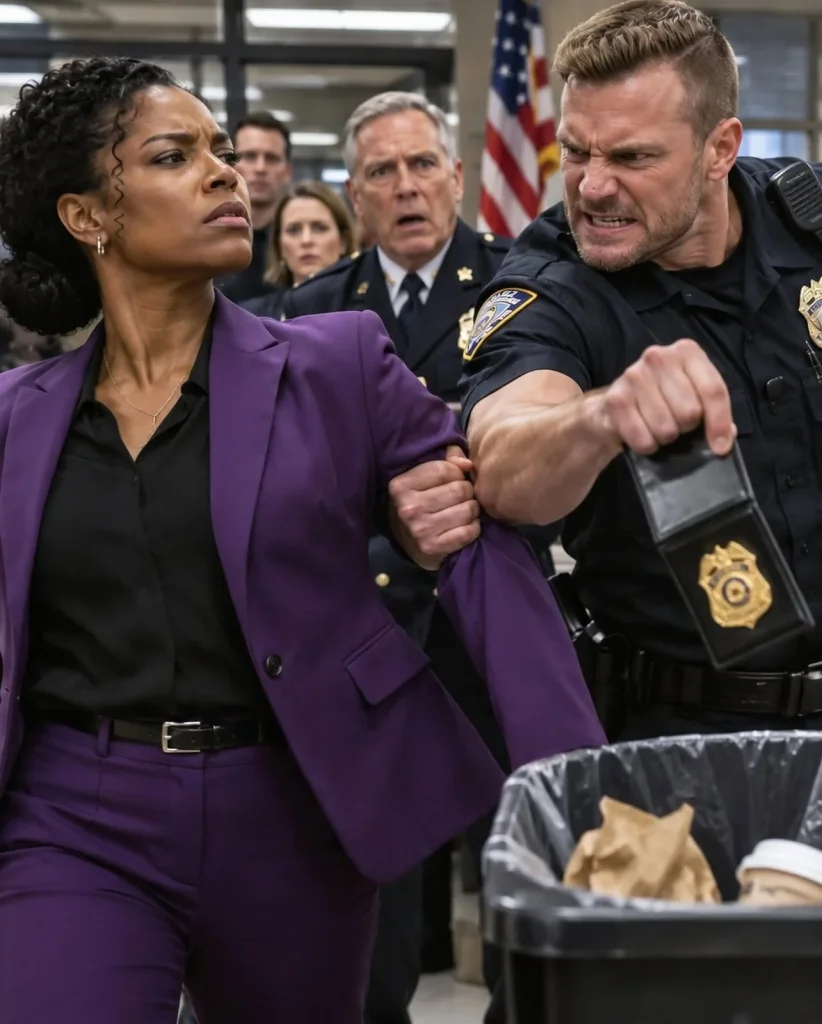
Number 4B sat at the end of an exterior metal staircase that rattled in the wind. The yellow police tape that had once sealed the front door had been crudely ripped down on one side, leaving sticky strips of yellow plastic dangling like ribbons of caution in the damp breeze.
Keira approached the door, her hand resting naturally near her hip. She didn’t need a search warrant; as an investigator with the Office of the Inspector General overseeing municipal fund allocations and civil rights abuses tied to federal grants, her authority superseded local containment protocols, especially given the department’s active obstruction.
Using a small, flat titanium pick from her tactical kit, she bypassed the cheap deadbolt with two silent clicks. The door swung inward, releasing a wave of stale air mixed with the sharp, chemical tang of industrial bleach.
The apartment had been tossed—thoroughly and systematically.
Drawers had been jerked from their runners and dumped upside down across the worn laminate flooring. Cushions from the floral-print sofa had been slashed open, spilling white Dacron stuffing across the rug. Family photographs—Maya smiling with her young daughter, birthday parties, school plays—lay scattered among broken ceramic mugs and spilled books. But beneath the chaotic facade of a common burglary, Keira’s trained eye spotted the telltale signatures of a professional search.
The electrical faceplates along the baseboards had been unscrewed. The back of the kitchen pantry had been pried away from the drywall to inspect the wall cavity. Even the water heater panel in the small utility closet had been removed. They weren’t looking for cash or jewelry. They were looking for digital media, flash drives, or paper ledgers containing the vehicle identification numbers and shipping manifests of the stolen fleet.
Keira moved quietly through the apartment, her heels making barely a sound on the littered floor. In the small bedroom at the back, a child’s twin bed remained unmade, a stuffed rabbit resting against the pillow. On the nightstand sat a framed photograph of Maya and her daughter, untouched by the vandals.
Beside the photograph lay a small, purple plastic hair clip.
Keira knelt, inspecting the clip closely. It was clean—too clean. It hadn’t been kicked around during the ransacking. It had been placed there deliberately, a silent marker or perhaps a message left by someone who had searched the room after the initial chaos.
Suddenly, a faint scraping sound echoed from the floorboards near the closet.
Keira froze. Her hand swept back her blazer, her fingers closing securely around the grip of her issued sidearm. She didn’t draw the weapon, but she assumed a balanced, defensive crouch, her eyes fixed on the partially open closet door.
“Whoever is in the apartment, identify yourself now,” Keira commanded, her voice cutting through the silence of the room. “I am a federal officer.”
The closet door creaked open another three inches. A small, trembling hand reached out, gripping the edge of the wooden frame. Then, a pair of wide, tear-filled eyes peered out from the darkness.
It was a little girl, no more than five years old, wearing an oversized pink sweater that swallowed her hands. Her face was smudged with dirt, and her lower lip quivered uncontrollably.
Keira’s tactical instincts instantly dissolved into a sharp pang of professional shock. She lowered her stance, releasing her grip on her firearm, and raised her empty hands palms-forward.
“Hey, it’s okay,” Keira said, softening her voice into a gentle, soothing cadence she rarely used in the field. “I’m not with the police department. I’m a federal agent. My name is Keira. What’s your name, sweetheart?”
The little girl hesitated, her chest heaving as she fought back a sob. She slowly stepped out of the dark closet, dragging a small, worn pink backpack behind her.
“Mommy said… Mommy said I had to stay in the hiding spot until the nice man in the car came back,” the girl whispered, her voice barely audible over the hum of the refrigerator. “She said if the men in uniforms came, I shouldn’t make a sound.”
Keira’s blood ran cold. Maya Lin hadn’t skipped town. She hadn’t taken a bus north.
“What’s your name, honey?” Keira asked gently, stepping closer and kneeling down to eye level.
“Chloe,” the girl replied, wiping her nose with her sleeve. “Where is my mommy? She went to the store yesterday morning and she never came back. And then some loud men came into our house and broke things, and I hid in the wall like Mommy showed me.”
Keira’s mind raced through the tactical implications with terrifying speed. If Chloe was still here, hidden in the apartment’s improvised panic space while Officer Keller and his goons ransacked the place, it meant Keller knew—or at least suspected—that Maya Lin had left a trail behind. And if Keller and his crew returned to finish sweeping the apartment for missed evidence, they would find the child.
And they would ensure there were no witnesses left to tell the tale.
“Chloe, listen to me very carefully,” Keira said, her voice dropping to an urgent whisper as she gently grasped the little girl’s shoulders. “We need to leave right now. We are going to get into my car, and we are going to go somewhere very safe. Do you trust me?”
Chloe looked up at Keira’s deep purple suit, her sharp obsidian eyes, and the glint of the federal shield tucked inside the leather case. Children possessed an uncanny radar for genuine authority and protection. The little girl slowly nodded.
“Okay,” Chloe whispered. “Can I bring Mr. Fluff?” She pointed back into the dark closet toward a battered stuffed rabbit.
“Bring Mr. Fluff,” Keira agreed instantly.
Chloe scrambled back into the closet, scooped up the rabbit, and clutched it fiercely to her chest. Keira scooped the child up with one arm, keeping her other hand free and steady on her weapon, and swept out of the bedroom toward the front exit.





