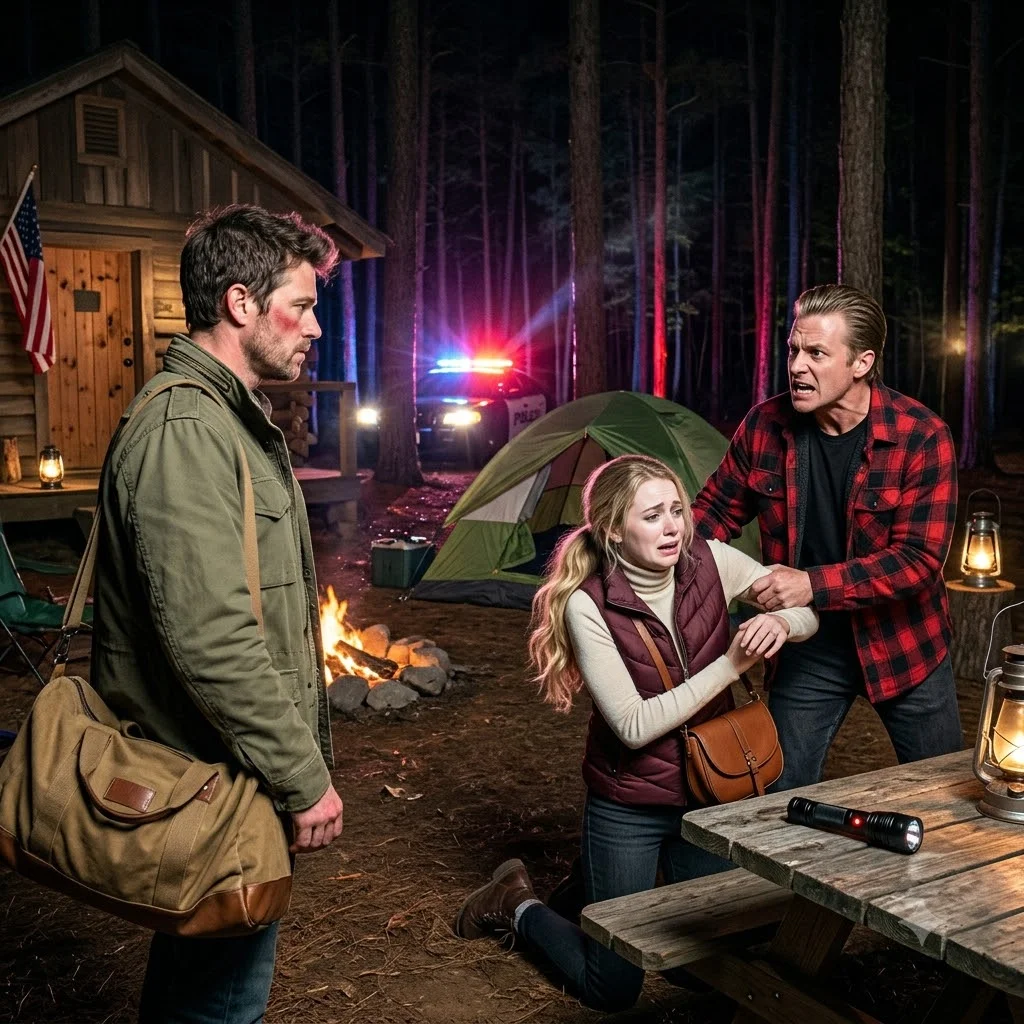
For one absurd second, I expected him to turn around and ask whether I wanted coffee.
Instead, he avoided my eyes.
Across the aisle sat representatives from Crescent Development.
Marcus was near the back of the courtroom.
Natalie arrived separately.
She sat alone.
When she saw me, she looked down.
Ruth leaned toward me.
“Remember, today is about preventing immediate harm while the evidence is examined.
We’re not resolving every accusation.”
I nodded.
The judge entered.
The hearing began.
Crescent’s attorney argued that the company had relied on documents representing a legitimate agreement.
He explained that substantial planning expenses had already been incurred.
Delaying the project, he claimed, would cause financial harm.
Ruth stood.
“Your Honor, my client disputes ever authorizing the agreement.”
She presented the document containing my apparent signature.
Then she introduced my sworn statement.
She explained that the signature appeared to have been copied from earlier business records and that Ethan had access to those records.
The developer’s attorney objected to conclusions that had not yet been established.
The judge acknowledged the dispute.
“Ms.
Sloane, what independent evidence supports your client’s position?”
Ruth presented the financial records.
She explained that a substantial payment from Crescent had entered Mercer & Vale Restoration without my approval.
Peter had identified subsequent transfers requiring further investigation.
The judge examined the documents.
Then Ruth addressed the campsite.
“Mr.
Mercer was subjected to an apparent attempt to provoke an emotional confrontation immediately before others planned to access his vehicle.”
Crescent’s attorney stood.
“We have a video suggesting the opposite.”
He requested permission to present it.
The judge allowed the short recording to be considered within the limited scope of the hearing.
My stomach tightened.
The video showed me standing near Natalie at the campground.
My expression was angry.
My voice sounded sharper than I remembered.
“You knew what you were doing,” I said in the recording.
Then it ended.
No kiss.
No earlier conversation.
No flashlight recording.
Just one isolated moment that made me look furious.
The attorney turned toward the judge.
“This is the state of mind of the person now disputing the agreement.”
Ruth stood immediately.
“Your Honor, the video is incomplete.”
The judge looked at her.
“Can you establish that?”
“Yes.”
Ruth introduced the unedited audio file preserved from the flashlight and the ranger’s contemporaneous account of the incident.
The recording played.
Natalie’s voice filled the courtroom.
“Push him harder.”
Marcus followed.
“What if he doesn’t react?”
Then Natalie.
“Then we wait until one-thirty.”
I watched Ethan.
For the first time that morning, his composed expression faltered.
Then his recorded voice emerged.
“If he takes the bait, get it on video.
If he doesn’t, we get the key at one-thirty.”
The courtroom fell silent.
Ruth allowed the recording to finish.
Then she spoke.
“These statements suggest that the confrontation was planned and that the purpose was to obtain Mr.
Mercer’s property without his consent.”
The judge turned toward Ethan’s attorney.
“Does your client dispute that this is his voice?”
The attorney rose slowly.
“We would need an opportunity to verify the recording.”
“Of course,” the judge replied.
“But that does not eliminate its immediate relevance.”
Next came Mara.
She explained the discrepancies between the submitted survey and the historic property records.
She spoke clearly, identifying the old watercourse, the proposed access corridor, and the field observations she had documented.
She avoided exaggeration.
She didn’t claim the development was automatically unlawful.
Instead, she explained that the maps appeared incomplete and that any construction could affect areas not properly evaluated.
The judge asked several questions.
Mara answered each without hesitation.
I watched her from my seat.
Her confidence came from preparation, not performance.
When she finished, she glanced toward me.
I nodded in gratitude.
Then Ruth addressed the change of locks and survey flags at Pine Hollow.
The deputy’s report and photographs confirmed that access restrictions had appeared while ownership and authorization remained disputed.
The judge studied the materials carefully.
Finally, he looked at both attorneys.
“I am concerned about the risk of irreversible changes to the property before the authenticity and scope of these documents can be determined.”
I felt my shoulders loosen slightly.
He ordered temporary restrictions preventing further land disturbance under the disputed agreement while the matter proceeded.
It wasn’t a final victory.
But the trees would remain standing.
At least for now.
Outside the courtroom, Ruth exhaled.
“That’s the protection we needed.”
I shook her hand.
“Thank you.”
“Don’t celebrate yet.
We still have a great deal to prove.”
Mara joined us.
“Your father would have liked that hearing,” she said.
“Why?”
“Because the judge actually listened to the maps.”
I laughed.
For one brief moment, hope returned.
Then Ruth’s phone rang.
She answered, listened, and moved away from us.
When she returned, her expression had changed.
“Crescent’s attorneys have produced another document.”
“What kind?”
“An email authorizing Ethan to negotiate the development agreement.”
I frowned.
“I never sent anything like that.”
Ruth studied me.
“According to the records they’ve supplied, it came from your company email account.”
“When?”
“Thursday evening.
Two days before the camping trip.”
I felt the ground shift beneath me.
“That’s impossible.”
Ruth looked at the printout.
“The message includes your name, your professional signature, and instructions that appear to approve the transaction.”
I stared at her.
For a moment, nobody spoke.
Then I asked the question I dreaded.
“If someone can make an email look like it came from me, how do I prove what I never wrote?”
—
**CHAPTER 9: THE LAST KEY TO THE TRUTH**
I spent the weekend wondering whether Ethan had managed to turn my own identity against me.
The email looked convincing.
It contained my name.
My usual professional signature.
Even the familiar sentence I used at the end of important business messages.
Please confirm receipt and proceed only after written approval.
Except the message itself supposedly provided that approval.
I read it repeatedly until the words blurred.





