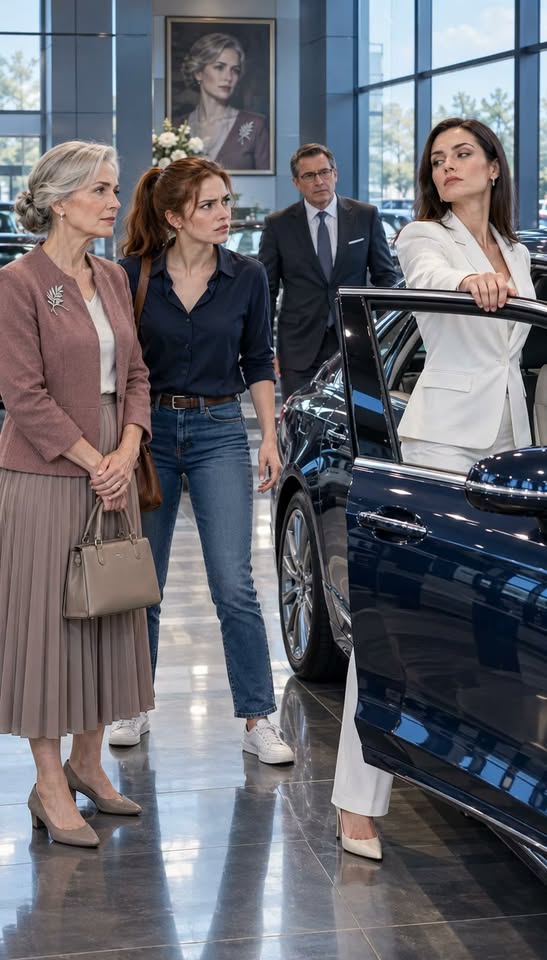
Graham glanced at James. The chief executive did not intervene.
Eleanor opened the buyer’s proposal. “This includes projected reductions in customer remediation costs.”
“A standard assumption following operational integration.”
“What information supports it?”
“Current complaint rates.”
“Which are now in question.”
“Yes, but no conclusions have been reached.”
“Then the buyer must be told that their assumptions may be unreliable.”
Graham’s composure thinned. “That could put the transaction at risk.”
Ruth folded her hands. “Withholding it would create a larger risk.”
By the end of the meeting, the board had paused discussions involving the flagship and required all potential buyers to receive accurate notice of the ongoing review. Graham’s responsibilities were transferred temporarily to another executive. He was instructed to cooperate and not contact staff about their evidence.
Eleanor did not leave feeling victorious. She left with a headache and a list of things that should have been noticed months earlier.
James walked with her to the lift.
“I should have questioned the closure numbers.”
“Yes.”
“I trusted the reporting structure.”
“So did I.”
He looked at her. “You were caring for Andrew.”
“That explains my attention. It does not improve the structure.”
They waited in silence while the lift rose.
“I need to know whether you can lead the changes,” she said. “That will require hearing things you do not like without waiting for someone to make them comfortable.”
James nodded. “I understand.”
“I hope so.”
That evening, Daniel found her in the garage behind her house. The space had once held three project cars, an engine hoist, and enough labeled drawers to satisfy his father’s faith in organization. Now half the floor was clear. Eleanor stood beside a workbench, looking at a photograph propped against the wall.
It was the original print of the portrait in the showroom.
In this version, the frame had not cropped out the man beside her. Andrew stood holding a dented kettle. His grin suggested he had said something just before the shutter clicked.
“They cut Dad out.”
“For the founder’s display,” Eleanor said. “He thought it was funny. Said it was the first photograph in which he had been removed for improving the composition.”
Daniel smiled. Then he studied the younger version of his mother. She was perhaps thirty, wearing borrowed overalls. The garage behind her had a cracked window and a hand-painted sign.
“How much did you have when you started?”
“Less than we told the landlord.”
“That bad?”
“Your father sold his motorbike. I sold a collection of jewelry my grandmother had left me. We borrowed the rest from a woman who ran a bakery and understood more about cash flow than our bank manager.”
“I don’t remember that story.”
“You remember the comfortable version. We were careful about what we worried you with.”
She took a small metal tin from a shelf. Inside were the first garage’s invoices, tied with string. Daniel lifted one. The paper was thin enough to see his fingers through it.
A customer named Mrs. Dawson had paid for a replacement alternator in three installments. Beneath the last amount, Eleanor had written paid in full and underlined it twice.
“She needed the car for work,” Eleanor said. “The alternator failed six weeks after we sold it. The warranty language was not generous. Your father said the language was our problem, not hers.”
“So you fixed it.”
“We fixed it. She brought us a fruit cake every Christmas until she moved to Scotland.”
Daniel returned the invoice carefully. “You built it around people remembering things like that.”
“We tried.”
“Then how did it become somewhere Vanessa could say that to you?”
Eleanor did not answer immediately. From the street came the sound of a delivery van and a dog barking at its own reflection in a window.
“Somewhere along the way,” she said, “we became better at displaying the principle than checking whether anyone practiced it.”
She tapped the photograph. “Putting my face on a wall was easy. Teaching someone what the woman did before the photograph was taken would have required time.”
Daniel considered the showroom portrait, the polished plaque, the expensive coffee. He had mistaken those things for proof that her values remained alive because they looked permanent.
“Are you thinking of selling?” he asked.
“I am thinking of whether I still have the energy to help repair it.”
The answer frightened him more than he expected.
“You do not have to do it alone.”
“I know. But you do not have to join the company to rescue me.”
“I wasn’t offering that.”
“I know the face you make before you offer something you will regret.”
He laughed. She knew him too well.
Then he told her about the pipe through the staircase, and she laughed with him. For a few minutes they stood in the old garage as mother and son, with no board papers between them.
Before leaving, Daniel noticed another photograph behind the invoices. It showed Eleanor outside the first showroom with a row of staff. Near the end stood a thin young man holding an apprentice’s certificate.
“Is that Victor?”
She nodded.
“He worked for you that long?”
“Twenty-seven years.”
Daniel studied the young face, eager and proud beneath an unfortunate haircut.
“Then he knows what you meant.”
“Yes,” Eleanor said.
She looked at the photograph for a long time.
“That is why his part may be the hardest to understand.”
Chapter 6- The People Who Knew Better
Victor asked to meet Eleanor away from the branch. She suggested the little bakery near her house, unaware until he arrived that it was the same bakery whose original owner had lent her money to open the garage. The business now belonged to the woman’s granddaughter. Its tables were new, but the bell above the door made the same cheerful, slightly unreasonable noise.
Victor wore a sweater instead of a suit. Without the polished clothes and showroom lighting, he looked tired. He ordered tea, then forgot to add milk.





