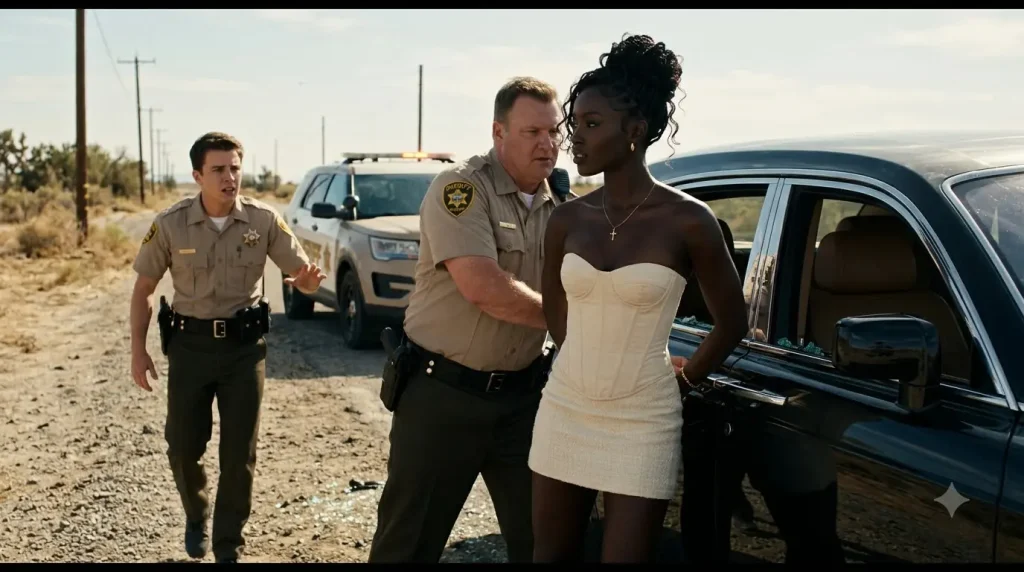
Mercer smiled faintly.
“You’re impossible.”
“Frequently.”
Investigators obtained legal process for the complaint database.
No dramatic raid.
No people running through halls with boxes.
Server images.
Access logs.
Backups.
Sequential complaint numbers.
That was where the system began to unravel.
Complaint 2214.
Then 2219.
Where were 2216 through 2218?
Marked void.
Why?
Data-entry error.
Technicians recovered deleted metadata.
Wallace.
Okafor.
Mendoza.
Names.
Narratives.
Files that had once existed.
Void privileges were held by four accounts.
The complaint lieutenant.
The sheriff’s administrative captain.
The IT administrator.
Sheriff Ashford.
That did not prove the sheriff deleted complaints.
It proved the power existed.
Then Deputy Miles Ansar requested a protected interview.
Renata was deliberately excluded at first.
She was a direct victim and witness.
Miles needed to speak without feeling he was being evaluated by the woman he had failed to protect quickly enough.
The interview lasted three hours.
When Mercer entered Renata’s office afterward, his face told her something had changed.
“What?”
“Miles says Gity told younger deputies to leave cameras off until stops became ‘real.’”
Renata sat straighter.
“Exact phrase?”
“Go dark until we know what we have.”
“When?”
“Multiple times.”
“Anyone else hear?”
“Yes.”
“Names?”
“He gave four.”
Renata nodded.
“Why was Miles’s camera active during my stop?”
Mercer smiled without humor.
“He recognized the Phantom.”
“What?”
“He saw it outside the federal courthouse two weeks earlier.”
Renata frowned.
“He knew it was federal?”
“No.”
“But he saw government-security people near it.”
“So when Garrett started following it…”
“He got nervous.”
Renata remembered Miles checking his watch.
“That’s why he looked at the time.”
Mercer shook his head.
“No.”
“Then why?”
“Because Garrett’s camera was off.”
Renata became still.
Miles understood that if the stop went bad, someone might later need an exact timeline to compare activation logs.
Smart.
Very smart.
Garrett Gity’s camera had not malfunctioned as he claimed.
Telemetry showed manual deactivation.
It came on only after federal vehicles appeared.
That turned an administrative problem into something more serious.
Then Miles revealed one detail nobody expected.
Before activating the cruiser lights, Gity had looked at the Phantom and said:
“There she is.”
Renata stared at Mercer.
“He knew the car.”
“Apparently.”
“That means this may not have been random.”
“Exactly.”
The task force revisited Renata’s confidential assignment.
The Rolls-Royce had been used three times in Ashford County during the previous month.
Each trip involved a source linked to Caldera Recovery Services, a private towing company holding the county’s exclusive impound contract.
The source alleged deputies were directing vehicles into impound under questionable circumstances.
Owners faced extreme storage fees.
Administrative penalties.
Lien processes.
Some vehicles eventually went to auction.
Several buyers were companies linked to county political donors.
Nothing inherently illegal about towing or lien sales.
Everything depended on whether stops and impounds were being manufactured intentionally.
The source claimed Garrett Gity had participated.
Renata had not known whether to believe him.
That was why she was investigating.
Surveillance footage from Caldera’s yard showed Gity arriving there late at night two weeks before Renata’s stop.
No official call.
No report.
No documented reason.
His cruiser stayed nineteen minutes.
Three nights later, the Phantom was parked across the street during a source meeting.
Could Gity have seen it?
Possibly.
Then investigators recovered messages from a Caldera manager’s phone.
To a prepaid number:
Black Phantom back around. Same one as last week.
Response:
Find out who’s driving.
Timestamp:
Twenty-six minutes before Gity stopped Renata.
Mercer placed the printed message on her desk.
“This changes everything.”
Renata read it twice.
“Can we tie the number to Gity?”
“Not yet.”
“Then it changes questions.”
Mercer sighed.
“You never give me a dramatic moment.”
“Drama contaminates people.”
The prepaid phone was eventually linked to a device that repeatedly traveled with Gity’s personal phone.
Still circumstantial.
Then investigators recovered security-camera footage from a gas station.
Gity buying a prepaid refill card.
Same account.
Now the evidence hardened.
Garrett Gity had not merely seen a Black woman in an expensive vehicle and made a biased assumption.
He may have been looking for that specific car because he believed it was connected to an investigation threatening a profitable impound scheme.
The racist language remained real.
The unlawful force remained real.
But another motive had been operating too.
Fear.
Money.
Self-protection.
Motives stack.
People want one explanation because one explanation fits headlines.
Reality is messier.
A person can act from prejudice, greed, pride, and panic in the same five-minute encounter.
The Caldera investigation exposed a system that had operated for almost four years.
Not every tow was improper.
Most were routine.
Accidents.
DUI impounds.
Abandoned vehicles.
But a subset followed a suspicious pattern.
High-value cars.
Drivers considered unlikely to navigate legal processes quickly.
Vehicles allegedly involved in documentation problems.
Cars seized after arrests that were later dropped.
Storage fees accumulated.
Some owners paid thousands.
Others lost the cars.
Caldera auctioned them.
Several went to companies connected to a businessman named Lawrence Vale.
Vale had donated heavily to Sheriff Ashford’s reelection campaigns.
Again, donations were legal.
Then technicians found text messages between Vale and Gity.
That was less innocent.
Got another German one for you. Young kid. Mama’s title.
Vale:
Keep it long enough to make the storage worth it.
Gity:
Working.
Another exchange:
County judge’s nephew says he wants the blue coupe.
Gity:
Owner’s fighting the impound.
Vale:
People stop fighting when numbers get big.
Renata stared at the texts.
Mercer sat across from her.
“How many people?”
“Potentially?”
“Yes.”
Renata looked toward the whiteboard.
“Forty-seven suspect impounds.”
Mercer swore softly.
“And Gity?”
“Directly connected to nineteen.”
“Sheriff?”
Renata shook her head.
“Not yet.”
Then the complaint suppression made sense.
People had complained.
Reports disappeared.
Body cameras started late.
Supervisors treated each incident as isolated.
Ashford County had built a system where no one person needed to order every act.
The structure protected itself.
Captain Ronald Pike, head of administration, became the first senior official to cooperate.
He did not do it out of conscience.





