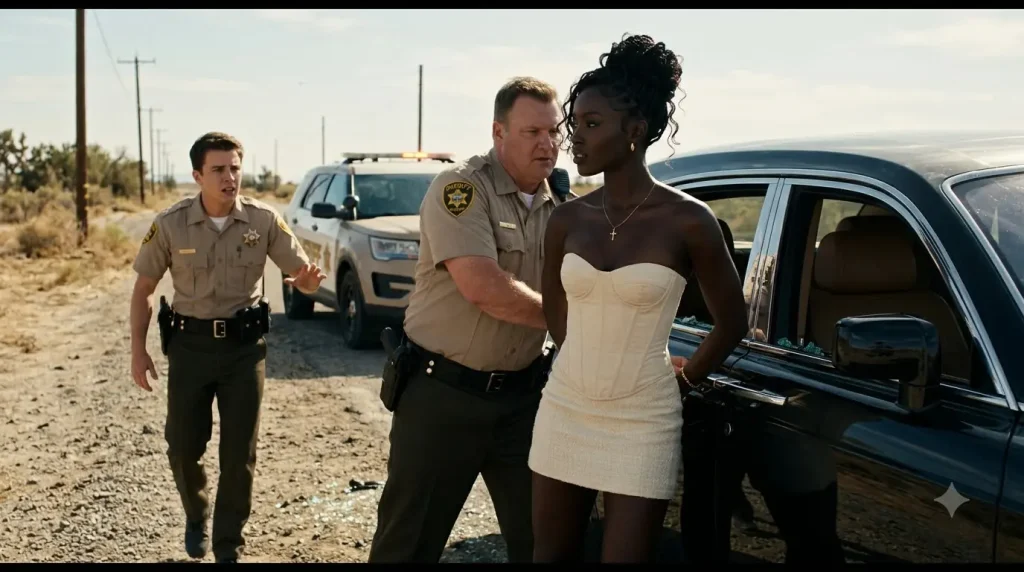
The middle ground satisfied almost nobody. Renata had expected that. Real accountability rarely offered the theatrical satisfaction of a guillotine. It was tedious, precise, and profoundly uncomfortable. While Miles served his suspension, the federal grand jury in the Western District began issuing subpoenas. Sheriff William Ashford fought every single one. He hired three prominent defense attorneys whose retainer alone exceeded his annual county salary. The money for his legal defense did not come from his personal accounts. It flowed from a newly formed legal defense trust funded almost entirely by anonymous political donors. Among the largest initial contributions was a certified bank draft traced back to an offshore entity managed by Lawrence Vale. Renata spent four weeks mapping the financial architecture of that trust. She worked twelve-hour shifts under buzzing fluorescent lights in the federal building, tracking corporate registry filings through Delaware, Nevada, and the Cayman Islands. Mercer brought her black coffee every morning at eight. He stopped asking about the dull ache in her left shoulder. He knew the strain from Gity’s takedown had settled into chronic tendonitis. He also knew she would ignore any advice to take medical leave until the indictments were unsealed. The grand jury heard testimony from thirty-two witnesses over twenty-four days. Captain Ronald Pike sat in the witness box for an entire afternoon, methodically laying out how the complaint purge operated. He brought personal notebooks he had kept in his garage for five years. Each notebook contained dates, internal file numbers, and handwritten notes of conversations with Ashford. In one entry from fourteen months earlier, Pike had written:Sheriff says Caldera needs the luxury imports kept off the street until auction windows clear. That single note shattered the defense’s argument that Ashford was merely an administrator disconnected from daily towing operations. Vale was arrested first. Federal agents took him into custody outside an upscale steakhouse in the state capital. He did not look like an architect of countywide extortion. He looked like a tired, sixty-one-year-old developer in an expensive suit that no longer fit his slumping shoulders. Vale did not stay silent for long. Faced with bank fraud, wire fraud, and conspiracy charges carrying potential sentences exceeding thirty years, his lawyers initiated proffer sessions within forty-eight hours. He provided audio recordings of phone conversations he had secretly made with county officials. Vale had distrusted everyone, including the sheriff he funded. In one recording, Ashford’s distinct, measured voice came through with crystal clarity:“Garrett knows what to grab. Just make sure the checks to the landscaping account don’t lag behind the auction turnover.” Renata sat in the listening room with headphones clamped to her ears as the audio played. She did not blink. She did not celebrate. She simply noted the timecode on an evidence log and initialed the line. When the federal indictment against Sheriff William Ashford was finally returned, it contained eighteen felony counts. Deprivation of rights under color of law. Honest services wire fraud. Conspiracy to commit extortion. Obstruction of justice. The arrest took place on a Tuesday morning at the Ashford County Courthouse. There were no sirens. No drawn weapons. Mercer and three other senior agents walked into the sheriff’s administrative office with an arrest warrant signed by a federal magistrate. Ashford sat behind his massive mahogany desk, beneath oil paintings of his predecessors. He looked at Mercer with cold disdain. “You’re making a historic mistake, Daniel.” Mercer did not raise his voice. “Stand up, William, and put your hands behind your back.” Ashford hesitated for three seconds. Then he looked past Mercer toward the open doorway where two uniformed Ashford County deputies stood in the hall. Neither deputy moved to help him. Neither deputy reached for a weapon. They simply watched their sheriff with expressionless faces. The culture of silence had snapped the moment the indictments became federal public record. Ashford stood slowly. He surrendered his service weapon. He placed his gold badge on the blotter of his desk. When the handcuffs clicked around his wrists, Renata watched from the end of the corridor. She felt no personal triumph. She felt only the heavy, quiet exhaustion of watching an institution collapse under the weight of its own rot. Garrett Gity’s legal trajectory moved along a separate, equally brutal path. His private attorney attempted to negotiate a plea agreement that would dismiss the civil-rights counts in exchange for a guilty plea to misdemeanor property damage. The United States Attorney rejected the offer immediately. Federal prosecutors made it clear that Gity would either plead guilty to Section 242 deprivation of rights resulting in bodily injury or face trial before a federal jury. Gity chose trial. He believed a jury drawn from the broader district would sympathize with a veteran deputy patrolling isolated roads against out-of-town strangers. His defense team argued that the traffic stop was an escalating tactical encounter fueled by reasonable suspicion. They claimed the broken window was an attempt to neutralize a potential threat inside a darkened, heavily tinted luxury vehicle. They called character witnesses who spoke of Gity saving lives from burning vehicles and freezing winters. Renata took the witness stand on the third day of the trial. She wore a simple dark suit. She carried no notes. Her testimony lasted four hours. She spoke with absolute clinical detachment. She did not exaggerate Gity’s physical aggression. She did not downplay his service record. She described the road conditions, the deceleration of the vehicle, the specific commands issued, and the exact physical mechanics of her restraint on the gravel. Then the prosecution played the dash-camera audio and Miles Ansar’s body-camera footage on a ten-foot projection screen facing the jury. The courtroom fell dead silent. The sound of the baton striking the Rolls-Royce windshield reverberated through the speakers. CRACK. Then came Gity’s voice, amplified and inescapable:“Where did a Black thief like you steal a car like this?”
A Deputy Smashed a Woman’s Rolls-Royce on a Lonely County Road — Then the Sirens Beyond the Trees Changed Everything
But he also had remained silent during earlier misconduct he now admitted seeing.
One evening he asked Renata to meet.
She agreed only after his own interview process was complete.
They sat in a quiet conference room.
Miles looked exhausted.
“Do you hate me?”
Renata leaned back.
“That question helps you more than me.”
He looked down.
“I should’ve stopped him sooner.”
“Yes.”
“I was scared.”
“I know.”
“You say that like it matters.”
“It explains.”
“Doesn’t excuse.”
“No.”
Miles rubbed both hands together.
“I’ve replayed the moment he first grabbed you.”
Renata said nothing.
“I knew.”
“What?”
“That it was wrong.”
“Immediately?”
“Yes.”
“Then why didn’t you act?”
Miles closed his eyes.
“Because Garrett trained me.”
There it was.
“He got me through field training.”
“Covered me when I screwed up.”
“Helped when my wife was sick.”
“Watched my daughter once when daycare closed.”
Renata listened.
“I kept thinking there had to be something I didn’t know.”
“Some reason.”
“Then he broke the window.”
“And?”
“And there wasn’t any reason left.”
Renata nodded.
Miles looked toward her.
“How do you know when loyalty becomes cowardice?”
Renata thought for a long moment.
“When loyalty requires you to lie about what you can see.”
Miles absorbed that.
Then:
“I looked at my watch.”
“I know.”
“I wanted the time.”
“I know.”
“Was that enough?”
“No.”
His face tightened.
Renata continued.
“But it mattered.”
“Both things can be true.”
Miles nodded.
“I’m probably getting suspended.”
“Possibly.”
“Could lose my job.”
“Possibly.”
He looked toward her.
“Would you fire me?”
Renata almost smiled.
“I’m not your chief.”
“If you were.”
She shook her head.
“I don’t answer disciplinary questions emotionally.”
“That’s not an answer.”
“No.”
“It’s the only one you get.”
Miles eventually received a suspension for prior body-camera failures and failure to intervene promptly during earlier incidents he disclosed.
He kept his job.
Some activists were furious.
Some deputies thought any discipline was betrayal.





