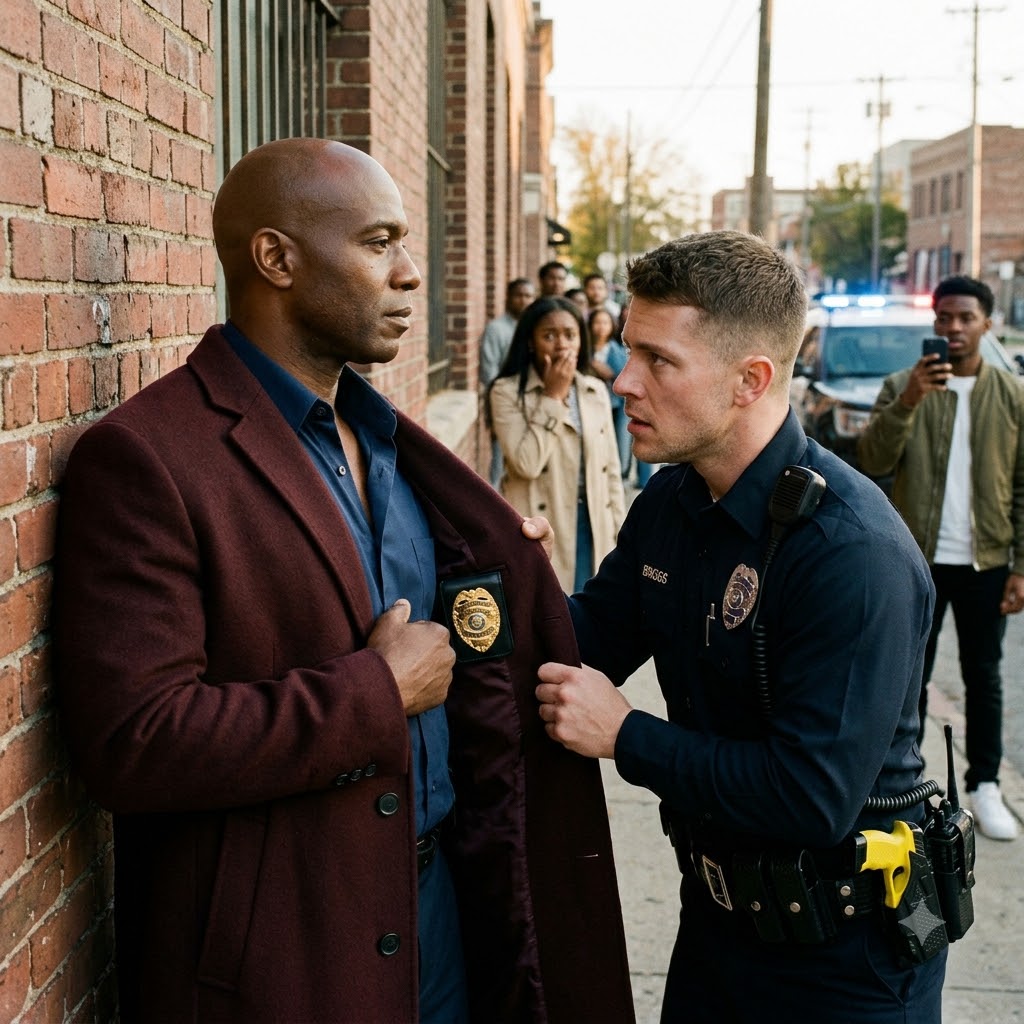
The rain in Oakhaven never fell straight down; it came off the river in cold, sideways sheets that turned the asphalt into black glass and made the sodium streetlights bleed across the gutters. Inside the bay of the Fourth Precinct, the air smelled of wet wool, burnt percolator coffee, and the faint, sharp tang of gun oil.
Kyle Vance stood in front of the tarnished mirror above the locker room sinks, running a thumb over the brass shield pinned to his left breast. Six months out of the academy, and the metal still hadn’t lost its factory glare. He adjusted his tie clip a millimeter to the left, squared his shoulders, and watched the stranger in the glass square his back. The uniform did something miraculous to a twenty-four-year-old frame. It widened the chest. It straightened the spine. Out on the street, people didn’t look at Kyle Vance, the kid who had spent three summers hauling drywall for his uncle in Eastbrook. They looked at the dark navy wool, the leather duty belt heavy with steel and polymer, and they stepped aside.
“If you polish that tin any harder, kid, you’re gonna rub the numbers off.“
Sergeant Ray Miller leaned against the doorframe, a Styrofoam cup cradled in one meaty hand. Eighteen years on the job had settled into Miller’s face like concrete—heavy jaw, broken nose from a bar fight in ’09, and eyes that looked like he’d already seen the worst thing a human being could do and been bored by it. He had fourteen days left until his pension locked in, and he carried the quiet, untouchable swagger of a man who had survived the meat grinder without losing a finger.
“Just making sure it’s squared away, Sarge,” Kyle said, dropping his hand.
“Squared away is for the parade ground,” Miller muttered, taking a slow sip of coffee that had to be scalding. “Out on Mercer, nobody cares if your creases are sharp. They care whether you look like you’re willing to put somebody through a plate-glass window if they mouth off. Come on. Unit Four-Twelve’s idling.“
They walked out into the gray drizzle. Roll call had been the usual blur of petty larcenies, domestic calls, and a terse warning from the watch commander about an audit coming down from downtown regarding narcotics vouchers. Kyle had barely registered the administrative chatter, too busy memorizing the hot sheet of stolen vehicles. Miller, though, had gone strangely rigid during the mention of the audit, his pen tapping a silent, frantic rhythm against his clipboard before he snapped it shut.
In the cruiser, the heater blasted dry air that smelled of dust and peppermint. Miller drove with one hand draped over the top of the steering wheel, the other resting near his knee, where a cheap, scuffed prepaid phone sat face-down in the cup holder. Twice in ten minutes, the phone buzzed against the plastic. Both times, Miller’s jaw tightened, and he ignored it.
“You hear the chatter at roll call?” Miller asked, his eyes flicking to the rearview mirror as they merged onto Mercer Avenue. “About the suits from downtown poking around the evidence annex?”
“Yeah,” Kyle said, adjusting the strap of his Kevlar vest where it bit into his collarbone. “Something about missing chain-of-custody signatures.”
Miller snorted, a wet, contemptuous sound. “Paper-pushers who haven’t walked a beat since flip phones were a luxury. They sit in climate-controlled offices on Broad Street, sipping twelve-dollar lattes, looking for a reason to jam up working cops because a receipt got wet in the rain. You remember one thing, Vance, after I’m sitting on a boat in Florida.”
“What’s that, Sarge?”
“The only people who have your back are the ones wearing the same color shirt as you,” Miller said, his voice dropping into that gravelly, conspiratorial register that always made Kyle feel like he’d been invited into an exclusive brotherhood. “The public? They hate you until someone kicks their door in. The brass? They’ll feed you to the press to save their own pension. You hold the line. You project control. You hesitate for half a second out here, you look weak—and the second you look weak, you’ve lost the street.”
Kyle nodded, absorbing the lesson like scripture. He wanted Miller’s approval more than he wanted to admit. For six months, he’d been the rookie who wrote clean reports, who said sir and ma’am, who took the dead-end calls no one else wanted. He was tired of being the kid who held the flashlight while the real cops worked. He wanted a collar that made the precinct room go quiet when he walked in.
Mercer Street was waking up in earnest. It was a strange, transitional artery of the city—half gleaming glass-and-steel commuter condos, half crumbling brick warehouses that hadn’t seen a shipping crate in thirty years. Steam curled from subway grates. Commuters hunched under black umbrellas, hurrying toward the Mercer Street Transit Plaza with paper cups clutched in gloved hands. Across from the plaza stood the Fourth Precinct’s evidence annex, a windowless concrete box tucked beside an old dry cleaner and a narrow, brick-walled service alley.
The prepaid phone in the cup holder buzzed a third time.
Miller cursed softly under his breath, grabbed it, and thumbed the screen without looking at Kyle. His thumb hovered for two seconds, then he shoved the phone into his windbreaker pocket and pulled Unit 412 sharply to the curb, double-parking half a block short of the transit plaza.
“Alright,” Miller said, shifting into park and popping his seatbelt. “I gotta go talk to a CI behind the dry cleaners. Guy’s skittish, won’t talk if he sees two uniforms.”
Kyle frowned slightly. “You want me to wait in the car?”





