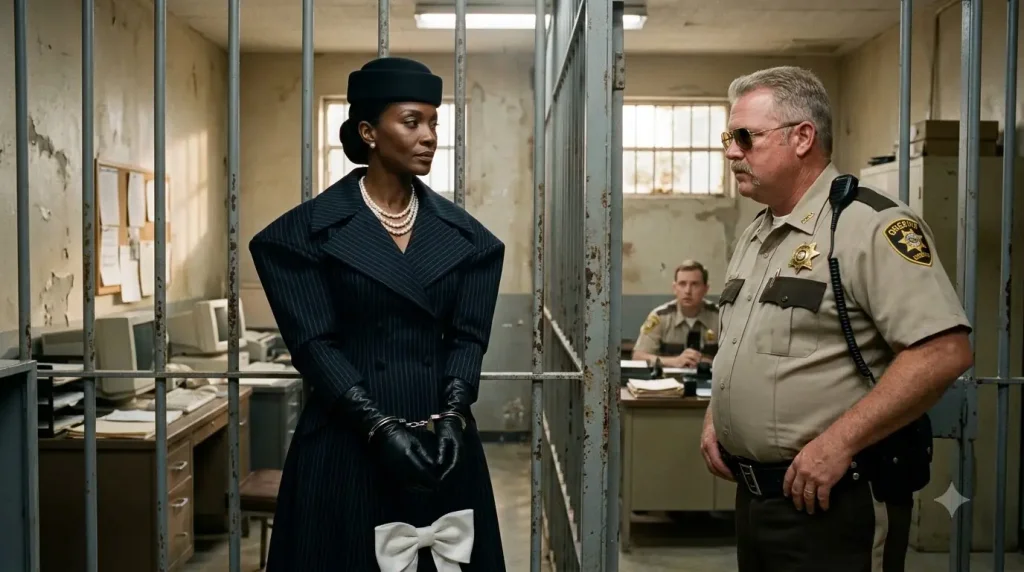
Sarah did not move her hands from the wheel. “On what legal basis are you ordering me out of the vehicle, Sheriff?”
“Pennsylvania v. Mimms, lady. Now step out on the gravel before I drag you out and tack on felony obstruction.”
“I will comply completely with your physical directive,” Sarah said, her voice crisp enough for both his body mic and her collar transmitter. “Please note that I do not consent to any search of my person, my containers, or this vehicle.“
She opened the door and stepped out into the blinding heat. Standing five feet ten inches in her heels, she was nearly eye-to-eye with Ryker. That vertical parity seemed to offend him deeply. Without asking for the identification he had just inquired about, he caught her by the upper arm, spun her toward the hot metal of the sedan, and barked for her to place her hands on the roof.
When the first steel cuff bit into her wrist, Sarah did not pull back. She simply turned her cheek slightly toward his chest camera.
“Sheriff Ryker, you are executing a custodial arrest without probable cause. I strongly advise you to pause and verify my credentials before locking these restraints.”
“Shut your mouth,” Ryker grunted, wrenching her left wrist behind her to snap the second cuff tight. He leaned in close enough that his breath stirred the veil of her pillbox hat. “Out here, we call this the attitude package. Disorderly conduct, failure to obey, and resisting.”
“Make certain that exact phrase appears in your sworn affidavit,” Sarah replied quietly.
Leaving her standing by his rear fender, Ryker marched back to her open driver’s door, reached across the console, and hauled her crocodile handbag out onto the hood of his Explorer. Without warrant, consent, or exigent circumstance, he unlatched the gold clasp and dumped the contents across the hot paint.
Pearls clattered against steel. A leather billfold slid toward the windshield wipers. And then Ryker’s thick fingers closed around a dense, six-inch matte-black casing machined from aerospace aluminum, featuring a recessed biometric glass plate and zero commercial branding.
He lifted it into the sunlight, turning it over. “Well, well. What the hell is this?”
Sarah’s voice dropped an octave, shedding its polite detachment for the flat, unmistakable cadence of general-officer command. “Put that down immediately. That is a serialized Department of Defense cryptographic communications terminal. You are not cleared to handle it, and tampering with it constitutes a federal felony under Title 18, Section 793.”
Ryker’s grin returned, wide and triumphant. He had hit paydirt. When people started spouting federal statutes on the side of the road, it meant they were terrified of what was inside the box. “Looks like contraband electronic equipment to me. Maybe a radar jammer. Maybe something my brother’s tech boys ought to look over while your car sits in our impound lot.“
He shoved the black unit into his cargo pocket, swept her pearls and wallet back into the bag, and kicked the dropped leather purse across the gravel before picking it up by one strap. Fifteen minutes later, a flatbed wrecker painted with the bold red lettering of Ryker Recovery & Transport was winching her black Genesis off the shoulder, while Sarah sat handcuffed in the cramped polyethylene rear seat of Unit 1, watching the pine trees give way to the brick courthouse square of Oak Haven.
At the booking desk inside the county jail, twenty-eight-year-old Deputy Jared Miller had been halfway through entering a misdemeanor shoplifting report when the heavy rear sally-port door banged open.
Jared had spent six years in the 3rd Infantry Division out of Fort Stewart—reaching the rank of staff sergeant before an ankle reconstruction sent him home to Oak Haven, where his uncle had helped him get hired on at the sheriff’s department. It had taken Jared less than three months on the payroll to realize that Thomas Ryker ran the county like a private tollbooth, and another six months of quiet dread to realize that speaking up meant losing his pension, his mortgage, and probably his freedom. So Jared kept his head down, worked the indoor booking desk, and prayed his shift ended quietly.
One look at the tall, composed woman walking ahead of Ryker in handcuffs told Jared his shift was not going to end quietly.
“Open up Four,” Ryker ordered, tossing a scuffed crocodile handbag onto the laminate counter so hard it scattered a stack of bond forms. “Got a Washington princess here who thinks the Georgia traffic code is optional.“
“I was detained after declining to validate an fabricated lane-violation claim,” Sarah said smoothly, her eyes meeting Jared’s across the counter. “And my personal effects were seized during a warrantless search incident to an unlawful arrest.“
“Sit down!” Ryker barked, shoving her shoulder toward the bolted metal intake chair. He began emptying his pockets onto the stainless-steel property tray—keys, a pair of gold earrings he had made her remove at the sally-port, her billfold, and finally the heavy matte-black rectangular slab.
When the device clacked against the steel counter, Jared froze.
He didn’t know the specific nomenclature of the unit, but nobody who had spent six years around brigade tactical operations centers could mistake that non-reflective coating, the zero-seam mil-spec housing, or the laser-etched red property seal of the Defense Information Systems Agency on the reverse plate. His stomach dropped straight into his boots.
“Sheriff,” Jared said, his voice tight. “Where did you get that?”
“Out of her purse,” Ryker scoffed, reaching for the intake sheet. “Write her up for reckless driving, disorderly conduct, and obstructing an officer.”
“Ma’am,” Jared said, ignoring the sheriff and looking directly at the prisoner. “Are you active-duty military?”
“I am, Deputy Miller,” Sarah answered. “And you have sixty seconds to inspect the military identification card inside that wallet before you become a named co-defendant in a federal criminal conspiracy involving compromised national defense material.”





