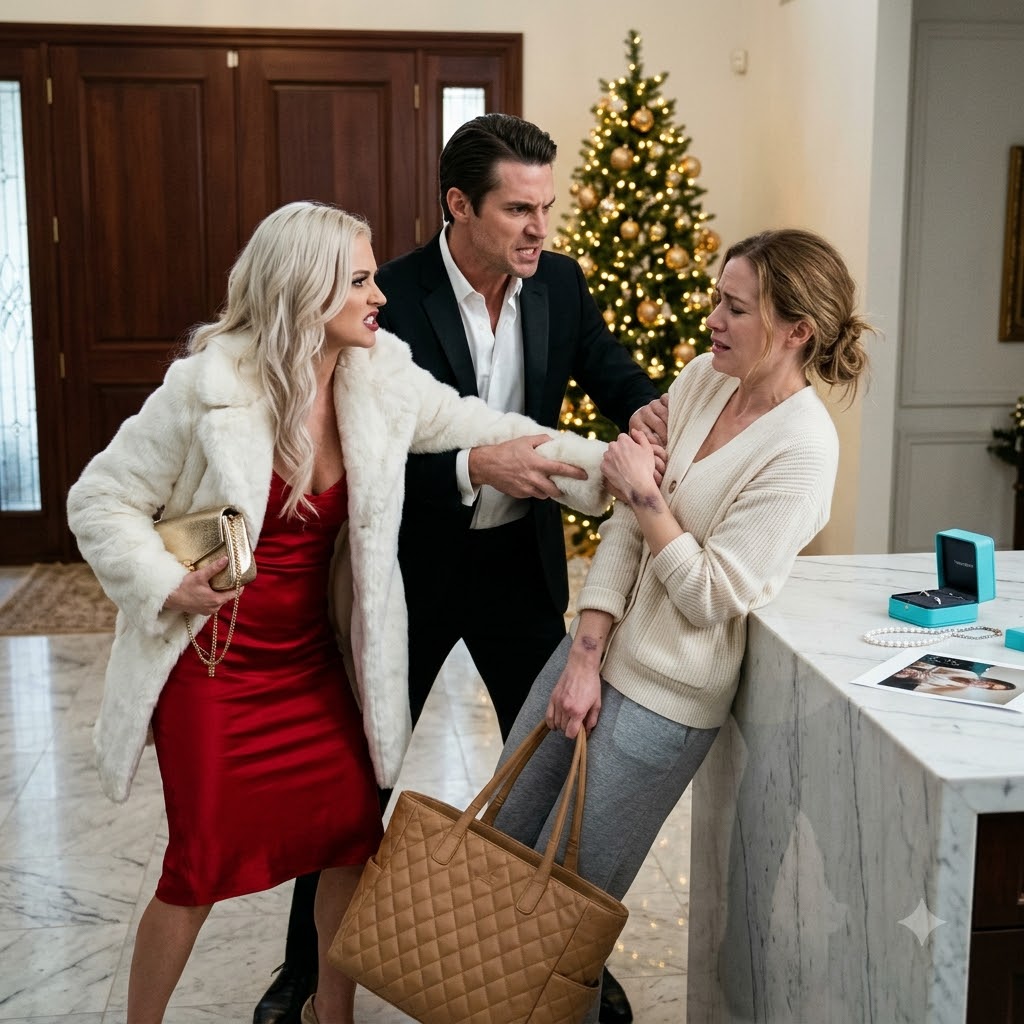
“Swept automatically from the cash-management sub-account tied to that exact brokerage,” Daniel said. “Along with twelve thousand dollars in hotel and dining charges over the past four months.”
A cold, brilliant stillness filled the room. Not rage. Not hysteria. Just the final, audible click of a lock turning into place.
“He told me the trust was dead money,” Lauren said softly. “He told me I didn’t understand how real businesses worked. And the entire time, he had secretly mortgaged my own cash reserves to keep his warehouse deal alive.”
“Yes,” Daniel said. “And unlike the outdated marketing decks, pledging a spouse’s separate inheritance distributions as undisclosed collateral for a distressed bridge draw—right before a separation—is not an innocent oversight. Rachel Kim has already seen the control agreement.”
The meeting took place three days later in a neutral conference room at Rachel Kim’s firm.
There were no raised voices. No slammed folders. Just four people—Lauren, Rachel, Cole, and Arthur Pendelton—plus Daniel Harris seated quietly at the end of the mahogany table as the trust’s representative.
Cole looked thinner than he had at the visitation center. He wore a charcoal suit that hung slightly loose at the collar, and the boyish confidence that had carried him through four years of glossy magazine profiles was entirely gone. When he sat down, he looked at Lauren for three full seconds, waiting for anger, for a speech, for the old emotional heat he knew how to deflect.
Lauren met his gaze calmly, her hands resting flat on a clean yellow legal pad, and said nothing.
Rachel Kim did not waste time on moral lectures. She slid the Fidelity control agreement, the Harborview bridge draw confirmation, and the twelve-month sweep ledger across the polished mahogany toward Arthur Pendelton.
“Here is where we stand,” Rachel said evenly. “Your client executed a collateral pledge against two point one million dollars of Lauren’s segregated trust distributions without her knowledge or consent, using a joint administrative designation obtained under the representation of tax convenience. In addition, forty-two thousand dollars of those same funds were dissipated on non-marital expenses—specifically jewelry and luxury hospitality for a third party.”
Cole’s jaw clenched, color rising slowly along his neck. “That was a joint account, Rachel. I had legal authority to pledge liquidity—”
“You had technical signatory access,” Pendelton cut in sharply, his eyes scanning the dates on the Fidelity form with unmistakable grimness. He glanced sideways at his client, lowering his voice. “Cole, you didn’t tell me you put a control agreement on her distribution account six weeks ago.”
“It was a ninety-day bridge!” Cole said, his voice cracking slightly as he leaned forward, looking straight at Lauren. “Lauren, listen to me—the permanent takeout financing was supposed to close in February. Not a single dollar was ever going to be drawn from that account. It was just a paper reserve to satisfy Harborview’s liquidity covenant.”
“Until Harborview learned your marketing deck overstated the Bennett Trust’s backing,” Daniel Harris said calmly from the end of the table. “Which triggered a material-adverse-change review on the Westbridge facility this morning. Harborview is now demanding either an immediate cash cure or permanent replacement collateral within fourteen days—or they have the contractual right to freeze Lauren’s Fidelity balance.”
Silence crashed down over the conference room.
Cole stared at Daniel, his face going pale. “They won’t freeze it if we extend the bridge—”
“They won’t be touching it at all,” Rachel said coolly, sliding a single-page stipulation across the table. “Because we are filing an emergency motion for equitable constructive trust and fraudulent-conveyance relief in Chancery Court at three o’clock today—naming Harborview Credit Partners as a third-party respondent—unless your client releases the Fidelity pledge by Friday afternoon.”
Pendelton exhaled slowly through his nose. He turned to Cole. “If Rachel files that motion, Harborview’s compliance committee will pull the entire Westbridge loan by Monday morning, and Northstar will cross-default your revolver. You’ll be in Chapter 11 before the end of January.”
Cole’s hands gripped the edge of the mahogany table, his knuckles white. “How am I supposed to replace a one-point-eight-million-dollar liquidity pledge by Friday?”
“Your board already discussed an option yesterday,” Daniel said neutrally. “Aaron Blake informed me that Meridian’s private-equity arm offered to inject three million in preferred equity into Bennett Development Group to stabilize the Westbridge balance sheet.”
Cole looked up, his eyes dark and hollow. “They want thirty-five percent of the company and a board seat. They’ll take away my majority control.”
“They’re offering you a solvent company,” Rachel said softly. “And a clean exit from a Chancery fraud docket.”
For ten long seconds, nobody spoke. The radiator beneath the tall window clicked softly in the winter silence.
Cole looked across the table at Lauren. For the first time in seven years, he wasn’t performing. There was no charm, no condescension, no rehearsed apology waiting to pivot into blame. Just a man staring at the exact dimensions of the consequences he had built for himself, brick by brick.
“You really aren’t going to blink,” he said quietly.
“No,” Lauren answered, her voice steady and devoid of cruelty. “I’m not taking your company, Cole. I’m taking back what belongs to me and our children. Whatever you build after Friday will actually be yours.”
He looked down at the stipulation for a long moment. Then he reached into his breast pocket, unscrewed the cap of his fountain pen, and signed his name on the line—agreeing to the immediate release of the Fidelity pledge through the equity dilution, full repayment of the dissipated forty-two thousand dollars from his next quarterly salary draw, and the formal parenting schedule Rachel had drafted.
The trustees’ first formal quarterly review meeting of the new year took place in late January, on a bright, freezing morning when the lake looked like hammered silver.





