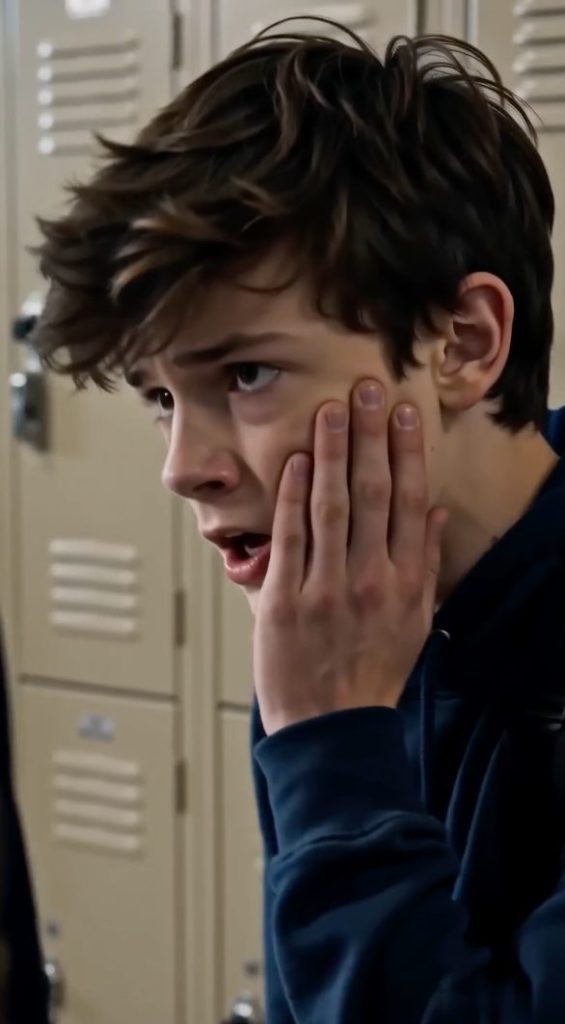
He was accustomed to that kind of answer when a conversation touched on his grandfather’s earlier years.
The old man had never lied about his past, as far as Ethan knew, but he had carefully chosen which parts of it belonged to their everyday life.
For a moment, Ethan felt the familiar curiosity rise, then decided that the questions on the kitchen table mattered more urgently than the ones behind the study door.
His grandfather reached across and touched the corner of the topmost printed sheet.
“Keep the full pages.
People sometimes leave out a heading or a footnote without realizing how much it changes the meaning.”
“I’ve kept them.”
“And your interview notes?”
“Those too.”
“Good.”
The old man stood, picked up the empty water glass, and carried it to the sink.
He spoke again without turning around.
“If somebody asks you to give up your work, remember that being respectful doesn’t mean surrendering your judgment.”
Ethan looked up.
“Why would somebody ask me to do that?”
His grandfather turned back toward him.
His expression was serious now, though his voice remained gentle.
“I hope nobody does.
But a difficult question sometimes makes people worry more about who is asking it than about whether it deserves an answer.”
For the rest of the evening, Ethan worked quietly while his grandfather prepared supper.
Their conversations returned to ordinary things, including a loose garden hinge and the possibility of rain before the weekend.
The change felt natural, as though the old man understood that constant worry would not make the evidence stronger.
Ethan helped clear the dishes and then returned to his papers, grateful for the familiar sounds of the house around him.
Before going home, he passed the study and noticed that its door had been left slightly open.
Through the narrow gap he could see the edge of a framed photograph and the reflection of a lamp against glass.
Several people stood together in the picture, their clothes formal and their expressions solemn.
Ethan slowed, curious as always, but he did not enter.
His grandfather was standing behind him with a folded dish towel in his hands, and when their eyes met, the old man offered a small, almost sorrowful smile.
“One day,” his grandfather said.
Ethan understood what he meant.
One day they would talk about the photographs and the years that had made his grandfather into the quiet, observant man he knew.
Ethan nodded without pressing.
There would be time, he thought, for those conversations after the school article was finished.
He did not know how quickly that assumption would be tested.
The next morning, Ethan arrived at school earlier than usual.
The hallways were still relatively quiet, and a custodian was finishing work near the entrance while the first students came through the doors.
Ethan went straight to the newspaper room and checked his messages.
There was no detailed response to his questions about the disciplinary decisions, and the budget inquiry had not yet produced a clear explanation.
He wasn’t surprised, but he was disappointed.
He had tried to present the questions fairly, and he had hoped that someone would recognize the value of answering before the article was published.
Instead, he found himself sitting in front of the same unfinished draft, wondering how to explain the school’s lack of response without making it sound more conclusive than it was.
He wrote a factual sentence noting that clarification had been requested, then left space for any answer that might arrive.
At the beginning of second-period history, he placed the notebook beneath his desk and tried to concentrate on the lesson.
Around him, students were opening textbooks and settling into the comfortable distraction of an ordinary school morning.
Ethan liked history because it rewarded the habit of asking how people knew what they claimed to know.
That morning, however, the words on the classroom board kept slipping past him as he thought about the interviews in his backpack.
The classroom door opened before the lesson was far underway.
Dean Vance stood in the doorway, one hand resting lightly against the frame, his expression composed.
He spoke briefly with the teacher, then turned his attention toward Ethan.
The sudden quiet in the room made Ethan aware of every movement as he closed his book and reached for his backpack.
“Ethan Cole.
Come with me, please.”
There was nothing openly threatening in the request.
Vance’s voice was measured, and his face revealed almost no emotion.
Yet Ethan felt the same uneasy tightening in his stomach that had accompanied his unanswered messages.
He understood that being summoned from class did not necessarily mean he had done anything wrong, but he also knew that the timing was unlikely to be a coincidence.
He followed Vance into the hallway.
Several classmates looked after him before returning their attention to the lesson.
The door closed, and the ordinary sounds of the building seemed strangely distant.
Vance began walking without explaining where they were going, and Ethan adjusted the strap of his backpack as he fell into step beside him.
“Is this about my newspaper questions?”
Ethan asked.
“We need to discuss some material you’ve been collecting.”
“Did someone send answers?”
“We’ll discuss that in the office.”
Ethan waited for something more, but Vance said nothing.
They continued toward the main administrative area, passing display cases filled with trophies, photographs, and awards celebrating student achievement.
Ethan had written short newspaper pieces about several of those accomplishments.
He had enjoyed seeing the school proud of its students, and he wondered why that pride seemed to become conditional whenever a student asked an uncomfortable question.
Vance’s footsteps were steady.
He neither hurried nor slowed to match Ethan’s pace.
The silence reminded Ethan of the stories frightened students had told him about being called into administrative meetings without knowing what the adults already believed.
He tried not to draw conclusions from his own discomfort.





