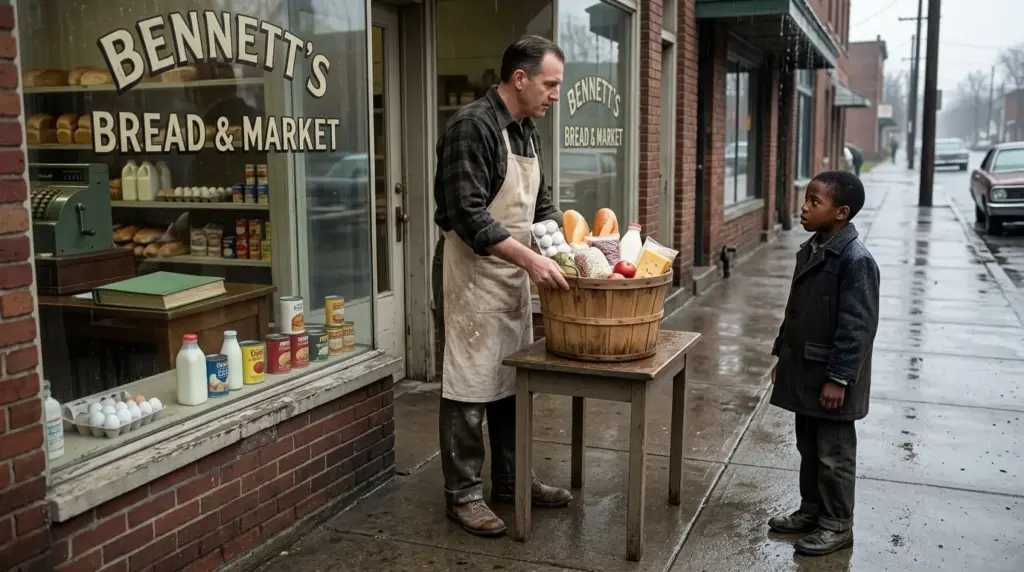
Caleb wiped his face with his sleeve. “One day I’ll come back and pay for all of this.”
Henry smiled because children made enormous promises with total seriousness.
“Tell you what. Pay me back differently.”
Caleb waited.
Henry pointed toward the paper bags. “When you are older, and somebody comes to you scared because they cannot afford what they need, do not make them feel smaller for asking. If you can help, help.”
Caleb stared at him.
“That’s it?”
“That’s plenty.”
“But I still owe you.”
“Your mother owes me thirty-seven fourteen. You owe me good grades.”
Caleb laughed through his tears.
Henry added a small cinnamon roll in a wax-paper sleeve to the top of one bag.
“That one is for you before you get home.”
“My mom says dessert is after dinner.”
“Then do not tell her who gave it to you.”
The boy picked up both bags. They were heavy enough that he had to adjust his grip twice before reaching the door.
He stopped beneath the bell.
“Mr. Bennett?”
“Yeah?”
“I mean it. One day I’ll come back.”
Henry waved him off with a smile. “Bring cash.”
Caleb grinned and disappeared into the rain.
Henry expected Teresa the next morning.
She came in after sunset instead.
She stood at the counter holding the two empty paper bags folded flat against her chest. Her eyes were red. For several seconds she said nothing.
Then she whispered, “You should not have done that.”
Henry kept kneading dough.
“Probably not.”
“I cannot pay for it.”
“I know.”
“Then why?”
Henry looked up. “Because your boy had not eaten.”
Teresa pressed her lips together. She placed five dollars on the counter.
“For the account.”
Henry started to refuse, then stopped. Pride mattered too. He opened the ledger, wrote five dollars beside her name, and handed her a receipt.
Before she left, Teresa said, “He talked about what you said all night.”
Henry smiled. “Then I am sorry for you.”
“No.” Her face softened. “I think he needed to hear it.”
For the next eight months, the Reeds remained customers. Teresa paid a little at a time. Some weeks she paid nothing. Caleb occasionally came in after school and stacked empty baskets for Henry without being asked.
Then one Monday, the apartment above the laundromat was empty.
Teresa had found work in another city. The move happened quickly. No farewell, no forwarding address Henry knew about. The last entry in the ledger showed a remaining balance of twelve dollars and sixty-four cents.
Henry circled it once.
Then life buried the memory.
Margaret became ill twelve years later and died after a long fight with ovarian cancer. Henry nearly sold the bakery then but could not bring himself to close the place where they had spent most of their marriage. His father died the following winter, leaving Henry alone behind the same counter where three generations of customers had bought bread, milk, birthday cakes, and emergency groceries.
The neighborhood changed too. The laundromat became a cell-phone store, then an empty unit. The barber retired. A national grocery chain opened less than two miles away with cheaper milk, wider aisles, online ordering, and parking for two hundred cars.
Henry adapted badly.
He refused delivery apps for too long because he did not understand why people would pay someone to drive bread three blocks. He held prices down even when flour doubled. He continued extending credit to families he knew, even after his accountant warned him that compassion was becoming an expense line he could no longer absorb.
Then came the fire.
Not in the bakery, but in the electrical room shared by three storefronts. Smoke damage shut the block down for seven weeks. Insurance covered repairs but not every lost sale, and customers who learned new routines did not all return.
By the time Henry reopened, the landlord had sold the building to a regional property company called Meridian Urban Partners.
The first rent increase came six months later.
The second came the following year.
Henry paid both.
Then a sleek sign appeared on the vacant storefront next door announcing a proposed redevelopment: MAPLE DISTRICT – RETAIL, DINING, LIVING.
Henry stared at the rendering for ten minutes. The artist’s version of the block included glass storefronts, rooftop plants, expensive apartments, and not one thing that looked like Bennett’s Bread & Market.
A month later Meridian offered to buy out the remaining term on his lease.
Henry refused.
They doubled the offer.
He refused again.
Pride played a part, but not all of it. The bakery was the last physical place in Henry’s life where Margaret’s laugh still seemed possible. Her handwriting remained on old recipe cards. A dent in the walk-in cooler came from the day they had tried to move it themselves and nearly crushed Henry’s foot. The back wall still carried pencil marks showing the height of employees’ children over the years.
Selling felt less like retiring than agreeing those memories could be demolished because someone had a more profitable drawing.
So Henry stayed.
And slowly went broke.
At sixty-four, he began opening the bakery at four-thirty each morning because he could no longer afford the assistant baker. He closed at seven, slept badly, and did the books after midnight. The green ledger still sat beneath the register, though most pages now belonged to families who paid through apps or cards rather than handwritten tabs.
Henry still kept a few accounts anyway.
Mrs. Alvarez from three blocks over sometimes needed a week until her disability deposit arrived. A young father named Sean occasionally bought formula two days before payday. Henry wrote the numbers down and waited.
His accountant called it unsustainable.
Henry called it Tuesday.
Then Meridian sent the final notice.
His lease ended in thirty days. Renewal would require a rent increase of forty-two percent, along with a new security deposit and renovation fee. Henry did the math four times because the number seemed absurd every time.





