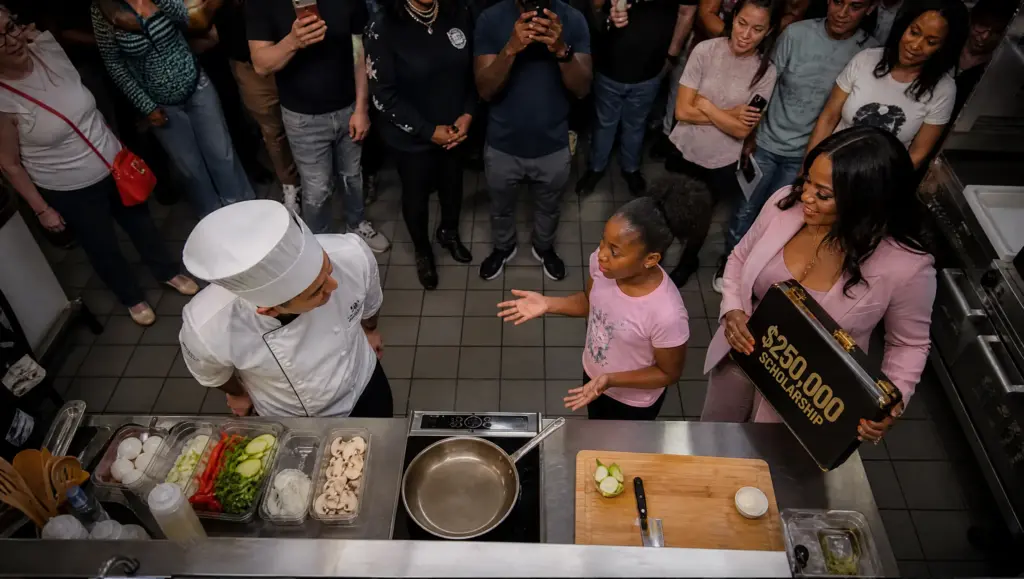
In her small room, Delia lay under the quilt Miss Odette had sewn from old church picnic shirts and stared at the ceiling crack that looked a little like a river. She replayed the whisking, the heat, the way Rainer’s eyes had changed. She felt proud and sick and hungry for toast. She got up, made toast quietly, ate it over the sink, and rinsed the crumbs so Anika would not see evidence of nerves.
She slept eventually. In her dream the sauce split into birds and flew up the hood into the night.
Wednesday morning arrived with the ordinary brutality of school logistics. Delia’s alarm went off at 6:20. She lay still for ten seconds, cataloguing smells the way some people checked weather apps: hallway cleaner faintly chemical, Anika’s coffee already blooming, rain on the windowsill metal. She dressed in a green sweater instead of the mustard yellow, because the mustard yellow still smelled like Emberwick if she buried her face in it, and she was not ready for that particular ghost at breakfast.
Ellis made scrambled eggs that were slightly too dry because he always got distracted by the news on his phone. Anika packed Delia’s lunch with the blue thermos of ginger tea and a note that said only, Stay in your lane today, which was both a joke and not. Delia’s flaw, if she had to name one before second period, was that she believed noticing was the same as being allowed to intervene. Noticing was a sense. Intervening was a politics. She was eleven and still learning the difference with her whole body.
On the bus, her friend Priya nudged her. “You look like you swallowed a secret.”
Delia almost said everything. Instead she said, “My after-school closed. I went to my mom’s work.”
“Boring?”
“Loud,” Delia said, which was true enough.
At school, science with Ms. Brantley included a demo on suspensions versus solutions. Delia raised her hand and asked about temporary emulsions and temperature shock, and Ms. Brantley looked delighted in the specific way teachers looked when a quiet student suddenly revealed a private curriculum.
“Have you been cooking?” Ms. Brantley asked after class, not nosy, just interested.
“With my grandma,” Delia said. “Sometimes.”
“If you ever want to do a lunchtime lab on fats and heat, tell me. No grade. Just curiosity.”
Delia nodded, pleased and cautious. Curiosity was safer at school than in a restaurant kitchen, but curiosity had teeth everywhere.
By Thursday, the Emberwick staff grapevine had done what grapevines do. Theo’s cousin who worked at a bakery on Kent asked Anika, when she stopped in for bread before her shift, whether “the little sauce genius” was coming back. Anika’s smile went flat.
“There is no genius branding,” she said. “There’s a child who should have been doing homework.”
The cousin lifted both hands. “Hey. No offense. People talk.”
People talked. A server mentioned it to a date. The date mentioned it to a friend who wrote a neighborhood food newsletter. The friend emailed Patricia on Thursday afternoon with a breezy request for a human-interest line about “the child prodigy who saved service.” Patricia forwarded the email to Anika with a single sentence: Handling this. Denied.
Patricia’s reply to the newsletter, which Anika insisted on reading, was polite and firm and empty of Delia’s name. Emberwick appreciated community interest in craft. Emberwick did not discuss minors on premises. End of story.
It was not end of story inside the Rowe apartment.
Miss Odette came over Thursday evening with a foil tray of stewed chicken and okra and the expression of a woman who had heard three versions of an event and trusted none of them completely. She kissed Delia’s forehead, inspected her braids with critical affection, and sat at the table like a court.
“Tell me what you smelled,” Miss Odette said.
Delia described the butter, the shallot edge, the way heat had outrun patience. Miss Odette nodded along, correcting a detail about wine reduction, praising the cold-cube instinct, then fixing Delia with a look that could peel paint.
“You were right about the pan,” Miss Odette said. “You were wrong about the room. A professional kitchen is full of egos and knives and rules written in blood nobody wants to see. You don’t walk into a man’s station and announce his failure unless you are ready for the cost. The cost isn’t always fair. Sometimes the cost is him respecting you. Sometimes the cost is him hating you. Sometimes the cost is your mama’s job getting weird. You feel me?”
“Yes, ma’am.”
“Good. Now eat. You’re too skinny when you get nervous, and your mama says you’ve been picking at toast like a bird.”
Ellis laughed into his cup. Anika rubbed her temples. The chicken tasted like Sunday even though it was Thursday, which was Miss Odette’s particular magic.
After Delia went to rinse dishes, Miss Odette lowered her voice. “That chef’s offer. Saturday tasting. What’s your fear?”
“That they want a mascot,” Anika said immediately. “That Delia becomes a story they tell to sell reservations. That she gets hurt. That she starts thinking her worth is applause from men in white coats.”
“And your hope?” Ellis asked.
Anika hesitated. “That she gets to learn in a real room with someone who knows more than we do about restaurant technique. That she isn’t punished for being sharp. That we can say yes to learning and no to spectacle.”
Miss Odette pointed her fork. “Then you write the rules before they do. You go Saturday only if Patricia puts it in writing: education hour, guardian present, no photography, no press, no ‘junior chef’ nicknames, stove access limited, and Delia can walk out mid-shallot if she wants. If they balk, you have your answer. If they agree, you still can say no after you sleep on it.”





