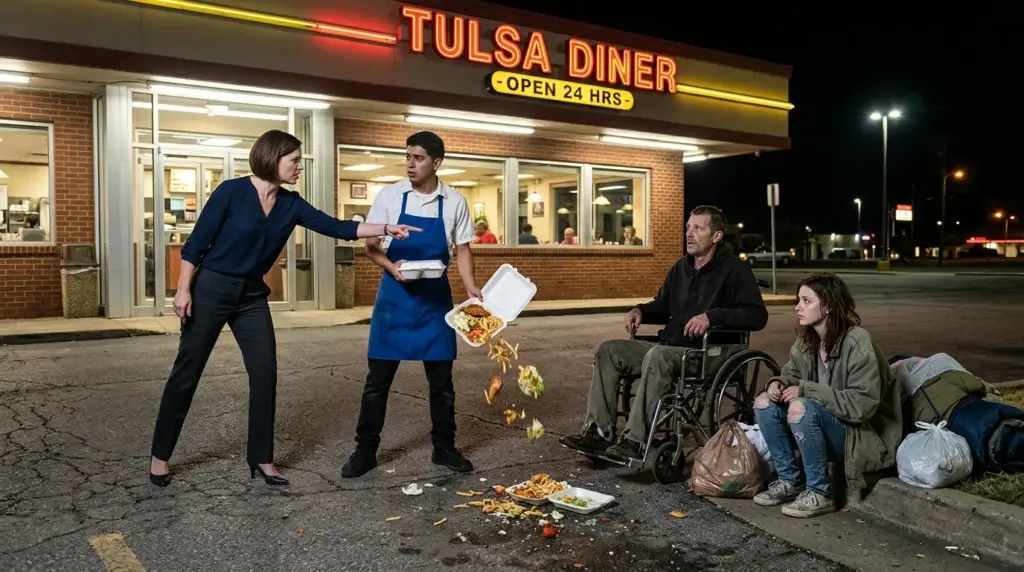
Angelica turned to Felix, her eyes full of venom. “You did this. You ungrateful little–“
“Enough,” Mr. Baker said sharply.
She grabbed her purse from inside, stomped back through the alley, and paused near Felix just long enough to whisper, “I hope your grandfather dies.”
Felix flinched before he could stop himself.
Mr. Baker’s face hardened. “Get out. Now.”
Angelica stormed away through the service gate, her heels snapping against the pavement until the sound disappeared.
June let out a breath. “Wow,” she said quietly. “She really is crazy.”
Felix almost laughed, but the shock was still too fresh. He looked at the food on the ground, then at Tony and June. “I’m so sorry. I was trying to help.”
“You did help,” Tony said. “None of this is your fault.”
Mr. Baker stepped closer. “Felix, what made you feel you needed to feed them?”
Felix looked down at his hands. Flour still clung beneath his fingernails from the mess Angelica had made earlier. “Because when I look at them, I see myself and my grandfather. We’re not homeless, but we could be. We don’t have much money. One bad month, one medical bill, and it could happen. And I guess… I hope if I ever ended up hungry outside a restaurant, somebody would show me the same kindness.”
Mr. Baker was silent for a long moment. Then he nodded. “That’s very compassionate. And it’s exactly the kind of thinking this place has been missing.”
Felix looked up, confused.
“How would you like a new position here?” Mr. Baker asked. “I’m in need of a manager.”
Felix blinked. “A manager? That’s Angelica’s job.”
“Not anymore.”
“Mr. Baker, I don’t know if I can–“
“You already understand the most important part,” Mr. Baker said. “Food is not only a product. It’s care. It’s dignity. It’s community. I can teach you ordering systems, schedules, and payroll. I can’t teach someone to have a heart. The job is yours if you want it.”
Felix felt his throat tighten. He thought of his grandfather’s medicine. He thought of the rent notice on the fridge. He thought of every night he had scrubbed floors while Angelica told him he was nothing. “Yes,” he said, barely above a whisper. Then stronger: “Yes, sir. I’ll take it. Thank you.”
Mr. Baker turned to Tony and June. “Now, as for you two.”
Tony lifted a hand. “Please, sir. You don’t have to do anything. We’ll move along.”
“No,” Felix said immediately. “I can’t just leave you out here.”
Mr. Baker smiled faintly. “You won’t have to. I have a friend who runs a housing assistance organization. I’ll call him tonight and see what temporary placement is available. In the meantime, you’re coming inside. We’ll get you both a proper meal.”
June stared at him as if kindness was a language she had forgotten how to understand. “Really?”
“Really,” Mr. Baker said. “And with Felix as our new manager, I also happen to need a waitress. June, you’re too young for that, but Tony, if your health allows, I can use someone at the front greeting guests a few afternoons a week. And when June is ready, we can talk about a school schedule, tutoring, whatever support you need.”
Tony covered his face with both hands. His shoulders shook once. “I don’t want to impose.”
“You’re not imposing,” Mr. Baker said. “You’re accepting help. There’s a difference.”
Felix crouched to pick up the ruined containers, but Mr. Baker stopped him. “Leave that for a minute. We will clean it together after everyone eats.”
Inside Baker’s Table, the restaurant looked different to Felix than it had an hour earlier. The same tables. The same lights. The same polished bar. But the air had changed. Mr. Baker asked the kitchen to prepare fresh meals, not leftovers. Chicken soup for Tony. Pasta for June. Rice, vegetables, bread, and tea. Felix sat with them at a corner table, still wearing his stained work shirt, while Mr. Baker made a phone call near the office.
June ate slowly at first, as though afraid the plate might be taken away. Then hunger overcame caution. Tony watched her with wet eyes, eating only after she had finished half her food. Felix recognized the look. It was the same look his grandfather gave him whenever there was not enough dinner for both of them.
When Mr. Baker returned, he handed Felix an envelope. “Advance on your first manager’s paycheck,” he said. “For your grandfather’s medication. We’ll set your official salary tomorrow. It will include healthcare benefits.”
Felix stared at the envelope. “Sir, I can’t–“
“You can,” Mr. Baker said. “And you will. Pick up the prescription tonight.”
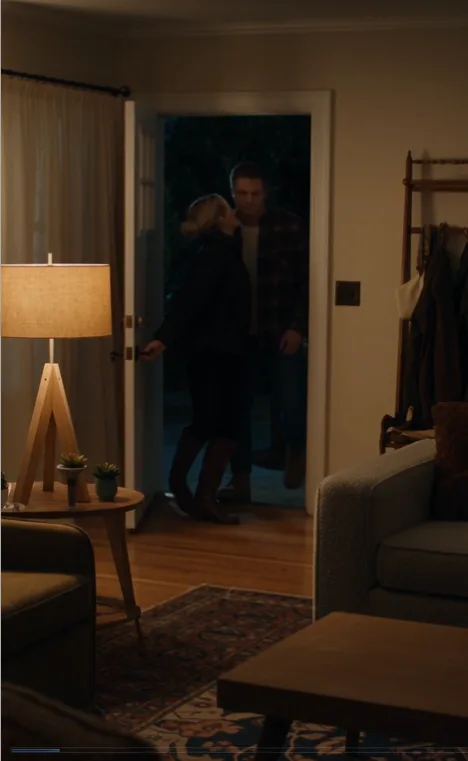
That evening, Felix walked into the pharmacy ten minutes before closing and paid for Emilio’s medication without counting coins at the counter. When he returned home, his grandfather was in the kitchen listening to the baseball game on a small radio. Felix put the orange bottle on the table.
Emilio looked at it, then at Felix’s face. “You got it.”
Felix nodded. “And I got a promotion.”
Emilio stared at him. “A what?”
Felix sat down and told him everything. The flour on the floor. Tony and June. The food in the alley. Angelica. Mr. Baker. The camera footage. The manager position. By the time he finished, Emilio was silent, his eyes bright.
“What did I tell you this morning?” Emilio asked.
Felix laughed softly. “That everything works out.”
“No,” Emilio said. “I told you not to let cruel people make you cruel. That’s what worked out.”
In the weeks that followed, Baker’s Table became a different place. Felix started small. At closing, all safe leftover food was packed, labeled, and delivered through a local shelter network instead of being thrown away. Staff schedules were adjusted so no one worked impossible overtime without proper pay. The kitchen was still clean, the service still sharp, but fear no longer ran the building.