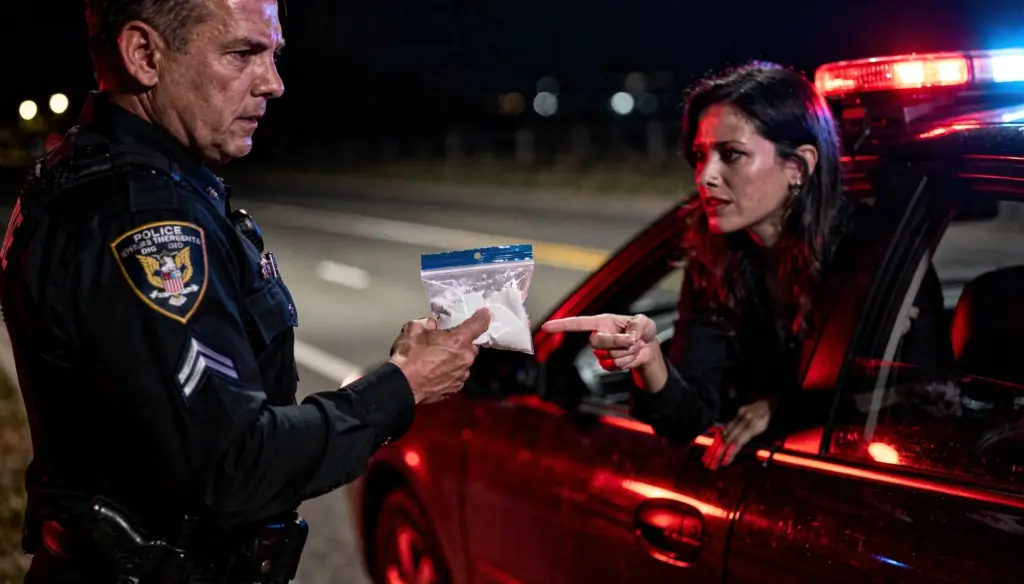
“Were you there?”
“Yes.”
“Good.”
Another silence.
“He asked about you.”
Helen closed her eyes.
“What did you say?”
“That you got his letter.”
“Anything else?”
“No.”
“Good.”
Adam laughed through tears.
“You really believe in boundaries.”
“I learned late.”
He cried then.
Helen listened.
Not because Daniel deserved her comfort.
Because Adam did.
Two weeks after the funeral, Adam visited again.
This time he brought a box.
Helen laughed when she saw it.
“Your family needs to stop giving me boxes.”
“I agree.”
Inside were Daniel’s old photographs.
One showed Thomas and Daniel as young deputies beside a patrol car.
Another showed Helen holding baby Evan during a station picnic.
Thomas stood behind her.
Hair thick.
Mustache terrible.
Evan appeared furious about something.
Helen smiled.
“He hated hats.”
Adam looked.
“He’s wearing one.”
“Your father put it on him.”
They sat on Helen’s porch.
Adam asked, “Do you want the rest?”
She thought.
“Yes.”
Memory did not belong only to the people who behaved perfectly.
Daniel had taken photographs before he became a man Helen hated.
Thomas had laughed beside him.
Evan had existed in a world before evidence bags and courtrooms.
Helen wanted those years back too.
Not rewritten.
Remembered.
Adam remained a police officer.
For a while Helen thought he might resign.
He considered it.
Then transferred to another county.
Three years later he became an evidence-integrity investigator.
Helen teased him when he told her.
“Family business?”
“Trying to improve the family business.”
“Dangerous.”
“Yes.”
He developed a reputation for asking irritating questions.
Helen approved.
Every December, Adam visited her community-college class when she taught a unit on institutions and public trust.
Students always expected a dramatic corruption lecture.
Instead Adam began with paperwork.
“Everybody thinks evidence scandals start with someone planting something.”
He would shake his head.
“They usually start earlier.”
A student once asked, “With what?”
Adam replied, “A person noticing an inconsistency and deciding someone else will handle it.”
Helen smiled from the back.
That sounded like Thomas.
Years passed.
The blue-sealed bag remained in state custody through appeals.
Helen never wanted it.
When the final case closed, prosecutors asked whether she wanted notification before destruction.
“Yes.”
Not because she wished to keep it.
Because destruction had begun everything.
This time she wanted to know it was real.
She attended.
Independent witnesses checked the number.
N-4417B.
Photographed.
Logged.
Verified.
The contents were destroyed according to procedure.
The bag itself went into archived case material because of its historical significance.
Helen laughed at that.
“Historical significance.”
Mara asked, “Better than under your passenger seat.”
“Barely.”
The restored blue sedan remained Helen’s car.
For years friends asked why she did not sell it.
“It was almost used to frame you.”
“Yes.”
“That doesn’t bother you?”
“It’s a car.”
They seemed disappointed.
People liked symbolic fear.
Helen had enough real fear without giving machinery personality.
Eventually she gave the car to her niece, Sophie, when the girl started graduate school.
Sophie was twenty-three.
She called immediately.
“Aunt Helen, are you sure?”
“Yes.”
“This thing has history.”
“Change the oil.”
“That’s your emotional response?”
“Yes.”
Sophie laughed.
Then asked, “Do you ever think about that night?”
Helen did.
Less now.
Still.
She remembered Adam holding up the bag.
The expression of authority.
Then confusion.
Then fear.
Mostly she remembered herself noticing the blue seal.
Twelve years earlier she had known nothing about evidence tape.
She became an expert because somebody made expertise necessary for survival.
There were things Helen wished she had never learned.
Chain of custody.
Suppression motions.
Lab retention policies.
Prison medical appeals.
Posthumous exoneration law.
Knowledge did not always feel empowering.
Sometimes it was simply the vocabulary grief forced upon people.
At sixty-one, Helen retired from teaching.
The college held a dinner.
Mara attended.
Adam too.
Her sister gave a speech.
Helen threatened to leave.
Then a student asked what she planned to do.
“Nothing.”
Everyone laughed.
She meant it.
For almost two decades, Helen had been doing something.
Teaching.
Investigating.
Writing.
Calling.
Appealing.
Proving.
She wanted mornings with no mission.
Coffee.
Books.
Gardening.
Maybe travel.
She visited Prague because Evan once said he wanted to see it after finding photographs in one of Helen’s textbooks.
She stood on Charles Bridge at sunrise.
Thought about him.
Cried.
Then bought a terrible pastry and laughed because Evan would have complained about the price.
Grief had become less like an emergency.
More like weather.
Some days clear.
Some days not.
When Helen returned, Adam invited her to speak at a police academy.
She said no.
He asked again six months later.
“No.”
Another year.
“No.”
Then he stopped asking.
Helen called him.
“Do they still want the old angry woman?”
“Desperately.”
“Fine.”
Her talk lasted twenty minutes.
She carried no slides.
No photograph of Evan.
No blue-sealed bag.
She told recruits:
“If you remember one thing, remember that certainty is not evidence.”
They listened.
“Officer Rourke stopped me believing he had found drugs in my car.”
Adam stood near the wall.
Helen continued.
“He was wrong.”
Several recruits looked toward him.
Helen smiled.
“He also became suspicious of his own certainty before somebody more senior could explain the inconsistency away.”
She looked at Adam.
“That mattered.”
Afterward, a recruit asked whether Helen trusted police.
People asked variations constantly.
She hated the question.
“Which police?”
The recruit looked confused.
Helen continued.
“Officer Rourke?”
“Yes.”
“Sergeant Pike?”
“No.”
“Investigator Santos?”
“Yes.”
“My late husband?”
She paused.
“Yes, and no, depending on the year.”
The room laughed nervously.
Helen did not.
“Institutions are not people. Trust them conditionally.”
She picked up her coat.
“People too.”
Outside, Adam walked beside her.
“You were nice to me.”
“Don’t get used to it.”
“I won’t.”
He opened her car door.
Helen stared.
“I can do that.”
“I know.”
“You are becoming annoying.”
“My therapist says I had a strong role model.”
“Fire your therapist.”
Adam smiled.
Helen paused before getting in.
“Your father taught you good things too.”
His smile disappeared.
She continued.





