“Elias,” Marcus said. The surprise in his voice lasted only a second before the old professional rhythm took over. He was a Deputy Director with the State Police now, sitting behind a desk in the capital, but he still sounded like the street detective I used to share terrible diner coffee with at two in the morning. “It’s been a while. You sound like you’re standing on the edge of a cliff. What’s wrong?”
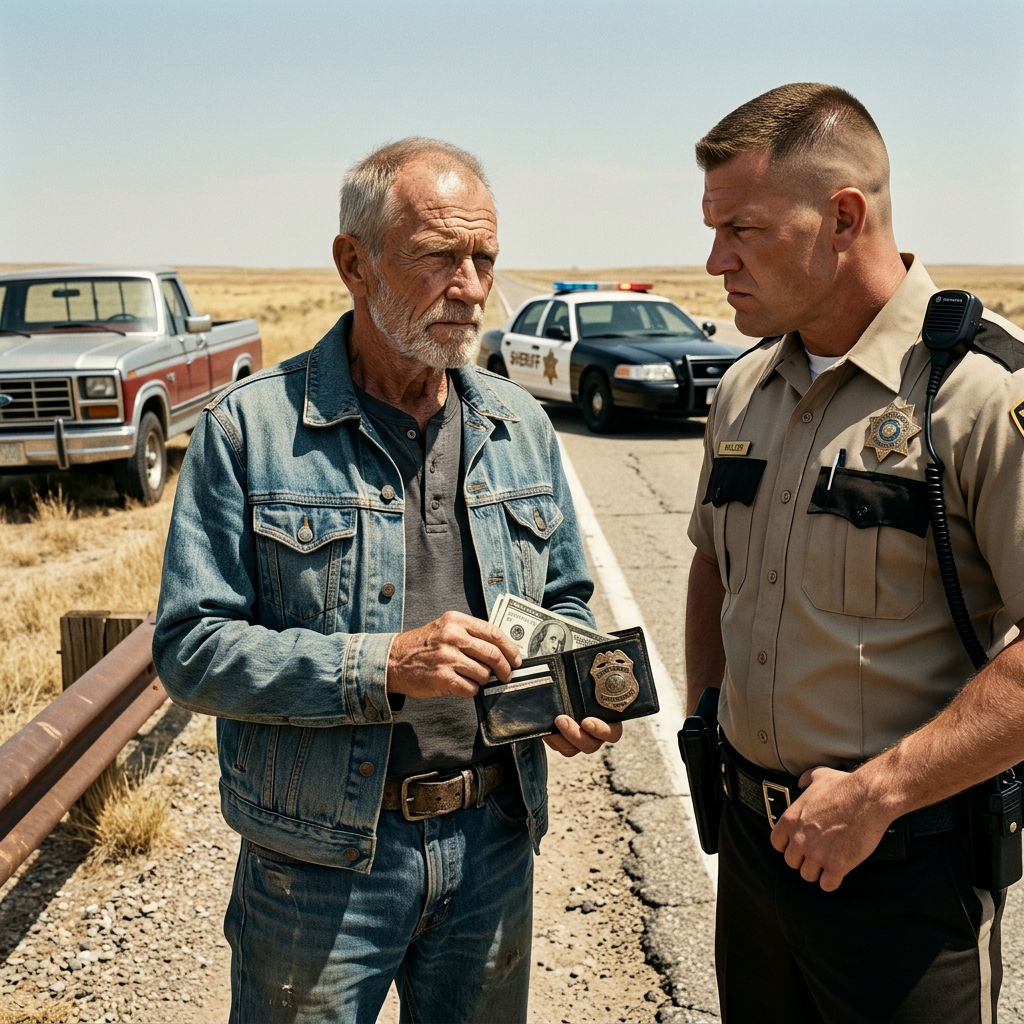
“I was just stopped on Interstate 70, westbound. Mile marker eighty-two.” I looked down at the withdrawal slip in my hand, flattening the creases against my thigh. “A local cruiser. Two officers. The primary had the nameplate Keller. Secondary was Pike. They performed a warrantless search of my person, bypassed my identification, and removed one thousand dollars in cash from my wallet under the guise of civil asset forfeiture. No receipt issued. No paperwork filed.”
The line went dead silent. I could hear the faint clicking of a keyboard in the background.
“Mile marker eighty-two,” Marcus finally said, his tone shifting into something hard and cold. “That’s Oakhaven Township jurisdiction. It’s a two-mile sliver of highway that cuts through their county lines. They write more tickets in that two-mile stretch than the rest of the county combined.”
“They aren’t just writing tickets, Marcus.”
“I can have an internal affairs squad car down there in forty-five minutes, Elias. We’ll pull them off the road right now.”
“No,” I said immediately. “If you send State Police rolling in loud, that cash disappears into a storm drain before you cross the township line. Keller will say I was speeding, that I became combative, and that he let me off with a warning. There will be no record of the money. It becomes a he-said, she-said against a retired guy in a beat-up truck.”
“So what do you want to do?”
“Pull Oakhaven’s stop data for the last six months,” I said. “Look for asset seizures under five thousand dollars. Out-of-county plates. Older drivers. People who are unlikely to hire a lawyer to fight for cash that’s already gone.”
“Give me until tomorrow morning,” Marcus said. “Where are you going now?”
“I’m going to see my daughter. I’m already late.”
I ended the call and put the truck in gear. The rest of the drive was quiet. I didn’t turn on the radio. I just listened to the steady hum of the worn tires against the asphalt, turning the situation over in my mind.
When I finally pulled into Sarah’s driveway, the sun was beginning to dip below the tree line. Her house was a small, single-story fixer-upper at the end of a cul-de-sac. She had closed on it three weeks ago, sinking every dime of her savings into the down payment.
She opened the front door before I even reached the porch. She was wearing a heavy wool sweater, a thick scarf, and a pair of fuzzy socks.
“Dad,” she smiled, stepping out to hug me. “You made it. I was starting to worry.”
“Traffic was heavier than expected,” I said, hugging her back.
I stepped inside, and the chill hit me immediately. It was colder inside the house than it was on the porch. Sarah had a small electric space heater running in the living room, glowing a faint, inadequate orange, but the rest of the house felt like a walk-in freezer.
“The plumber came by for an estimate,” Sarah said, rubbing her arms as she led me into the small kitchen. She had a kettle boiling on a hot plate. “The water heater is completely rusted through at the bottom. It’s a total loss. He said he can install a new one on Monday, but…” She trailed off, offering a tight, forced smile. “I might have to put it on the credit card for now. The interest rate is awful, but I can’t live in an igloo.”
I reached into my pocket. My fingers brushed the worn leather of my empty wallet. The thousand dollars I had withdrawn was supposed to cover the unit and the labor. It was supposed to take this exact look of quiet, panicked calculation off her face.
“Sarah,” I started, my voice catching slightly. I cleared my throat. “I had a minor issue at the bank today. A delay with the withdrawal. I’ll have the funds for you by Monday morning. You won’t need to put anything on credit.”
“Dad, you don’t have to do that. You’ve already helped so much with the moving expenses.”
“I want to,” I said firmly. “I promised you a housewarming gift. Just schedule the plumber for Monday.”
She looked at me closely, her brow furrowing. “Are you okay? You look pale. And your knees are filthy.”
I looked down. The dust and gravel from the interstate shoulder still clung to my denim jeans where I had knelt to pick up my dropped wallet.
“Just brushed against the truck,” I lied smoothly. “I’m fine, sweetheart. Let’s just have dinner.”
I spent the evening eating takeout on a pair of folding chairs in her freezing living room. I smiled, I asked about her new neighbors, and I pretended everything was perfectly normal. But every time she shivered, a cold, hard knot tightened in my chest. Keller hadn’t just insulted me on the side of the road. He was the reason my daughter was sitting in a freezing house, worried about a debt she couldn’t afford.
I left her house at nine o’clock. I didn’t drive back to my apartment. I found a cheap motel two towns over, paid in cash, and spent the night staring at the ceiling.
At eight the next morning, I drove directly to the Oakhaven Township Municipal Building.
It was a small, squat brick structure that looked like a converted post office. The police precinct shared a lobby with the municipal court and the tax assessor’s office. The air inside smelled of stale floor wax and old coffee.





