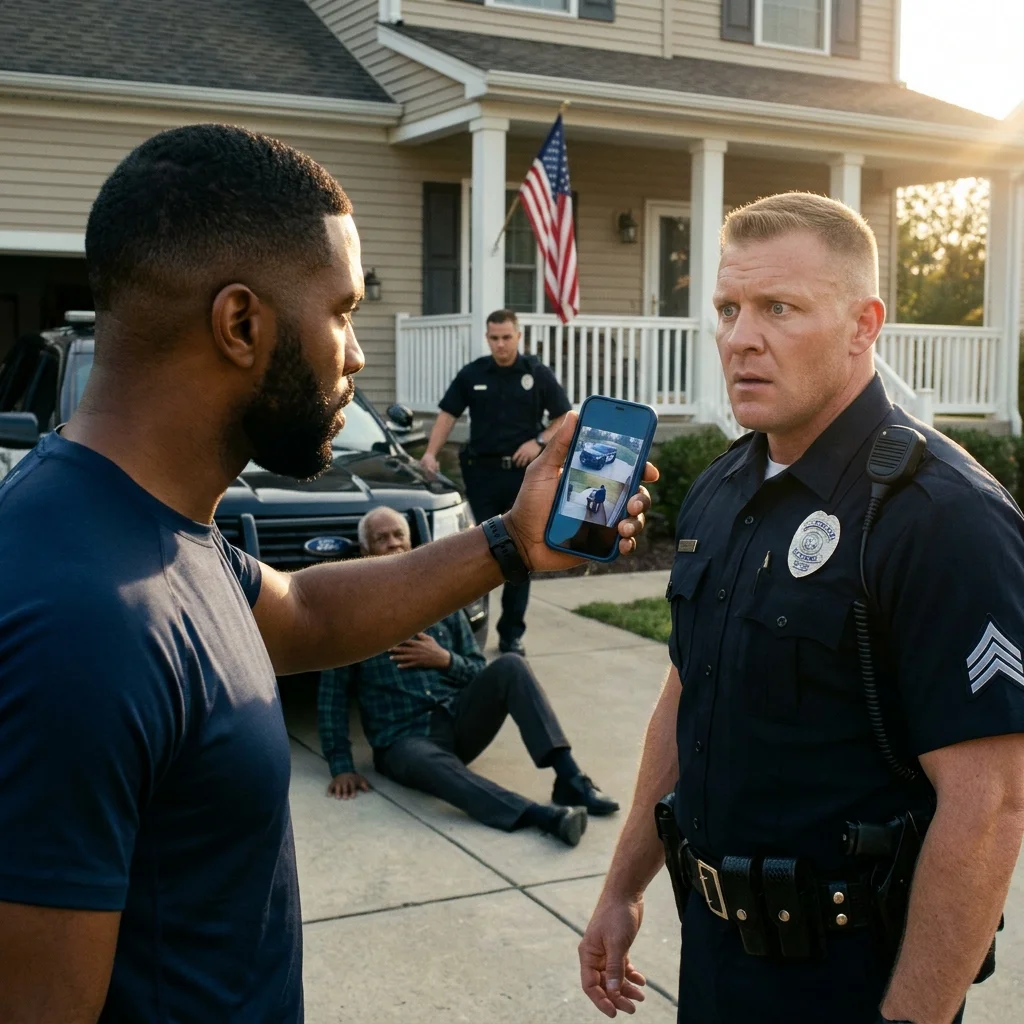
beside them. Samuel closed his eyes for a moment and then opened them. Across the aisle, Baird stared forward as though awaiting a different announcement. There was no speech from him and no instant transformation in his face. Marcus found that less satisfying than he had imagined and easier to bear. The verdict did not require the sergeant to understand it before it existed. Sentencing took place later, after the court received the necessary information. Samuel was offered an opportunity to describe the effect on his life. He wrote his statement at the kitchen table with the county-logo pen. He crossed out one sentence demanding that Baird feel what he had felt. He did not believe pain could be transferred that neatly. What remained was more exact. He described losing sleep, confidence, independence, and easy use of his own driveway. He described Marcus missing work and Eva learning to fear unanswered calls. Then he described what he wanted protected for the next family. “My age didn’t make me disposable. His uniform didn’t make him right.” He read the statement himself, stopping once to drink water. The judge imposed a prison sentence and other consequences tied to the convictions. Pike was sentenced separately for his admitted role in the equipment scheme. Their obligations did not end with public embarrassment or a change of jobs. Outside, reporters asked Samuel whether justice had finally been served. He considered the question before answering. “A decision has been made. Now I want to go home.” Denise guided further questions away without speaking over him. The civil case continued on its own track and later reached a resolution. It addressed documented harm and included enforceable changes to departmental practices. The terms were reviewed carefully rather than announced as a miraculous cure. Samuel used part of the recovery for treatment and the practical costs of healing. He set aside money for Eva’s education and kept the rest without apologizing. He did not owe the public a donation to prove he had deserved protection. The county recovered some equipment and revised its tracking of repairs and disposal. The audit’s unresolved items remained public instead of disappearing beneath the verdict. Heller received disciplinary consequences for his handling of the report and review. Sheriff Ward instituted outside checks on serious complaints and published response deadlines. Lila continued comparing the new promises with actual records. Some changes worked. Others required uncomfortable follow-up articles. Samuel read those on Sunday mornings beside the roses. He did not confuse one verdict with a finished responsibility. One evening, Marcus found him standing beside the gray pickup. The driver’s door was open, and the keys rested in his palm. “Want company?” Marcus asked. Samuel smiled and shook his head. “Not this time. I’m only going to get peaches.” Marcus stayed on the porch and watched his father leave on his own. By the next summer, the community workshop had reopened in a larger building. Samuel agreed to teach two mornings a month, with Walter handling the heavy lifting. He refused the suggestion that the program be named after him. Ruth’s Repair Table was his alternative, and nobody argued for long. She had never repaired an engine, but she had repaired more difficult things. On opening morning, Eva arranged safety glasses beside the benches. Marcus checked the wiring without finding a reason to keep checking it. The first students arrived carrying broken fans, radios, and enormous expectations. Samuel showed them how to label parts before taking anything apart. One boy wanted to skip the notebook and get to the interesting work. “The notebook is interesting,” Samuel said. The boy looked unconvinced, which Samuel considered a healthy beginning. He explained that a record helped the next person understand what had happened. “What if you make a mistake?” a girl asked. “Write down the correction. Don’t pretend the first thing was always right.” Navarro visited later in response to an invitation from the organizers. She brought no equipment for repair and asked where she could help. Samuel pointed to a stack of folding chairs. She carried them inside and listened while he finished the lesson. There was no ceremony making either of them simpler than they were. At noon, June Ellis arrived with her father’s old toolbox. She wanted the students to use it rather than leave it shut in a cupboard. Samuel recognized the worn red handle and stood quietly beside her. They put the man’s name on the inside lid. Nothing about the gesture recovered the years he had lost. It made room for something useful to follow them. Afterward, Marcus drove Samuel home past the courthouse and the repaired pumping station. His father pointed out a house with terrible drainage and another with excellent tomatoes. The observations were so familiar that Marcus nearly missed their importance. Samuel was looking at the neighborhood again instead of looking for danger. Not always. Not perfectly. But enough to notice the tomatoes. At home, he carried the empty lunch containers into the kitchen. Marcus stayed outside to collect a package near the porch rail. Above the door, the camera blinked its small, unremarkable light. For months, he had thought of it as the device that saved his father. Now he thought of Navarro choosing to act, and Mrs. Holloway remembering clearly. He thought of Denise’s questions, Lila’s patience, and Samuel’s stubborn dates. A recording had mattered because people had finally taken responsibility for what it showed. Inside, his father called him to help find the good plates. Eva was coming for dinner, and Walter had promised pie. Marcus left the package on the table and washed his hands. Through the window, he saw Samuel return to the garden with his shears. The old man bent toward a rose that had grown stubbornly across the path. He studied it, shook his head, and decided to leave it another day. Ruth would have approved of a little disobedience from a plant. Marcus took out his phone when the porch camera sent a
A Sergeant Slammed a 78-Year-Old Father Against His Cruiser—Then His Son Played a Video Nobody Expected