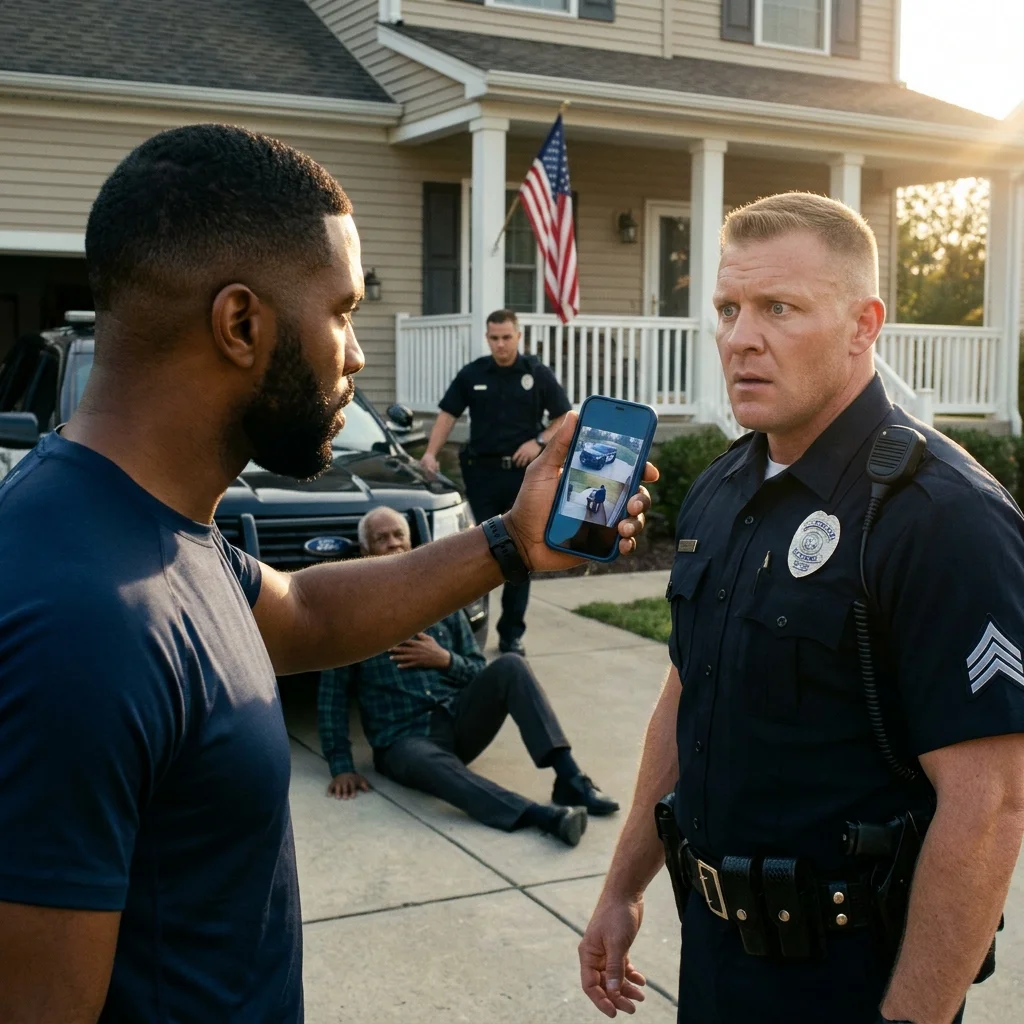
documents. The defense examined his agreement and the benefit he hoped to receive. The prosecutor acknowledged both instead of pretending cooperation made him innocent. Documents and messages supported parts of his account independently. Other details depended on his credibility, and the jurors heard that too. Then the camera evidence was introduced through the necessary witnesses. Marcus explained installing the porch camera and preserving the files after the incident. He described his work maintaining electrical systems for the transit service. He did not pretend that made him an expert in every digital question. A specialist addressed the technical examination and the supporting sources. The defense asked whether recordings could theoretically be altered. The answer did not turn into a promise that technology was infallible. Instead, the specialist explained the examination performed in this particular case. The delivery was corroborated by records and recordings from independent locations. No supported sign of the alleged fabrication had been found. The jurors watched Baird back into Samuel’s driveway in afternoon sunlight. They heard him ask for a repair and promise paperwork the following day. They heard Samuel refuse to write an arrival date that was not true. Nobody in the courtroom laughed when Baird called him a stickler. Marcus sat with his hands flat against his knees. He had watched the clip so often that every pause felt memorized. Yet hearing his father’s ordinary voice in that room still hurt. The defense suggested Baird could have believed the machine belonged to Pike. The prosecution did not need to deny every uncertainty to answer that. It presented the message Samuel sent about the county mark the following morning. It presented the exchanges between Baird and Pike before the property complaint. Then it returned to what Baird had told dispatch and written afterward. The accounts did not describe a repair delivery that had become a dispute. They described locating property in a suspect’s possession during an investigation. The missing explanation was not a minor difference of wording. At the afternoon break, Marcus found Samuel standing near a window. “Want to go outside?” he asked. “Not yet. I like being able to see the street.” They watched rainwater gather along the courthouse curb. For a few minutes, neither thought of a useful thing to say. They stayed together anyway. Samuel testified on Wednesday morning wearing the blue shirt Eva had chosen. His new glasses sat straight, though he adjusted them whenever he felt nervous. He described Baird’s first visit and the request to change the date. He explained that he had accepted the generator because he trusted the uniform. Then he corrected himself before the prosecutor asked another question. “And because it was supposed to help children. I wanted that to be true.” The admission made him sound human rather than perfectly prepared. He described asking for authorization and reaching for his glasses. He remembered the first impact more clearly than the second. He said so instead of filling the gap with what the recording showed. When asked why he had raised his hands, he looked at them. “I was trying to keep from falling. I couldn’t get enough air.” The defense asked whether he had been frustrated by the sergeant’s questions. “Yes.” “Did you refuse to do what he asked?” “I asked why he wanted to search my garage.” “That’s not quite what I asked, Mr. Bennett.” Samuel waited until the question was repeated in a form he could answer. He did not apologize for needing it clear. He acknowledged that he had not opened the garage on command. He denied striking, threatening, or attempting to flee from Baird. The footage supported what his memory could not describe second by second. Navarro testified after lunch, including the part she most wished to forget. She described recognizing the medical distress and hesitating before acting firmly. The defense asked whether she had concerns about her own employment review. “Yes,” she said. “That doesn’t change what I saw.” Her camera recording showed the period before Marcus arrived. It captured Samuel saying the sergeant had delivered the generator himself. It captured Baird ignoring the explanation and describing him as uncooperative. Then came the sounds the family had not wanted strangers to replay endlessly. The impact. The broken breath. Navarro’s first, insufficient warning. Samuel had chosen not to remain in the room for that portion. Eva sat with him outside, looking at photographs of their roses. Inside, Marcus kept his eyes on the screen without turning it into duty. When it became too much, he looked away. He was allowed to be his father’s son rather than another recording device. Baird’s defense presented witnesses to his work history and previous acts of service. The court did not dispute that those events had occurred. The question remained what he had done on this particular driveway. In closing, the defense argued that a difficult encounter had been misinterpreted. The prosecution asked the jury to compare that explanation with the complete record. The jurors were not asked to repair the county or settle every public argument. They were asked to decide the charges against one defendant from the evidence. Deliberations began late Thursday afternoon. The family ate dinner in a café where nobody recognized them. Samuel chose soup, then changed his mind and ordered fried chicken. Eva smiled at the small rebellion against hospital food that was months overdue. Marcus told a story about a bus that would not stop sounding its alarm. For several minutes, they laughed louder than the table required. The courthouse would still be there in the morning. The verdict came the following afternoon, after a question and further deliberation. Samuel stood slowly when the clerk asked the courtroom to rise. Marcus watched the jurors instead of Baird. The jury found him guilty on the central charges arising from Samuel’s mistreatment. It also returned guilty findings on substantiated parts of the property scheme. It did not convict on every allegation presented. The distinction mattered, even through the sound of Eva crying
A Sergeant Slammed a 78-Year-Old Father Against His Cruiser—Then His Son Played a Video Nobody Expected