myself the good one and stop thinking.” He passed her a bowl of rice. “That sounds useful.” Weeks later, Samuel agreed to meet her in Denise’s office. Navarro arrived without flowers, gifts, or a request for a photograph. She described what she wished she had done earlier. She did not ask him to agree that she had tried her best. Samuel watched her hands clasped tightly in her lap. “You stayed truthful when it got difficult,” he said. “Yes, sir.” “It was difficult before that too.” Her eyes filled, but she did not make him manage the tears. “I understand.” “I hope you keep understanding when nobody’s filming.” After the meeting, Samuel sat in the parked car for several minutes. Marcus waited with the engine off. “Do you feel better?” he asked eventually. “A little. Not in the way people mean.” Samuel adjusted the seat belt away from his shoulder. “I don’t want her ruined. I want the next person protected sooner.” Marcus nodded and started the engine. That afternoon, the state investigators completed a substantial phase of their work. Their findings went to prosecutors responsible for deciding which charges to pursue. Denise warned the family that an investigation and a prosecution were different stages. There could be additional delays, contested evidence, and decisions they could not control. Samuel asked whether he would need to testify. “Possibly,” she said. “We’ll prepare if that happens.” He looked at the hands resting on his knees. He had spent months hoping the recording could speak instead of him. Now he understood that a video could show harm without carrying all its weight. “If they ask me,” he said, “I’ll tell them what happened.” Marcus reached over and adjusted the air vent toward his father. Baird was arrested on a clear morning six months after the driveway encounter. The photographs showed no dramatic confrontation and no one pressed against a car. He walked between investigators wearing ordinary clothes and an expression Marcus recognized. It was disbelief that the rules could arrive at his own door. The announced charges concerned the force used against Samuel and the equipment scheme. Pike faced separate charges arising from records, property, and payments under investigation. Both men entered pleas denying wrongdoing, and the court process began. The prosecutor’s office explained the schedule to the family without promising speed. Samuel turned seventy-nine while motions and hearings filled the calendar. Eva came home with a cake shaped badly enough to become a family treasure. The icing generator on top looked more like a washing machine. Samuel laughed until his shoulder reminded him to stop. “Next year,” he told her, “just make a cake.” She took a photograph only after he nodded. The house had become better at asking permission. By then, Samuel had begun attending a support group for older adults after trauma. He disliked the first meeting and went back the following week anyway. A retired teacher described being afraid of a stairwell after a fall. A former nurse admitted she checked the door lock four times every night. Their experiences were different, but fear sounded familiar in all their voices. For once, Samuel did not have to explain why being home was complicated. Marcus attended a separate counseling appointment after Eva insisted he stop pretending. He admitted watching the driveway recording whenever he could not sleep. He told himself it was preparation, although nothing new appeared after midnight. The counselor asked what he hoped to find on the next viewing. Marcus had no answer until he reached the parking lot. He wanted the version in which he arrived sooner. That version did not exist, and watching could not create it. He moved the working copies out of his everyday phone gallery. The originals remained preserved where the legal team could access them appropriately. He started leaving his phone in another room during dinner. Sometimes he retrieved it twice before dessert. Sometimes he did not. In early spring, Pike sought a negotiated resolution through his lawyer. The discussions eventually produced an agreement requiring truthful cooperation and accountability. The judge would determine its final consequences under the court process. Pike provided records that helped explain how the labels had been exchanged. He admitted that the theft report had misrepresented the generator’s whereabouts. He did not claim Baird had forced every decision he himself had made. Baird continued to contest the accusations and chose to proceed to trial. A victim liaison asked Samuel whether he wanted to tour the courtroom beforehand. He accepted, bringing the notebook he no longer needed to carry everywhere. The empty witness chair looked smaller than it did on television. He sat in it, tested the microphone, and practiced asking for water. Marcus waited at the back rather than answering questions for him. When they left, Samuel looked toward the courthouse steps. “I thought being brave would feel different,” he said. Marcus considered the father who had repaired engines through summer heat. “Maybe it usually feels like doing the next thing.” Samuel took the railing and did that. The trial began on a Monday with rain ticking against courthouse windows. Baird sat beside his defense team, listening as the allegations were summarized. The judge instructed the jurors to decide from admitted evidence, not public reaction. Samuel appreciated hearing that, even though public reaction had kept him awake. He did not want a jury selected from people who already loved him. He wanted one prepared to see what had actually happened. The prosecution began with records rather than the most painful footage. The county inventory manager explained the generator’s original identification. The auction documents showed which machines Pike had legitimately purchased. The Everett Road generator was not among them. A warehouse employee described Baird collecting equipment for the preparedness event. The coordinator confirmed that no generator had reached the venue. Each witness supplied a smaller fact than the internet had demanded. Together, those facts built a path toward Samuel’s garage. Pike testified about altering labels and arranging questionable repair
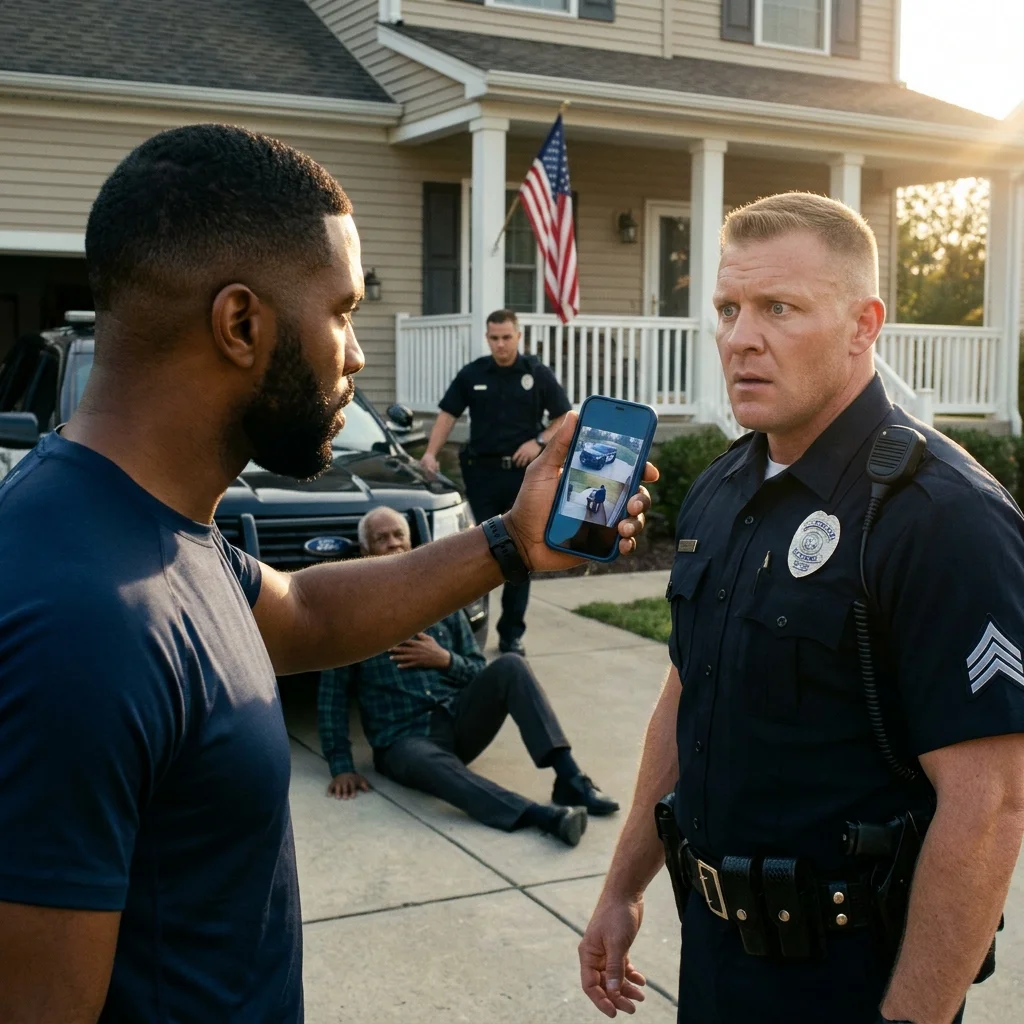
A Sergeant Slammed a 78-Year-Old Father Against His Cruiser—Then His Son Played a Video Nobody Expected