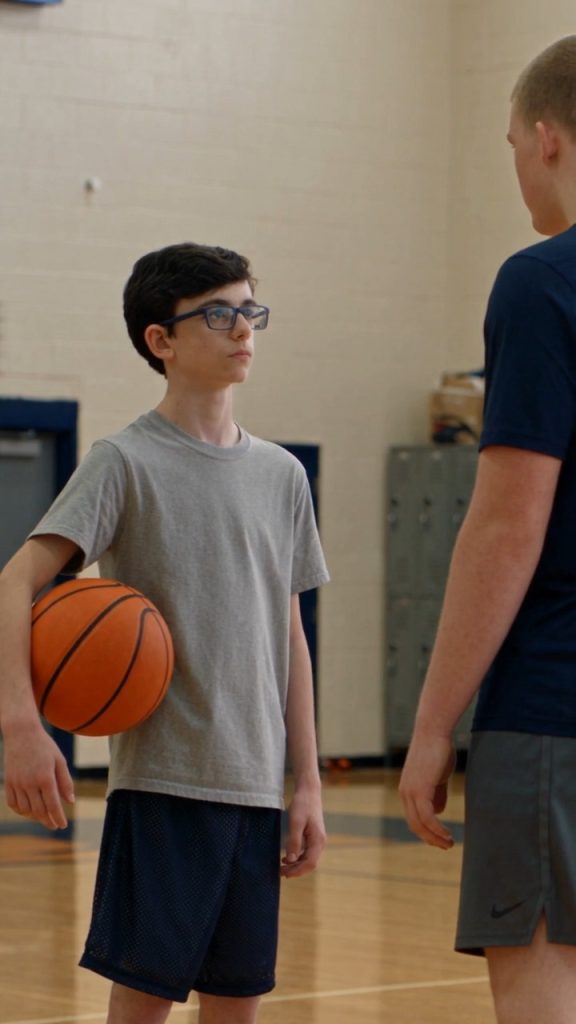
Leaving the counselor’s office, Eli stopped beside the student-services bulletin board and read the posted reminders about attendance. He had come into the office expecting to be told to stand up for himself, as though standing up always meant making a louder speech in the same room where somebody had frightened him. Instead, he’d been asked what he’d seen and what he needed in order to keep attending class. The distinction stayed with him. It meant his next action could be unremarkable: finish a class, walk to a bus, eat dinner. He didn’t have to become the strongest boy in the gym. He had to be able to be an ordinary student there, and to have adults take responsibility for the parts of school that belonged to them.
After school he found Zoe near the bus loop and told her he’d spoken to the counselor. He made himself avoid describing his own written page line by line. “She may want to ask what you saw. You don’t have to copy me.”
“I know,” Zoe said. “I’ll tell her.”
“Are you worried Mason will get angry?”
“Of course.” She adjusted her backpack strap. “I’m also tired of acting like there’s nothing to notice.”
He walked home under a sky the color of wet cement, repeating that conversation. A friend, he thought, might be somebody who was afraid of the same thing but acted anyway. Yet he didn’t want Zoe to suffer for helping him. He couldn’t offer her a guarantee, only the knowledge that he wouldn’t ask her to exaggerate or take the blame.
At home Marisol was sorting mail at the kitchen table, still wearing the polo from her shift. She looked at his soaked sweatshirt and reached for a clean dish towel. He sat across from her before she could ask about homework.
“Something happened in gym,” he said. “And I reported it today.”
The words made the story sound official and small. It took nearly twenty minutes to tell it in a way that included the long weeks before Thursday, the ridiculous relief of the three made shots, and Mason’s warning by the trophy case. His mother listened with her hands folded around a mug that had gone cold.
“I wish you’d told me sooner,” she said finally.
“I kept thinking it was just one thing.”
“One thing can hurt,” she said. “Several things can make school feel impossible.”
She asked about the adults involved, what the counselor had said and whether Eli wanted her to call. She didn’t demand the names of every student in the class. She didn’t tell him to fight Mason or to become his friend. When he admitted he’d worried a report would make him look weak, she looked genuinely puzzled.
“Writing down what happened and saying it aloud is hard,” she said. “You already know that. Why would hard mean weak?”
Eli tried to answer and found that the belief sounded foolish when spoken. Instead he showed her the notebook. She read the dates slowly. At one point she asked whether the score was written correctly, and he said yes. She tapped the line about wanting to be left alone.
“That’s the part I want the school to hear,” she said.
They agreed she would respond if the school contacted her and would help keep his notes in order. She wanted to drive him the next morning so he wouldn’t have to walk past the bus stop where some of Mason’s friends gathered. Eli said he wanted to use his regular route. They compromised: he’d walk as usual, and he’d text when he arrived at school, from outside the gym and class hours. His mother didn’t like that a compromise about his safety was necessary. Neither did he.
Saturday morning, Eli opened his notebook at the kitchen table while his mother left for a short shift. He had promised himself he wouldn’t spend the whole weekend replaying the gym, but he wanted to check the dates of the earlier incidents before they grew fuzzy. He found an assignment sheet tucked behind a math handout from September 29. It showed PE that day, which was all he had expected it to show. The paper didn’t prove Mason had ordered him around; it was just a reminder that his life had been full of normal schoolwork during the weeks when gym began to feel unbearable.
He drew a line down a fresh page. On one side he listed things he had directly seen or heard. On the other he wrote questions: Had Coach Parker heard Mason use the phrase “extra equipment”? Eli didn’t think so. Who had been near Noah during the repeated drill? He couldn’t reliably remember. Was Mason embarrassed that Eli won? His face suggested it, but it wasn’t a fact Eli could put into someone else’s memory. He circled the questions and left them unanswered.
When Marisol returned, she saw the open notebook and put a grocery bag on the counter. “Have you been doing this all morning?”
“Some of it.”
“We can make room for something else.”
He wanted to protest that the situation was too important to set aside. Instead he admitted he was tired. They made a late lunch together. He chopped tomatoes while she prepared rice, and she described a customer at work who had spent fifteen minutes arguing with a card reader that was turned off. The story wasn’t particularly funny, but she told it with such exhausted disbelief that Eli laughed. He noticed that laughing at a harmless absurdity didn’t take anything away from his report.





