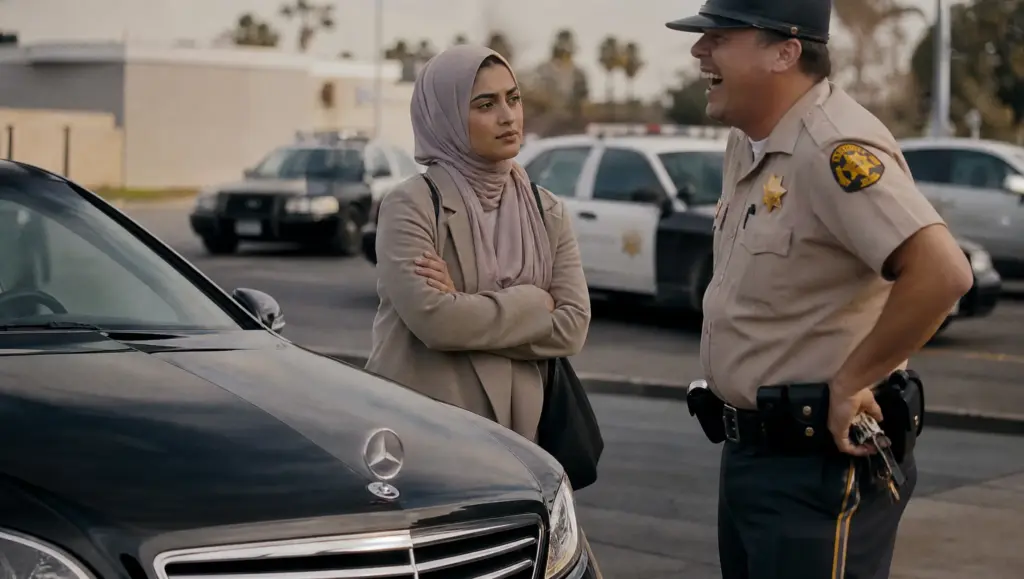
He also had, though he would not have put it this way and would have been offended if anybody else did, a set of pictures in his head of what certain kinds of people looked like. A harbor pilot looked like Clint Daigle, who had piloted ships into Gulfline for twenty-five years and who used to bring boudin to the line crew at Christmas, or like the younger ones, crew-cut men with Oakley sunglasses pushed up on their heads and good boots and big trucks, who made, everybody on the docks knew, somewhere north of four hundred thousand dollars a year, and who walked through the gate like they owned the channel, because in a sense they did. A woman with her head wrapped up in a scarf looked like the people on the news, on the channels Wade watched in the guard shack at three in the morning, the ones with the red banners at the bottom of the screen. He had never met a Muslim person in his life, so far as he knew, other than to buy gas. He had not thought about it much. He had not needed to.
When he looked through the glass and saw a small red Honda Accord at his arm, with a woman behind the wheel whose head was wrapped in a navy blue scarf that came down tight around her face and under her chin, the first thing he felt, before any thought at all, was a kind of tired irritation, the irritation of a man who has to get up off a stool. The second thing, which came right behind it, was suspicion. Nobody came to Gate Two in a red Honda at a quarter to seven at night with a storm coming. Vendors came in vans. Crew came in the Seafarers’ Center shuttle. Pilots came in trucks.
He slid the window open. The air outside was thick and warm and smelled like rain that hadn’t fallen yet.
“Help you?”
“Good evening.” The woman’s voice was calm and clear, with no accent he could place, just Texas, maybe Houston. She was holding a card up toward him. “I’m the pilot for the Corvina Star at Berth Four. The reader’s out, so I’ll need you to check me in manually. Rania Mansour, Bayard Pilots. Dispatch should have called it in to your ops.”
Wade looked at her. He looked at the card in her hand. He looked at the car. He looked at her again.
“You’re the what?”
“The pilot,” she said. “The harbor pilot. I’m taking the Corvina Star off Berth Four. She’s scheduled to sail at nineteen hundred, but we’re moving it up because of the weather.” She pointed, not at him but past him, toward the southwest, where the wall of cloud had swallowed the last of the light. “That’s why I’m in a hurry.”
Wade did not take the card. He folded his arms across his chest and leaned one shoulder against the window frame.
“Ma’am, I’ve been on this terminal twenty-six years. I know the pilots. Clint Daigle. Ross Hebert. The Picard brothers. Big guy with the mustache, Abshire. I’ve never seen you in my life.”
“I’ve been through Gate One a hundred times,” she said. “And through this gate maybe a dozen, on day shift. Most of the night jobs come in through One. I don’t think we’ve met. I’m Captain Mansour.” She held the card out farther, toward the window. “That’s my TWIC. My state pilot license is in my bag. You can call our dispatch at the pilot station. Hap Landry is on tonight. Or call your ops.”
He took the card, finally, between two fingers, and held it up under the fluorescent light in the shack.
It looked like a TWIC card. White with the blue band across the top, the eagle, the gold chip, the little holographic seal that shifted when you tilted it. The name said RANIA I MANSOUR. The photo showed a woman’s face framed by a dark scarf, looking straight at the camera with no expression. It could have been her. It could have been any woman in a scarf. That was the thing that went through Wade’s head, in those exact words, and he did not examine them: it could be any of them, under that thing.
He looked from the card to her face and back again, slowly, three times, the way Fuselier had told him to.
“This is a federal credential,” he said. “I’m required to verify the identity of the bearer.”
“I know. That’s what the fingerprint reader is for, the one that’s broken. I’m happy to give you a thumbprint if you’ve got a handheld unit in there.”
He did not have a handheld unit. Sentinel had promised one in August. He felt his face get warm.
“What I’m going to need,” he said, “is for you to take that off your head so I can compare the photo.”
The woman did not move, and did not look away from him, and something in her face went still, not angry, just very still, the way the air outside was still.
“No,” she said. “I’m not going to do that. The photo on that card was taken with my hijab on, at a TSA enrollment center, by federal staff, because that’s how the federal government allows it to be taken, so you’re comparing it to exactly what it’s supposed to be compared to. My whole face is visible. My ears and hair are not part of the photo. If you need a further check, I’ll step out of the car and go into the shack with a female officer, if you have one on shift. Or you can call my dispatch, and they will describe me to you. Or you can call your ops, who have me on their list. Any of those. But I need you to do it fast, sir. That front is going to be here in about fifteen minutes.”





