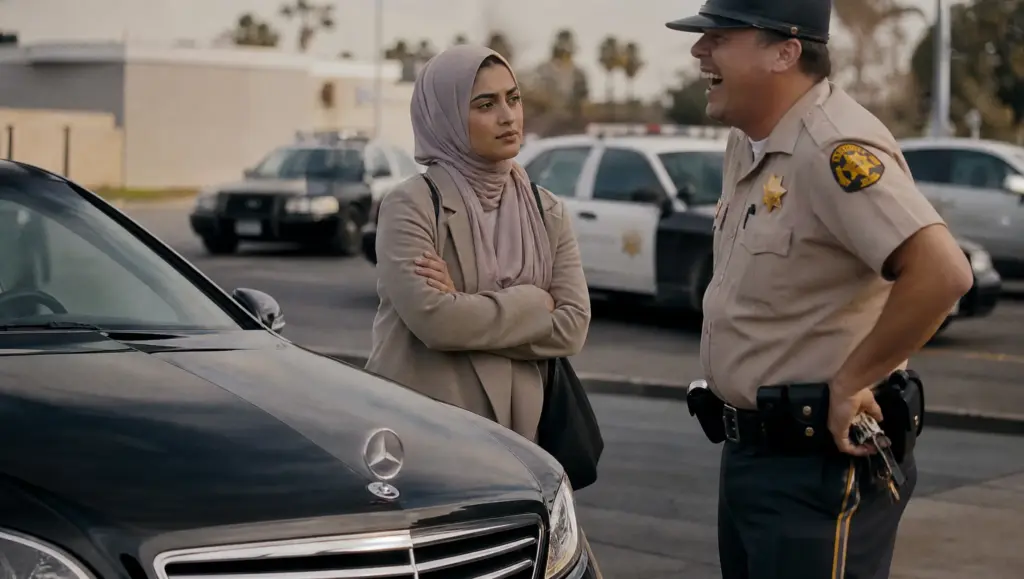
Wade did not have a female officer on shift. There was no other officer on shift at all. There was Wade, and the white shack, and a phone, and a radio.
“I’ll call it in,” he said, and slid the window closed in her face, and sat back down on the stool.
He picked up the shack phone and dialed Sentinel’s night line. It rang eight times and went to a recording that said all supervisors were assisting other customers and to leave a message. He hung up. He dialed Fuselier’s cell. It rang four times and went to voicemail. Fuselier was probably at the refinery gate across the channel, where Sentinel had another contract, dealing with the same storm. Wade left a message: “Ernest, it’s Wade at Gulfline Two, I got a lady here in a, in a headscarf says she’s a harbor pilot, TWIC reader’s still down, I can’t verify the card, call me back.” He hung up again.
He could call Gulfline ops. That was what the procedure said. But ops tonight was Twyla Guidry, who had been a dispatcher on the docks back when Wade was a longshoreman and who had never, in Wade’s opinion, liked him much, and who, the day after the crane thing, had walked past his shack and looked at him through the window with an expression he could not stop thinking about, a sort of disappointed pity, like you’d look at a dog that had gotten into the trash. He did not want to call Twyla and say, I don’t know if this is real. He wanted to call Twyla and say, I stopped somebody.
He looked through the glass at the woman in the red Honda. She was holding her phone up to her ear, talking to somebody, and looking at her dashboard clock, and then looking past the shack toward the berths. She did not look scared, which bothered him. People who were lying got scared when you made them wait. Or they got loud. She was neither. She looked like she was waiting for a train.
And then a thought came to him, and it was such a relief, such a clean, clear, simple explanation, that he almost laughed out loud.
Beau.
Beau and the line crew. Beau and Dusty Arceneaux and that big Vietnamese kid, Tommy Bui, who did the stern lines. They had been riding him for three weeks about the crane guy. They called him Officer Toups. They called him the Gatekeeper of Gate Two. Last Thursday somebody had left a plastic toy sheriff’s badge on the counter of his shack with a sticky note that said FOR WHEN THE POPE COMES. A week before that, around two in the morning, a man in an enormous foam chicken costume had pulled up to his arm in a pickup and said he was a federal poultry inspector here to check the frozen chicken containers on Berth Seven, and had kept a straight face for almost a full minute before he broke, and Wade had found out later it was Tommy Bui’s cousin, and the whole line crew had laughed about it for days.
A woman harbor pilot. In a Muslim scarf. In a red Honda. With a storm coming. On the night his son was working Berth Four. It was exactly the kind of thing those boys would think was hilarious. It was the chicken suit all over again. It was a test, to see whether Officer Toups would wave through the Pope.
He slid the window open again. He felt better now. He felt like a man who had seen the trick.
“Okay,” he said. “Okay. Who put you up to this?”
The woman lowered the phone from her ear. “I’m sorry?”
“Was it Beau? Or Tommy? Tommy Bui? He get his cousin to find you?” He was smiling now. He held her card up between two fingers and waggled it. “This is good. This is real good. Where’d you get this, they make these online? It’s a good fake. I mean that. Better than the badge.”
“Sir.” She said it slowly. “I don’t know who Beau or Tommy is. That is a real federal credential, and I need it back, and I need you to open this gate. The ship I’m supposed to pilot is at Berth Four with a sixty-knot squall about fifteen minutes away, and if I’m not on her bridge before it hits…”
“A harbor pilot,” Wade said. He laughed. He could not help it. It just came out of him, a short, hard bark of a laugh, and once it was out he could not put it back. “Lady, you know what those guys make? Those are the best jobs on the whole coast. It’s a closed club. You got to be somebody’s son, near about. You got to have, I don’t know, twenty years on ships. You expect me to believe they handed one of those to…” He stopped, but not soon enough. He waved his hand at her, at the car, at the scarf. “To you? Come on. Come on now. You’re a joke. This whole thing’s a joke. Tell Beau he got me for about thirty seconds.”
There was a silence in which he could hear the window air conditioner rattling behind him and, very faintly, far away to the southwest, the first low roll of thunder.
The woman looked at him. She did not look hurt, exactly, and she did not look angry, exactly. She looked at him the way he imagined a doctor might look at an X-ray, like she was seeing all the way through to something and making a note of it.





