The man driving it was 42 years old. He had not slept in 26 hours. His carry-on bag sat on the passenger seat, and inside it, beneath a folded dress shirt and a Ziploc bag of travel toiletries, was a leather credential case he had not opened in public in 23 months. He had a fresh haircut from the barber at Ramstein Air Base in Germany, where he had spent his last 72 hours completing an afteraction debrief that would be classified for the next 30 years.
He wore a navy polo shirt, khaki trousers, and plain frame reading glasses that made him look like a high school guidance counselor. This was intentional. Wendell Kaine pulled into the driveway at 11:42 Maynard Street and sat in the car for 45 seconds before turning off the engine. The house looked the same.
The porch light was on, which meant Opal was awake. The bicycle was not in the yard, which meant Micah was either at school or on his route. The lawn needed cutting. The gutter on the east side had pulled away from the fascia.
The mailbox had a new dent in it that had not been there when he left. He picked up his bag, walked to the front door, and knocked twice. The door opened. Opal Kaine stood in the doorway in a house coat and slippers, holding a coffee mug with both hands.
And for 3 seconds, she did not speak. Then she set the mug on the hallway table without looking at it and put both arms around her son’s neck and held on with the specific strength of a woman who had spent 23 months not knowing where her child was, whether he was safe. Whether the next knock on the door would be him or someone bringing news about him. I’m home, mama.
I can see that. She did not let go. You eat yet? No, ma’am.
Then sit down. He sat at the kitchen table. Opal made eggs. He noticed the plastic organizer with the day labels.
He noticed the jar on top of the refrigerator marked house. He noticed the delivery manifest tucked under the edge of the microwave. He read the first three addresses. Collier Ridge Estates.
He looked at Opal. Mama, Micah delivers newspapers in Collier Ridge. Three mornings a week. Has been since last July.
He’s responsible about it. Wendell picked up the manifest. He read every address. He recognized the subdivision.
He had reviewed census data, income demographics, and complaint patterns for that zip code 18 months ago as part of a file he could not discuss at this table. Has anyone bothered him? Opal set the plate of eggs in front of him. She sat down across the table.
She folded her hands the way she folded them when she was about to say something she had been carrying alone for too long. He doesn’t tell me everything, Wendell. He thinks I don’t know that. But I wash his shirts.
I see the grass stains. I see when he comes home and doesn’t talk. He’s 12. 12-year-old boys who don’t talk are either hiding something or carrying something.
Sometimes both. Wendell ate the eggs. He did not ask more. He did not need to.
The training that had made him effective in his work, the ability to read a room, read a silence, read the space between what a person says and what a person means, was the same training that told him right now that his mother was afraid and had been afraid for months and had not called him because she, like Micah, had decided that his work was more important than her worry. He washed his plate. He kissed Opal on the forehead. He went to the living room, sat on the couch, and fell asleep in his clothes.
He had been awake for 31 hours. Micah came home from school at 3:41 p.m. and found his uncle asleep on the couch. He stood in the doorway of the living room for a long time. The carry-on bag was on the floor.
The shoes were by the door, lined up with the toes touching the wall, the way Wendell always lined them up, the way Micah lined up his own shoes without thinking about why. The reading glasses were folded on the coffee table, arms crossed precisely, lenses facing up. Micah set his backpack down. He walked to the kitchen.
Opal was sitting at the table with her afternoon tea. When did he get here? This morning after you left. Opal looked at Micah.
He asked about your wrote. Micah’s face did not change, but his hand, the one resting on the counter, closed into a loose fist and then opened again. What did you tell him? What I know, which is less than what there is to tell.
Opal set down her tea. You want to tell him or you want me to guess and get it wrong? Micah said nothing. He went to his room.
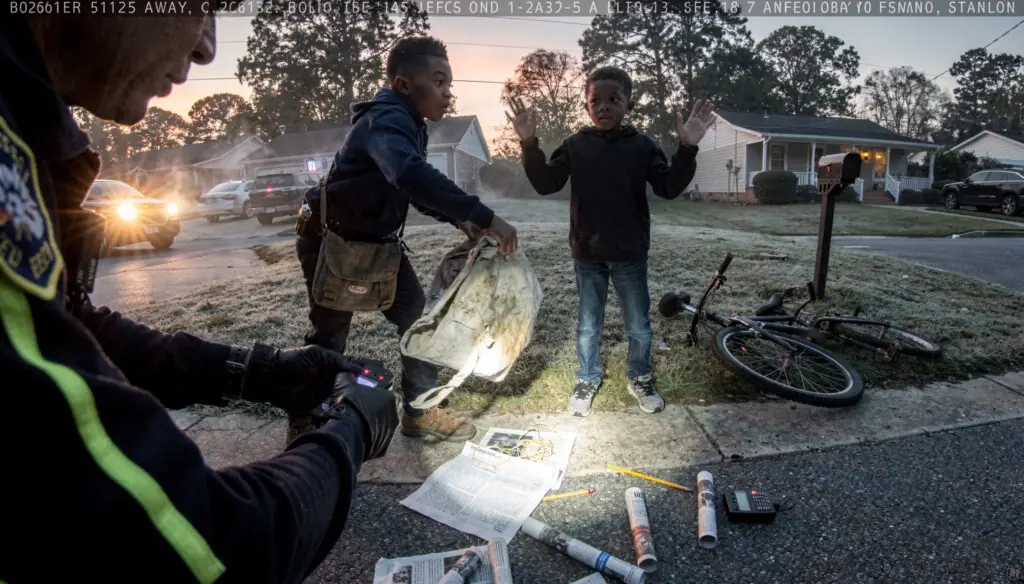
He took the voice recorder from his satchel, plugged it into the old laptop Wendell had left him, and transferred the audio file from that morning. He labeled it with the date, the time, and a four-digit number he had read off Tull’s name plate. He saved it in a folder on the desktop labeled root log. There were six other files in the folder, one for each time he had been stopped.
This was the seventh. He had not told Opal about any of them. He had not called Wendell’s emergency number. He had handled each one the same way.
Hands up, voice steady, bag open, right stated, recorder running. Each time the officers had let him go. Each time he had come home and logged the file and said nothing. But now Wendell was here.





