Lorraine continued:
“What happened to your father matters.”
“But if you make every complaint into proof of what happened to him, you’ll stop seeing people clearly.”
Malcolm smiled sadly.
“You would’ve been a good lawyer.”
“I like children more.”
“Questionable judgment.”
She laughed.
Then became serious.
“Come home when you can.”
“I will.”
Malcolm slept badly.
The next morning he met Deputy Lena Ruiz at a diner outside the courthouse.
She had called Rebecca Shaw first.
That mattered.
Not secret.
Not improper.
A request to speak through counsel.
Rebecca sat two booths away.
Ruiz drank coffee.
Hands shaking slightly.
“I need to tell you something.”
Malcolm waited.
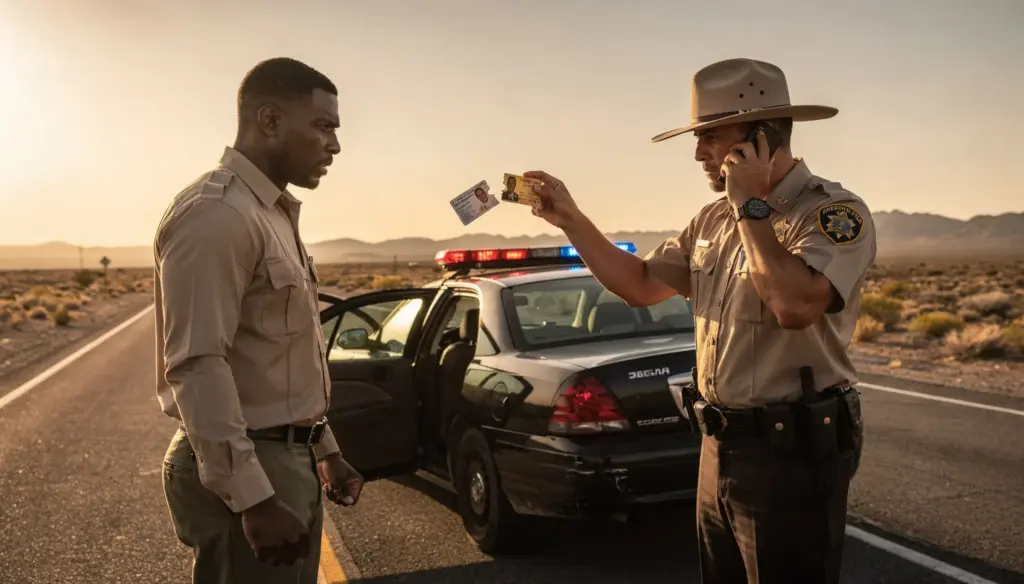
“Sheriff Harlan breaks IDs.”
His expression did not change.
“How often?”
“I’ve seen three.”
“Before mine?”
“Yes.”
“Why?”
“He says fraudulent cards should be destroyed.”
“Policy?”
“No.”
“State law?”
“No.”
“Department procedure?”
“No.”
“Does anyone report it?”
Ruiz looked toward the window.
“That’s the problem.”
“Explain.”
“When people are booked, property gets inventoried.”
“If license is already broken, intake writes damaged ID.”
“Then charge is suspended license, no valid ID, whatever.”
“People complain.”
“Who do they complain to?”
“The sheriff.”
Malcolm stared.
“Internal affairs?”
Ruiz laughed without humor.
“Two deputies.”
“One reports to Harlan.”
“County board?”
“Mostly budget oversight.”
“State?”
“Sometimes.”
“What happens?”
“Nothing I can see.”
Malcolm leaned back.
“How long have you worked there?”
“Six years.”
“How long have you known?”
“About the IDs?”
“Three.”
“About other problems?”
She looked at him.
“What do you think?”
“I don’t want what I think.”
“I want what you know.”
That answer changed her expression.
Ruiz reached into her bag.
Rebecca appeared beside them immediately.
“Before anything comes out,” she said, “we need to clarify whether this is department property.”
Ruiz nodded.
“Copies.”
“Of?”
“Property logs.”
“Tow logs.”
“Cash seizure sheets.”
Rebecca sat.
“Who gave you authority to copy them?”
“No one.”
“Then do not hand them over to us yet.”
Ruiz froze.
Malcolm nodded.
“My lawyer is right.”
Disappointment crossed her face.
“I thought you wanted proof.”
“I want proof that survives.”
He looked toward the folder.
“If you violated law or policy collecting it, we need counsel to handle that correctly.”
Ruiz swallowed.
“I can tell investigators where to look.”
“Yes.”
“That may be enough.”
It was.
Over the next month, the Red Mesa review expanded.
Not publicly at first.
Judge Harper authorized focused preservation and document requests under the existing monitoring order.
The state attorney general’s public-integrity section joined for limited review of cash and property handling.
Again, not because Malcolm demanded it.
Because records showed anomalies.
Vehicles towed without charges.
Cash seized but not consistently deposited.
IDs logged as damaged at rates far above neighboring counties.
Traffic stops disproportionately affecting out-of-county Black and Hispanic drivers on Highway 86.
Statistics did not prove motive by themselves.
Malcolm repeated that constantly.
People around him wanted cleaner conclusions.
Some activists wanted him to say systemic racial targeting was conclusively established.
County supporters wanted him to say a few paperwork mistakes were being exaggerated.
Malcolm said neither.
“The evidence says what it says.”
He became hated by both extremes.
That usually meant he was doing his job.
Sheriff Harlan hired an attorney named Paul Denning.
Denning was excellent.
He attacked the data carefully.
Highway 86 had particular traffic patterns.
Drug interdiction activity.
Out-of-county commercial routes.
Different demographics.
Some disparities could have non-discriminatory explanations.
Malcolm agreed.
Denning seemed irritated by agreement.
At one hearing he said:
“Mr. Reed, you seem eager to concede points.”
Malcolm answered:
“If they’re correct.”
Denning stared.
“That makes cross-examination difficult.”
Judge Harper almost smiled.
The torn-ID issue was harder.
Seven confirmed cases in four years.
Four involved Sheriff Harlan personally.
Three involved deputies.
Six drivers were Black or Latino.
One white.
Harlan defended the practice as informal fraud prevention.
The state motor-vehicle department testified that local law enforcement had no authority to destroy suspected fraudulent state IDs before evidentiary processing.
Worse, four of the seven cards were later confirmed valid.
Including Malcolm’s.
One belonged to a seventy-year-old Hispanic veteran named Raul Mendoza.
His daughter testified.
“My father drove twenty miles without a license afterward because they left him roadside.”
Denning objected to emotional framing.
Judge Harper allowed the factual statement.
Raul had not filed suit.
Had not known how.
Another driver, Jamal Brooks, had.
His complaint from two years earlier described almost the exact sequence Malcolm experienced.
Stop.
ID called suspicious.
Card bent until broken.
Arrested after objecting.
Vehicle towed.
Charges dismissed.
Jamal had spent $1,800 getting his truck back.
The county refunded nothing.
Malcolm met him outside court.
Jamal was thirty-six, delivery driver, father of three.
He looked at Malcolm.
“You’re the lawyer guy.”
“Apparently.”
“They listened to you.”
Malcolm paused.
“Yes.”
Jamal laughed bitterly.
“They didn’t listen to me.”
“No.”
Malcolm did not defend the system.
Jamal appreciated that.
“You know what made me mad?”
“What?”
“Not the money.”
Malcolm waited.
“I mean, the money too.”
“But when I told people what happened, everybody asked what I did first.”
His voice hardened.
“What did you say?”
“I said I asked why he broke my license.”
“And?”
“They said maybe my tone.”
Malcolm closed his eyes.
Tone.
A word powerful people loved when facts became inconvenient.
Jamal continued:
“You make one phone call, now everybody wants records.”
Malcolm nodded.
“Yes.”
“That fair?”
“No.”
Jamal stared.
The answer disarmed him.
Malcolm continued:
“My call mattered because your complaint existed.”
“And Mendoza’s.”
“And public defenders.”
“And Deputy Ruiz.”
“And others.”
He looked at Jamal.
“If nothing had been documented before me, I would be one angry lawyer with a broken license.”
Jamal thought.
“So what happens?”
“I don’t know.”
“You’re the monitor.”
“Still don’t know.”
Jamal smiled despite himself.
“At least you’re honest.”
That became the hardest part of the next year.
People expected certainty.
Investigation produced layers.
Cash handling showed serious failures, but not every missing amount was theft.
Some involved delayed deposits.
Bad forms.
Weak reconciliation.
One clerk had made repeated errors without personal gain.





