The rain over the East River did not fall so much as it drifted, a suspended mist of sulfur, soot, and pulverized river grease that clung to the acoustic glass of the penthouse forty stories above Central Park South. Inside the library of Vance Capital Management, the air remained dry, recirculated through titanium electrostatic filters that stripped away the scent of the city, leaving only the neutral, refrigerated breath of wealth: unvarnished cedar, calfskin bindings, and the faint, bitter trace of ozone from the sub-floor server array.
Julian Vance was fifty-two years old, and for eighteen months he had known that a man does not drown all at once. Drowning was a ledger entry. It was an amortization schedule whose terminal date had been calculated by someone else in a room you were never permitted to enter.
He sat behind an eleven-foot slab of ebonized bog oak that had been dredged from a peat marsh in County Mayo. On its polished surface lay his instrument of thirty years: a Montblanc Meisterstück 149 with an eighteen-karat split nib, ground flat to an architect’s oblique. Beside it lay an envelope made of heavy deckle-edged rag paper, sealed with unrefined black pitch instead of wax.
The letter had arrived not through the mail chute, nor by bonded courier, but placed directly upon the brass scales of his private entrance hall while his night porter was asleep between three and four in the morning.
The ink on the single enclosed sheet was iron-gall, hand-ground, corrosive enough to have eaten microscopic halos into the fibers of the paper. It contained nine lines of neat, upright copperplate script:
Julian,
The ballast was never granite. You knew this when you drafted the declaration of loss for Lloyd’s in November of 1994. The granite was invoiced at Cardiff, but the manifests at the Bute Docks were signed by a clerk who died of typhus six days before the ship cleared the breakwater.
The weight was three hundred and forty tons of pig iron, cast with the mark of the Tredegar works. It sits eighty-two fathoms down, four miles south-southwest of the Smalls Light. The iron does not rot, Julian. Neither do the teeth.
Arthur Reynolds will call you at noon. Do not take his settlement. If you take the settlement, I will give the logbook to the girl.
Julian lifted the fountain pen. His hand was not trembling, but the tendon running from his wrist into his forefinger was locked so hard that the skin showed white over the bone.
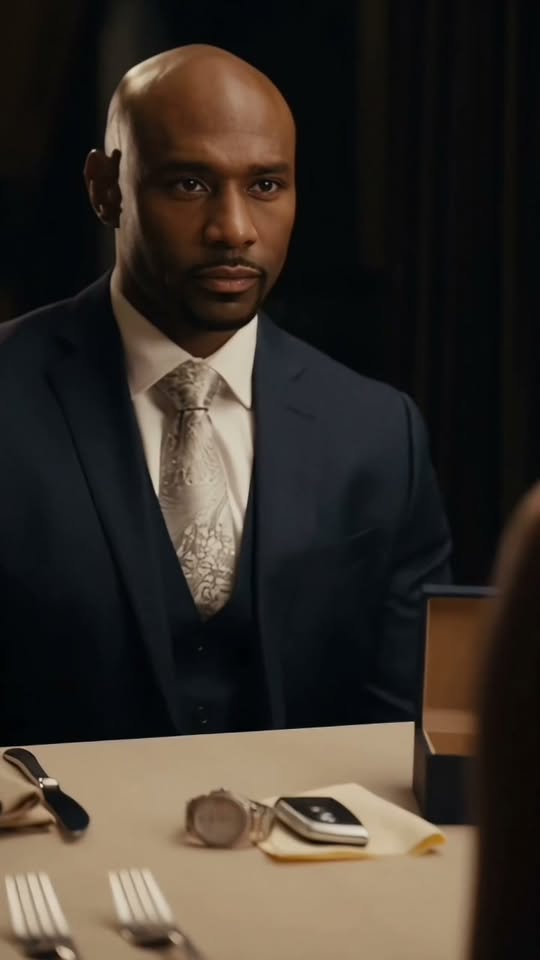
Across the room, Marcus sat on the low velvet chaise beneath a seven-foot Gerhard Richter canvas. Marcus was thirty-four, his skin the color of parched earth after rain, dressed in a three-piece suit of midnight-blue wool that had been cut by hand on Savile Row and tailored to conceal the heavy, athletic slope of his shoulders. He was scraping the edge of an ivory thumbnail against the seal of an unlit Cohiba.
“You’ve been staring at that scrap of rag for forty minutes, Julian,” Marcus said. His voice was a rich, low cello that had charmed state pension boards from Sacramento to Dubai. “The market opens in twenty minutes. Henderson’s people are already on the squawk box from Charlotte. If we don’t release the third-quarter audited net asset values before the bell, the short-sellers are going to open our belly like an unpinned trout.”
“Henderson is an idiot who thinks the world is made of arithmetic,” Julian said without looking up. His voice was dry, the sound of dry grass dragged over slate. “A man who believes in spreadsheets is easily killed by an adjective.”
Marcus let out a short, percussive breath that was almost a laugh. “Spreadsheets are the only reason you still have that townhouse on East Sixty-Fourth Street, cousin. Spreadsheets bought the three cases of Romanée-Conti currently rotting in your cellar. If Henderson’s credit committee pulls our warehouse facility this morning, you won’t be writing essays on maritime jurisprudence. You’ll be explaining to the United States Bankruptcy Trustee why four hundred million dollars in mortgage derivatives disappeared into a shell corporation registered to a postbox in Road Town, Tortola.”
Julian turned the black-sealed letter face down on the bog oak.
“The firm was never built on mortgage derivatives, Marcus. You think you understand Vance Capital because you know how to trade the volatility of interest-rate swaps. You are a mechanic who has learned how to tune a carburetor, and you mistake yourself for the man who discovered oil.”
“I am the man who keeps the engine from seizing,” Marcus said, standing. He was six-foot-two, his posture immaculate, the silken sheen of his burgundy tie catching the cold northern light from the terrace. “And right now, the oil is leaking. Arthur Reynolds called my mobile ten minutes ago from his town car. He’s coming up the private elevator now. He says Maya has something from her father’s estate. Something that wasn’t in the probate filings.”
Julian’s eyes drifted toward the tall mahogany doors at the end of the library.
“Her father died thirty years ago in an asylum in Inverness,” Julian whispered. “He hadn’t recognized his own boots since the winter of eighty-two.”
“He had enough sense to keep a tin box under the floorboards of the boathouse,” Marcus replied, checking the diamond-faced Patek Philippe on his wrist. “And his daughter has enough rage to set fire to every dry timber in this city just to watch you choke on the smoke.”
Chapter II: The Sovereign of the Shoals
The elevator did not announce its arrival with a chime; it was an antique Otis cage that had been modernized with hydraulic rams and soundproof seals, but it still possessed the deep, lung-collapsing vibration of a mine skip rising from the dark.
The doors slid back with the dry hiss of pneumatic seals.





