I picked it up from the ground, wiped the rain off my screen, and answered with a trembling thumb. It was my father’s hospital room.
“Isaiah?” Dad’s voice came through the receiver, but it was barely audible. It was weak, choked with a terror I had never heard in my father’s voice in my entire life. “Isaiah… don’t come back to the hospital. Stay away.”
In the background, a heavy door clicked shut, followed by the metallic click of a deadbolt sliding into place.
The headlights of the unmarked black SUV washed over the rusted railcars, painting long, skeletal shadows across the gravel lot. Inside the vehicle, the tinted driver’s window rolled down an inch, revealing the glint of a polished silver badge and the heavy silhouette of a tactical shotgun resting across the steering column.
“Mr. Lennox,” a harsh, amplified voice crackled through a handheld P.A. system, bouncing off the corrugated iron walls of the warehouse. “Step away from the vehicle. Put your hands where we can see them. Right now.”
Ava froze, her fingers clawing at the frozen fabric of my coat. “They’re going to kill us, Isaiah. They’re going to wipe the phone and make us vanish.”
“They aren’t going to touch you,” I said, my voice steadying into the cold, impenetrable armor I wore every time I walked into a federal courtroom.
I didn’t reach for a weapon—I didn’t carry one. Instead, I reached inside my breast pocket and pulled out my federal credentials, flipping the leather case wide so the golden Department of Justice seal caught the glare of the high-beams. I took two deliberate, unhurried steps forward, shielding Ava behind me, and raised my voice so it carried across the gravel.
“I am Assistant United States Attorney Isaiah Lennox,” I shouted back, the title ringing with absolute authority. “Every second you keep these lights trained on a federal officer and a witness to an ongoing federal civil rights felony, your obstruction charges multiply. Turn off those high-beams and step out of the vehicle with your hands empty.”
For three agonizing seconds, the engine hummed in the wet night air. The spotlight didn’t waver.
Then, with a heavy pneumatic hiss, the SUV’s doors unlocked. The driver’s side door swung open, and Lieutenant Knox Sullivan stepped out into the freezing drizzle. He wasn’t wearing his uniform cap; his slicked-back brown hair was plastered to his forehead by the rain, and his eyes burned with reckless, cornered desperation. In his right hand, he held a standard-issue tactical flashlight, its strobe blindingly bright.
“Federal prosecutor or not, you’re out of your jurisdiction, Lennox,” Sullivan snarled, his boots crunching heavily on the loose gravel as he closed the distance. “This is Bessemer. Down here, federal badges don’t write the rules. We do.”
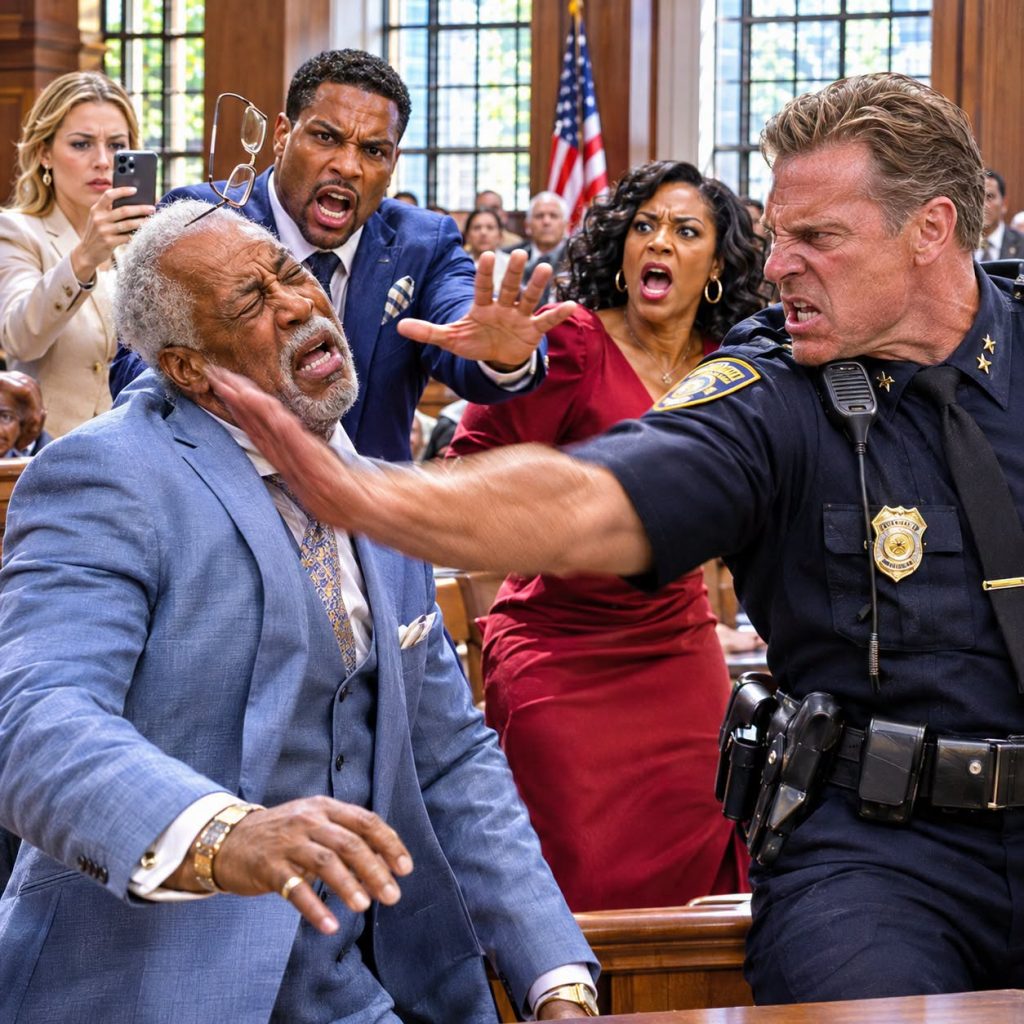
“You assaulted a seventy-four-year-old civilian on a secured public record camera, Lieutenant,” I replied, holding my ground without flinching an inch. “And then your superior, Judge Vance, ordered a cover-up, cut the feed, and sent you out here to intimidate a witness. I watched the video, Sullivan. It’s backed up to three independent cloud servers in Washington, encrypted and time-stamped. If anything happens to me—or to Ms. Reed—a grand jury indictment drops before dawn.”
Sullivan stopped ten feet away. His chest heaved beneath his damp tactical vest. For a fleeting instant, I saw the panic flicker behind his eyes—the sudden realization that his old-school county playbook had just collided with an unstoppable federal freight train.
“You’re making a catastrophic mistake,” Sullivan hissed, his voice dropping to a venomous whisper. “You think you can clean up this town? Vance owns the police commission, the district attorney, and half the state legislature. You’ll be disbarred before you even reach the courthouse steps.”
“Try me,” I said quietly.
Behind Sullivan, the headlights of two unmarked cruisers suddenly swept into the rail depot, their blue-and-red emergency strobes flashing through the mist, accompanied by the unmistakable wail of state troopers and federal marshals. The call I had quietly dispatched to the Birmingham FBI field office right before leaving the hospital had finally arrived.
Within seconds, armed federal agents in heavy tactical gear fanned out across the lot, their weapons trained squarely on Sullivan and his vehicle.
“Lieutenant Knox Sullivan, step away from the civilian!” a federal supervisor’s voice commanded over the din of the rain. “Do it now!”
Sullivan stared at me with pure, unadulterated hatred, but as the heavy tactical boots closed in around him, he slowly let his flashlight drop into the mud. He raised his hands behind his head as the zip-ties clicked shut around his wrists.
As they dragged him past me toward the cruiser, I didn’t look at him. I turned back to Ava, who was trembling violently in the shelter of my car.
“You’re safe now,” I told her, gently placing a hand on her shoulder. “Let’s go home.”
By 4:00 AM, the emergency department of UAB Medical West was quiet, save for the hum of the fluorescent lights and the steady beep of a cardiac monitor.
I sat in the plastic chair beside my father’s bed. The swelling on his face was still severe, but the hospital staff had managed to clean the deep gash above his eyebrow and stabilize his blood pressure. Naomi was asleep in the corner armchair, her head resting against her coat, exhausted from the nightmare.
My phone vibrated continuously on the metal bedside table—texts from the Deputy Attorney General, voicemails from investigative journalists in Montgomery, and encrypted updates from the federal task force executing search warrants on Judge Harrison Vance’s municipal chambers.
Dad stirred, his good eye fluttering open. He looked at me in the dim light, his expression softened by a profound, weary pride.
“You didn’t listen to me,” he whispered, his voice raspy. “I told you not to kick the hornet’s nest.”
I smiled, reaching out to squeeze his scarred, trembling hand. “Some nests need to be burned to the ground, Dad.”
For the first time in seventeen years of prosecuting white-collar criminals behind polished oak desks in Atlanta, I finally understood what the law was truly for. It wasn’t just about balancing spreadsheets or indicting faceless corporate cartels. It was about standing in the dark, in the freezing rain, and telling the monsters who thought they owned the world that they didn’t own us.





