By dawn, the industrial gloom of Bessemer had given way to a pale, clinical morning light that bled through the reinforced windows of UAB Medical West. The rain had ceased, leaving the asphalt slick and reflecting the bruised purple hues of the early sky.
I sat in the stiff vinyl armchair beside my father’s bed, the digital clock on the wall reading 6:15 AM. My father, Clarence Lennox, was awake, propped up against a stack of crisp white pillows. The swelling on the right side of his face had settled into a deep, mottled shade of indigo and bruised plum, but the dazed, shell-shocked look in his eyes had been replaced by the quiet, unyielding dignity that had defined his forty-two years as an educator.
Naomi sat on the opposite side of the bed, softly buttering a piece of dry toast she had managed to procure from the nurses’ station, her eyes rimmed with the exhaustion of a night spent staring into an abyss.
The heavy wooden door of Room Twelve swung open silently. A tall, impeccably dressed man in a charcoal bespoke suit walked in, carrying a heavy leather briefcase. It was Marcus Vance—not the municipal judge, but his younger brother, a federal magistrate judge based out of the Hugo L. Black United States Courthouse in Birmingham, and a man I had occasionally shared coffee with at bar association dinners. His expression was grave, devoid of the usual political warmth.
“Isaiah,” Marcus said quietly, stepping into the sterile light of the room. He glanced briefly at my father, then looked down at me with heavy eyes. “I heard the reports coming across the secure wire from the field office at three in the morning. Is this him?”
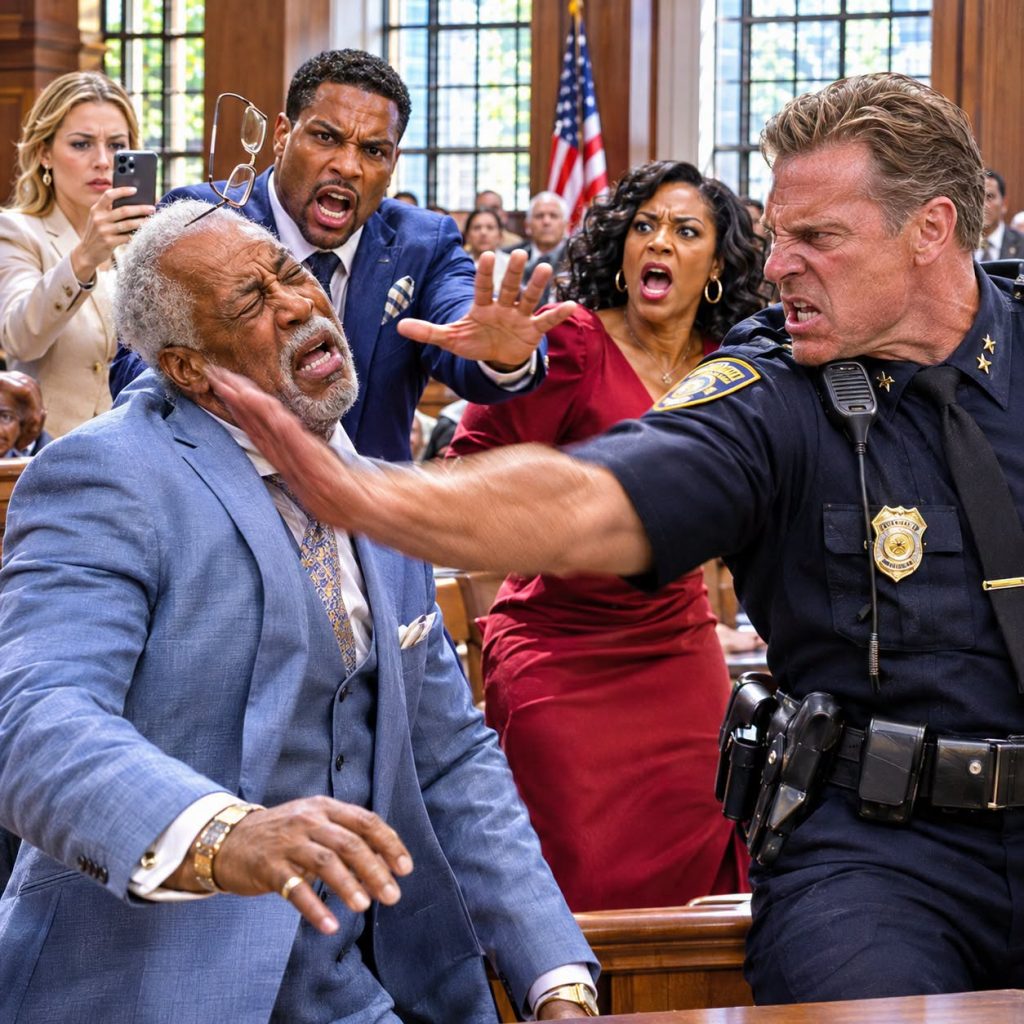
“This is my father, Marcus,” I replied, standing up so that I stood between the magistrate and the bed. My voice was level, stripped of all professional courtesy. “A retired history teacher who was assaulted in a public courtroom by a municipal lieutenant for asking an itemized receipt on a forty-five-dollar traffic citation. And then hunted down by county units because the presiding judge wanted the security footage scrubbed.”
Marcus closed his eyes for a moment, letting out a long, shuddering breath. He set his briefcase on the metal bedside table, right beside my father’s shattered, gold-rimmed glasses.
“Harrison is my brother, Isaiah,” Marcus said softly, his voice thick with a profound, familial sorrow. “We grew up in this county. We watched it die piece by piece when the steel mills closed down in the eighties. Men like Harrison and the Sullivans… they built a wall around this place because they genuinely believed nobody else would protect it. They thought they owned the soil.”
“They don’t own the law,” I said, every word dropping like lead shot. “And as of four hours ago, Harrison Vance is no longer presiding over anything. The FBI task force executed the search warrants on his chambers at midnight. They recovered the hard drives, the audio logs, and the secondary backups of the courtroom feed that Ava Reed managed to download before they locked her out of the terminal.”
Clarence Lennox slowly raised his weathered hand, resting it gently against my forearm. His fingers were still trembling slightly, but his grip had a surprising, steady warmth.
“Son,” my father murmured, his raspy voice cutting through the tense silence of the room. “Don’t let this turn your heart into stone. You came down here looking for justice, not vengeance. Make sure there’s a difference when all is said and done.”
I looked down at my father’s battered face—the purple swelling, the butterfly bandage over his eyebrow, the quiet resilience of a man who had taught generations of children how to respect a republic governed by rules rather than men. The raw, white-hot fury that had driven me down Interstate 20 at a hundred miles an hour began to settle into something much more permanent, much more formidable: the unyielding, surgical precision of an institution designed to protect the vulnerable from the predators who wore badges and black robes.
“My heart isn’t stone, Dad,” I whispered, covering his calloused hand with mine. “It’s just finally doing what it was sworn to do.”
Outside the hospital window, across the damp rooftops of Bessemer, the morning sun finally broke through the gray canopy of clouds, casting a sharp, golden beam of light across the steel-ribbed horizon. In the hallway, the steady, rhythmic beeps of the medical monitors echoed like a metronome—a reminder that time, and the law, were finally moving forward again.





